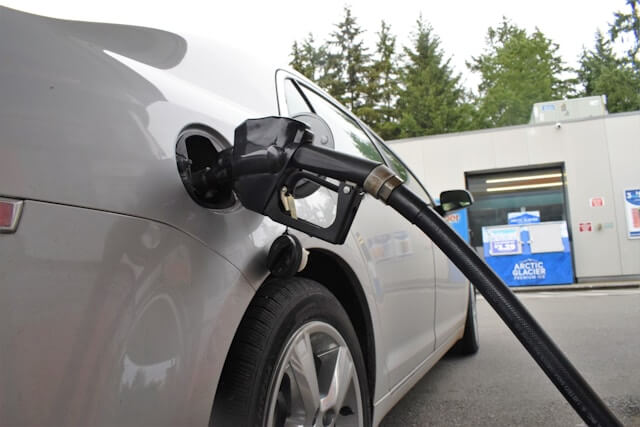
Photo by j. a. uppendahl on Unsplash
The Meaning of Gasoline Octane Rating
There are three common types of unleaded gasoline in the market: 92, 95, and 98. Their octane ratings are 92, 95, and 98 respectively, which means that each type of gasoline has a different ability to resist knocking in the engine.
The classification of gasoline is mainly based on its octane rating, which is an important indicator of gasoline’s knock resistance.
- The higher the octane rating, the stronger the gasoline’s ability to resist knocking. This is because high-octane gasoline can burn stably at higher pressures and temperatures, thereby reducing the risk of abnormal combustion (i.e., knocking).
- The octane rating of 92 unleaded gasoline is 92, with the lowest knock resistance; 95 unleaded gasoline is slightly higher, at 95; while 98 unleaded gasoline has the highest knock resistance, at 98.
The Impact of Knocking
- Knocking refers to abnormal combustion occurring in an internal combustion engine, which usually leads to abnormal vibrations and noise inside the engine. This situation often occurs when the engine is climbing or accelerating.
- If low-octane gasoline below the vehicle’s design requirements is used for a long time, it may lead to engine damage, such as piston damage or valve damage. Therefore, choosing the right type of gasoline is crucial for maintaining vehicle performance.
Comparison of 92, 95, and 98 Gasoline
| Gasoline Type | Octane Rating | Knock Resistance | Suitable Engines | Advantages | Disadvantages |
|---|---|---|---|---|---|
| 92 Gasoline | 92 | Low | General naturally aspirated engines | Cheapest price, good fuel economy | Lower power output |
| 95 Gasoline | 95 | Medium | Most modern gasoline engines | Balanced performance, good fuel efficiency | Moderate price |
| 98 Gasoline | 98 | High | High-performance engines | Highest power output | Most expensive, poor fuel economy |
Choosing the right type of gasoline is crucial for protecting the engine and enhancing performance, so vehicle owners should make informed choices based on their vehicle’s needs.
Octane Rating Calculation Method
Reference for standard oil
- Isooctane (octane rating 100) and n-heptane (octane rating 0) are used as benchmarks.
- The octane rating of gasoline is determined based on its comparison with these two substances in a standard engine.
| Testing Method | Abbreviation | Main Features | Octane Rating Range | Usage Regions | Formula |
|---|---|---|---|---|---|
| Research Method | RON | Tests simulated under moderate speed and driving conditions, widely used in Asian countries. | Typically 92-98 | Asia, Europe | - |
| Motor Method | MON | Tests simulated under high load and high-speed driving conditions, values are usually 8-12 lower than the research method. | Typically 80-90 | USA, Canada, Europe | - |
| Anti-Knock Index | AKI | The rating used in the USA and Canada, which is the average of RON and MON. | Typically 87-93 | USA, Canada | $$ \text{AKI} = \frac{\text{RON} + \text{MON}}{2} $$ |
Are There Different Octane Ratings of Gasoline in Different Countries?
| Country/Region | Octane Rating Indication | Common Octane Rating Types |
|---|---|---|
| USA | Anti-Knock Index (AKI) | 87 (Regular), 91-92 (Mid-Grade), 97-98 (Premium) |
| Canada | Anti-Knock Index (AKI) | 87 (Regular), 91-92 (Mid-Grade), 97-98 (Premium) |
| Brazil | Anti-Knock Index (AKI) | E25 (85% gasoline + 15% ethanol), E100 |
| Mexico | Anti-Knock Index (AKI) | 87 (Regular), 92 (Premium) |
| Europe | Research Method (RON) | 95 (EuroSuper), 98 (SuperPlus) |
| Germany | Research Method (RON) | 95 (Super), 98 (SuperPlus) |
| France | Research Method (RON) | 95 (SP95), 98 (SP98) |
| UK | Research Method (RON) | 95 (Premium), 97 (Super), 99 (Ultimate) |
| Italy | Research Method (RON) | 95 (Verde), 98 (Super) |
| Spain | Research Method (RON) | 95 (Sin Plomo), 98 (Super) |
| Japan | Research Method (RON) | 91 (Regular), 95 (High-Octane), 100 (Premium) |
| China | Research Method (RON) | 92, 95, 98 |
| Taiwan | Research Method (RON) | 92, 95, 98 |
| Hong Kong | Research Method (RON) | 95, 98, 100 |
| Australia | Research Method (RON) | 91 (Regular), 95 (Premium), 98 (Ultra) |
| New Zealand | Research Method (RON) | 91 (Regular), 95 (Premium), 98 (Ultra) |
| South Korea | Research Method (RON) | 92, 95, 100 |
| Russia | Research Method (RON) | 92 (Regular), 95 (Premium), 98 (Super) |
| India | Research Method (RON) | 91 (Regular), 95 (Premium) |
| Singapore | Research Method (RON) | 92, 95, 98 |
| Malaysia | Research Method (RON) | 95 (Regular), 97 (Premium), 100 (Racing) |
| Thailand | Research Method (RON) | 91, 95, 97 |
| Indonesia | Research Method (RON) | 90, 92, 95, 98 |
| Philippines | Research Method (RON) | 91 (Regular), 95 (Premium), 97 (Super) |
| Vietnam | Research Method (RON) | 92 (Regular), 95 (Premium) |
| UAE | Research Method (RON) | 91 (Special), 95 (Super), 98 (Ultra) |
| Saudi Arabia | Research Method (RON) | 91 (Green), 95 (Red) |
| South Africa | Research Method (RON) | 93, 95 |
| Argentina | Research Method (RON) | 95 (Super), 98 (Premium) |
| Chile | Research Method (RON) | 93 (Regular), 95 (Extra), 97 (Super) |
Different countries have their own characteristics in the way gasoline octane ratings are indicated and calculated, but they all revolve around the core indicator of knock resistance. Choosing the right gasoline is crucial for engine performance and longevity.
How to Know What Type of Gasoline to Use When Refueling in Different Countries?
When refueling in different countries, choosing the right type of gasoline is crucial. This not only affects vehicle performance but may also impact engine longevity.
Based on your vehicle needs and driving habits, making a reasonable choice of the appropriate type of gasoline can ensure smooth vehicle operation and extend its lifespan.
Suitability and Characteristics of Different Octane Gasoline for Vehicle Types
| Octane Rating | Measurement Method | Suitable Vehicle Types | Characteristics |
|---|---|---|---|
| 87 | AKI | General vehicles | Suitable for daily driving, lower price |
| 91 | AKI | General vehicles, performance vehicles | Provides better performance and combustion efficiency |
| 97-98 | AKI | High-performance vehicles | Suitable for performance vehicles that require high octane |
| E25 | AKI | Flexible fuel vehicles | Uses ethanol blended fuel, suitable for Brazil |
| E100 | AKI | Flexible fuel vehicles | Uses ethanol blended fuel, suitable for Brazil |
| 91 | RON | General vehicles | Suitable for vehicles in Japan and Asia |
| 92 | RON | General vehicles | Suitable for vehicles in China and Asia |
| 95 | RON | High-performance vehicles | Provides higher performance and combustion efficiency |
| 98 | RON | High-performance vehicles | Suitable for performance vehicles that require high octane |
| 100 | RON | High-performance vehicles | Provides the highest performance and combustion efficiency |
How to Choose the Right Gasoline
Improper use (such as using the wrong fuel) may not cause immediate serious damage, but long-term use can have negative effects on the vehicle. Therefore, it is very important to understand the correct type of fuel required for your vehicle.
1. Check the Owner’s Manual
The manual for each vehicle usually clearly states the recommended type of gasoline to use.
2. Consider the Engine Compression Ratio
| Compression Ratio | Recommended Gasoline (AKI) | Recommended Gasoline (RON) |
|---|---|---|
| Below 8.5 | 87 | 92 |
| Between 8.5 and 9.5 | 91 | 95 |
| Above 9.5 | 97-98 | 98-100 |
3. Driving Needs
If you often engage in high-intensity driving (such as high-speed driving or frequent acceleration) or long-distance travel, choosing high-octane gasoline may help enhance performance and stability.
4. Operating Environment
In different environments (such as high-altitude areas), changes in air pressure and temperature can affect combustion efficiency, and adjustments to the type of gasoline used may be necessary.
| Environmental Conditions | Recommended Gasoline Octane Rating | Explanation |
|---|---|---|
| High-altitude areas | 92 or lower | As altitude increases, air density decreases, combustion efficiency decreases, and the risk of knocking decreases, so lower octane gasoline can be used. For every 1000 meters increase, the gasoline octane rating can be reduced by about 1 unit. |
| Low-temperature environment | 95 or higher | In environments below -20°C, gasoline may become viscous, affecting vaporization and ignition. Using higher octane gasoline can improve ignition performance and reduce starting difficulties. |
| High-temperature environment | 95 or higher | High temperatures may lead to increased fuel volatility, and using higher octane gasoline can prevent knocking and improve engine stability. |
| High-humidity environment | 95 or higher | High humidity may lead to uneven fuel mixing, and using higher octane gasoline can improve combustion efficiency and reduce black smoke emissions. |
Choosing the right type of gasoline not only depends on the technical requirements of the vehicle but also needs to consider the current environmental conditions. Adjusting the octane rating of gasoline used in different environments can effectively enhance engine performance and extend its lifespan.
Therefore, it is very important to understand the local environmental conditions and their impact on gasoline requirements before driving.
What to Do If You Don’t Know What Gasoline to Use? Is Using Higher Octane Gasoline Safer?
Not necessarily better; for low-compression engines, using gasoline with too high an octane rating may not bring significant performance improvements and may increase fuel costs.
Therefore, choosing the octane rating that suits your vehicle’s needs is the ideal approach.
If you are unsure what type of gasoline to use, you can first check the owner’s manual to understand the recommended octane rating. Using higher octane gasoline usually provides better knock resistance, but it may not be suitable for all vehicles.
Choose the appropriate fuel based on your vehicle type, engine compression ratio, and driving needs to ensure stable engine operation and extend its lifespan.
Reference
- 辛烷值 - 維基百科,自由的百科全書
- 92 / 95 / 98 無鉛 汽油 差在哪?我的汽車該加什麼油? - StockFeel 股感
- 92、95、98汽油的抉擇:汽油專家指南 | 道路駕駛教練推薦台北
- 無鉛汽油大哉問:92、95、98可以混著加嗎?改加98能減少積碳和爆震嗎? - TNL The News Lens 關鍵評論網
- 開車小知識 | 92、95、98 汽油有什麼差別?抗爆震性哪款最好?
- 汽油 v.s 柴油傻傻分不清楚 | LiFe 生活化學 - LIFE 生活化學│找知識 x 玩創意 x 品生活
- RFecu釋原力-基礎知識
- 92,95,98汽油差別是什麼?引擎壓縮比對照表一次看懂
- 汽車加什麼油?專家教你選對油,車子順暢開一輩子 | 道路駕駛教練推薦台北
- 台灣中油股份有限公司 CPC Corporation, Taiwan 版本:8.21 石 油 產 品 規 範 Specification of Petroleum
- 开车离不开的 汽油_车家号_发现车生活_汽车之家
- 高海拔地区使用发动机的注意事项
- 汽油发电机组对工作环境的要求-发电机,汽油发电机,柴油发电机,发电电焊机,上海欧鲍实业有限公司