Electoral College System

538 Electoral Votes = (50 States * 2 Senators = 100 Senators) + (435 Representatives) + (3 Electoral Votes for Washington D.C.).
The US presidential election uses the Electoral College system instead of direct popular vote, which is a unique form of indirect election. The design and operation of this system are as follows:
| System | Description |
|---|---|
| Allocation of Electoral Votes | The number of electoral votes for each state equals the total number of its seats in Congress (Senators plus Representatives), totaling 535 votes, plus 3 seats for Washington D.C., making a total of 538 electoral votes. |
| State Voting | Voters in each state vote for presidential candidates. |
| Winner-Takes-All Principle | Except for Nebraska and Maine, most states adopt the “Winner-Takes-All” system, where the candidate with the most votes in the state wins all the state’s electoral votes. |
| Electoral Voting | Electors in each state gather after the election to vote for the presidential candidate according to the state’s voting results. |
| Winning Threshold | The candidate who receives 270 or more electoral votes wins the presidency. |
Reasons for the Design of the Electoral College System
| Reason | Description |
|---|---|
| Federal Balance | Protects the interests of small states, preventing populous states from dominating the election |
| Regional Balance | Ensures that candidates pay attention to the interests of different regions, not just densely populated areas |
| Prevents Vote Splitting | Encourages the formation of strong national parties |
However, this system also raises controversies, mainly criticisms that it may lead to the winner of the popular vote losing the election, and that it causes candidates to overly focus on a few swing states.
Despite this, due to the need for constitutional amendments to change the system, and the possible opposition from small states, it is unlikely that this system will change in the short term.
Controversies of the Electoral College System
| Controversy | Description |
|---|---|
| Violates the Principle of “One Person, One Vote, Equal Value of Each Vote” | Since the number of electoral votes per state is not exactly proportional to the population, the value of votes from small states is relatively higher. For example, each electoral vote in Wyoming represents far fewer voters than in California |
| Possibility of Winning the Popular Vote but Losing the Election | Historically, there have been several instances where the candidate who won the national popular vote lost the election. For example, in 2016, Hillary Clinton received nearly 3 million more popular votes than Donald Trump but still lost the election |
Unfairness of the Winner-Takes-All System | Most states adopt the “Winner-Takes-All” system, where even if a candidate wins by a narrow margin in the state, they win all the state’s electoral votes. This may not accurately reflect the will of the voters |
| Overemphasis on Swing States | Candidates often concentrate their campaign resources on a few key swing states, ignoring the needs of voters in other states |
| Strengthens the Two-Party System | The Electoral College system makes it difficult for third-party candidates to win enough electoral votes, thus reinforcing the two-party system |
| Electors May “Faithlessly” Vote | Although extremely rare, electors can theoretically vote against the will of the state’s voters |
| Complexity of the System | Compared to direct popular vote, the Electoral College system is more complex, making it harder for voters to understand |
| Possible Delay in Election Results | In a close election, it may be necessary to wait for the results from key states, delaying the final outcome |
Despite these controversies, due to the need for constitutional amendments to change the Electoral College system, and the possible opposition from small states, it is unlikely that this system will change in the short term.
Supporters argue that this system helps maintain federal balance and forces candidates to pay attention to the interests of different regions.
Why Use the Winner-Takes-All Mechanism Instead of Proportional Allocation by Party Votes?
There are several main reasons why the US adopts the Winner-Takes-All Electoral College system
| Reason | Description |
|---|---|
| Strengthens Federalism | The “Winner-Takes-All” system makes every state important, ensuring that even less populous states are not ignored. This helps balance the interests of large and small states, in line with the spirit of federalism |
| Prevents Vote Splitting | This system encourages the formation of strong national parties, preventing excessive vote splitting. Within each state, a candidate only needs to win a plurality to win all the state’s electoral votes |
| Simplifies Election Results | The “Winner-Takes-All” system makes the election results clearer, reducing the complexity of counting and allocating electoral votes |
| Protects the Interests of Small States | Even less populous states have at least 3 electoral votes, ensuring their voice in the election |
Despite these controversies, due to the need for constitutional amendments to change the system, and the possible opposition from small states, it is unlikely that this system will change in the short term.
Frequently Asked Questions
Why Does Washington D.C. Have 3 Electoral Votes? How Do They Decide Who to Vote For?
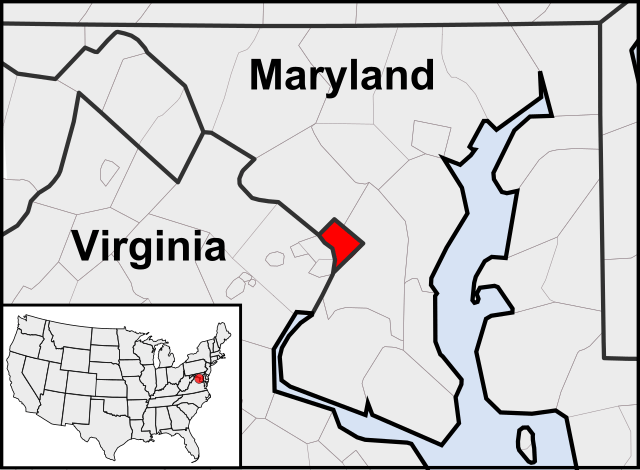
Washington, D.C. (formally: District of Columbia), also known as Washington or the District
| Item | Description |
|---|---|
| Legal Basis for Electoral Votes | The 23rd Amendment, passed in 1961, grants Washington D.C. 3 electoral votes, giving it a voice in the presidential election |
| Voting Method | Residents of the District can vote in the presidential election like citizens of other states |
| “Winner-Takes-All” System | Washington D.C. adopts the “Winner-Takes-All” system, where the candidate with the most popular votes in the District wins all 3 electoral votes |
| Historical Voting Tendency | Since gaining the right to vote in 1964, Washington D.C. has always cast its electoral votes for Democratic candidates in every presidential election |
| Impact of Population Characteristics | The District’s population is predominantly African American and largely federal government employees, factors that have long favored the Democratic Party |
Although Washington D.C.’s 3 electoral votes are not many, their allocation reflects the complexity of the US electoral system and the effort to ensure the capital region has a voice in the presidential election.
How Would the US Presidential Election Change If It Were a Direct Election?
If the US switched to direct election of the president, it could bring about several major changes
| Possible Change | Description |
|---|---|
| Change in Campaign Strategies | Candidates would focus more on densely populated metropolitan areas rather than the current swing states. Campaign activities would be more nationalized, no longer overly concentrated in a few key states |
| Equal Value of Each Vote | There would no longer be a situation where the winner of the popular vote loses the election. The voting weight of small state voters would decrease, while the influence of large state voters would increase |
| Simplified Election Process | No need for the complex allocation and counting of electoral votes. Election results could be determined more quickly |
| Reduced Controversy | Avoids the controversy of differing electoral and popular vote results. Reduces the possibility and impact of election fraud |
| Adjusted Party Strategies | Parties might focus more on attracting national middle voters rather than voters from specific states |
| Small State Interests Might Be Ignored | Candidates might pay less attention to issues in less populous states |
What Are the Steps of the US Presidential Impeachment Process?
The process of impeaching a US president is complex and involves both the Senate and the House of Representatives. Here are the main steps of the impeachment process
| Step | Responsible Body | Action | Requirement |
|---|---|---|---|
| 1 | House of Representatives | Propose Articles of Impeachment | Any Representative can propose |
| 2 | House Judiciary Committee | Investigate and Draft Articles of Impeachment | Majority of the Committee approval |
| 3 | Full House of Representatives | Vote on Articles of Impeachment | 1/2 Majority (218 votes) approval |
| 4 | Senate | Conduct Trial | Presided over by the Chief Justice |
| 5 | Senate | Hear Testimonies and Debates | - |
| 6 | Senate | Vote on Conviction | Requires 2/3 Majority (67 votes) approval |
| 7 | (If Convicted) | President is Removed from Office | Takes effect immediately |
- The impeachment process is initiated by the
House of Representatives, but the final trial is conducted by theSenate. - The
House of Representativescan pass articles of impeachment with a1/2 Majority (218 votes), but this is only a formal accusation, not a conviction. - The
Senateconducts the actual trial, requiring a2/3 Majority (67 votes)to convict and remove the president. - Throughout the process, the
House of Representativesacts as the “prosecutor”, while theSenateserves as the “judge and jury”. - Even if the
House of Representativespasses articles of impeachment, if theSenatedoes not reach the2/3 Majority (67 votes)needed for conviction, the president remains in office. - Historically, three US presidents have been impeached by the
House of Representatives, but none have been convicted by theSenate.
This process is designed to ensure that the power of impeachment is not easily abused, while also providing a mechanism to remove a president for serious misconduct or violations.
Which Presidents Have Been Impeached in US History?
| President | Term | Successful? | Reason for Impeachment |
|---|---|---|---|
| Andrew Johnson | 1865 to 1869 | No | Johnson was impeached for violating the Tenure of Office Act by removing Secretary of War Edwin Stanton without Senate approval. In 1868, the House passed the articles of impeachment, but Johnson was acquitted by one vote in the Senate trial and was not removed from office. |
| Richard Nixon | 1969 to 1974 | - | Nixon faced impeachment proceedings in 1974 but resigned before the House could vote, making him the only US president to resign from office. |
| Bill Clinton | 1993 to 2001 | No | Clinton was impeached for perjury and obstruction of justice related to his affair with White House intern Monica Lewinsky. In 1998, the House passed two articles of impeachment, but Clinton was acquitted by the Senate and was not removed from office. |
| Donald Trump | 2017 to 2021 | No | Trump was impeached twice. The first time in 2019 for abuse of power and obstruction of Congress; the second time in 2021 for incitement of insurrection. Both times, the Senate did not reach the 2/3 Majority (67 votes) needed for conviction, so he was not removed from office. |
What Is the Line of Succession for the US President?
The line of succession for the US president is as follows
| Order | Position |
|---|---|
| 1 | Vice President |
| 2 | Speaker of the House |
| 3 | President pro tempore of the Senate |
| 4 | Secretary of State |
| 5 | Secretary of the Treasury |
| 6 | Secretary of Defense |
| 7 | Attorney General |
| 8 | Secretary of Homeland Security |
| 9 | Secretary of the Interior |
| 10 | Secretary of Agriculture |
| 11 | Secretary of Commerce |
| 12 | Secretary of Labor |
| 13 | Secretary of Health and Human Services |
| 14 | Secretary of Housing and Urban Development |
| 15 | Secretary of Transportation |
| 16 | Secretary of Energy |
| 17 | Secretary of Education |
| 18 | Secretary of Veterans Affairs |
| 19 | Other Cabinet Secretaries (in order of department establishment) |
The main considerations for this order are:
- The
Vice Presidentis elected alongside thePresident, having the highest democratic legitimacy. - The
Vice Presidentregularly assists thePresident, being most familiar with national affairs, ensuring policy continuity. - The Constitution explicitly designates the
Vice Presidentas the first in line of succession. - The
Speaker of the Houseis elected but not through a national election, having slightly lower legitimacy than theVice President. - This arrangement ensures a smooth transition of executive power.
Only if the Vice President is also unable to serve does the Speaker of the House succeed. This design aims to ensure the continuity and stability of government operations.
Reference
- 美國的選舉人團制度 - 維基百科,自由的百科全書
- 美國國會 - 維基百科,自由的百科全書
- 华盛顿哥伦比亚特区 - 维基百科,自由的百科全书
- 美國大選:歷史上五位輸了選票卻入主白宮的總統 - BBC News 中文
- 美國選舉人團制度詳解:運作機制與爭議何在?|白宮之路 選舉人團制|公視 #獨立特派員 第875集 20241030 - YouTube
- 特派員精華|美國選舉人團制 有何爭議|公視 #獨立特派員 #Shorts - YouTube
- 美國選舉制度一篇看懂!搖擺州、人團、贏者全拿、通訊投票是什麼?|美國大選2024
- 美國總統大選2024怎麼選?一文搞懂選舉制度與票數計算 | 遠見雜誌
- 美國大選・懶人包|一文讀懂選制:何謂選舉人票、搖擺州分? 何時有結果?|Yahoo
- ElectoralCollege2024 - 美國的選舉人團制度 - 維基百科,自由的百科全書
- File:ElectoralCollege2024.svg - Wikimedia Commons
- 美國人為什麼不搞總統直選 ▶ 選舉人團制度的歷史由來 - YouTube