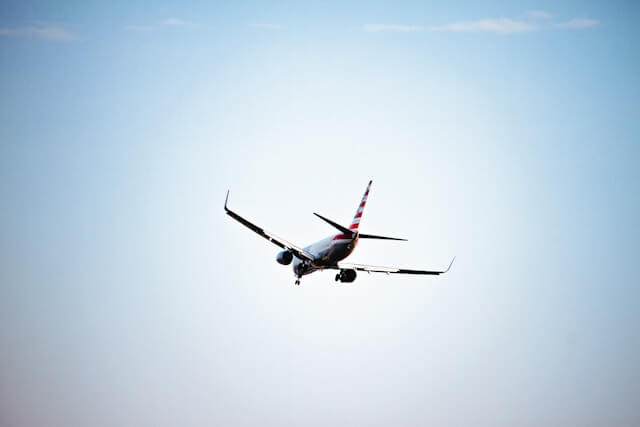
Photo by Denisse Leon on Unsplash
Why use “Mayday”
“Mayday” is an internationally recognized radio distress signal, mainly used in aviation and maritime, when life is threatened. This word is derived from the French “m’aider”, which means “help me”.
Its usage dates back to 1923, when it was created by British radio operator Frederick Stanley Mockford, who worked at Croydon Airport in London. At that time, flights mainly operated between London and Paris, so this French term was chosen to facilitate understanding among all pilots and ground staff.
| Reason | Explanation |
|---|---|
| Clarity | In emergencies, pilots need to ensure that the signal is not misunderstood or ignored. Calling “Mayday” three times in a row (“Mayday, Mayday, Mayday”) can reduce the risk of mishearing in noisy environments and clearly distinguish the distress signal from other communications |
| Official Standards | According to the 1927 Washington International Telegraph Convention, “Mayday” was officially defined as a distress call signal. This regulation requires that the distress signal must be called three times in a row to avoid confusion |
| Emergencies | When pilots face critical situations such as engine failure or cabin depressurization, using “Mayday” is a standard procedure to quickly obtain help |
“Mayday” is an important and effective distress signal, aimed at ensuring that the need for help can be communicated quickly and clearly in critical moments.
What is the difference between Mayday and SOS
"Mayday" and "SOS" are two different distress signals, each with clear distinctions in their usage scenarios and meanings.
| Feature | Mayday | SOS |
|---|---|---|
| Definition | An internationally recognized radio distress signal indicating an emergency situation where life is threatened | A Morse code distress signal indicating danger or the need for urgent assistance |
| Origin | Derived from the French “m’aider”, meaning “help me”, introduced in 1923 | Established by the German government in 1905, representing three short signals, three long signals, and three short signals (··· — ···) in Morse code |
| Usage Scenario | Mainly used in aviation and maritime, when facing a crisis where self-rescue is impossible | Primarily used for maritime distress, especially in telegraph communication |
| Sending Method | Communicated through radio verbal calls, must call “Mayday” three times in a row | Sent through Morse code, usually not conveyed verbally |
| Audio Recognition | Easily recognizable in noisy environments, suitable for verbal communication | Easily identifiable in Morse code, but verbal communication is not as clear as “Mayday” |
| Legal Status | Issuing a false distress signal is usually considered a criminal offense | Sending a false SOS may also violate the law |
"Mayday" and "SOS" are applicable in different situations and needs, and the choice of which signal to use typically depends on the specific circumstances and communication methods.