
Every time you visit a gas station and watch the meter tick upward, you probably think oil is only about driving and refueling.
But in reality, this dark, gooey “Earth crude” affects your life far more than you ever imagined.
The sneakers on your feet, the shampoo you wash your hair with, and even the painkiller you pop when you have a cold — all of these seemingly unrelated things are actually made from petroleum.
Petroleum is essentially a pot of “concentrated broth” that Earth spent hundreds of millions of years brewing for humanity.
The “Broth-Making” Craft Inside Refineries: Distillation and Cracking
How can a barrel of dark, viscous liquid transform into so many different things? It all comes down to two core technologies inside oil refineries.
1. Fractional Distillation (Physical Change): Sorting by Boiling Point
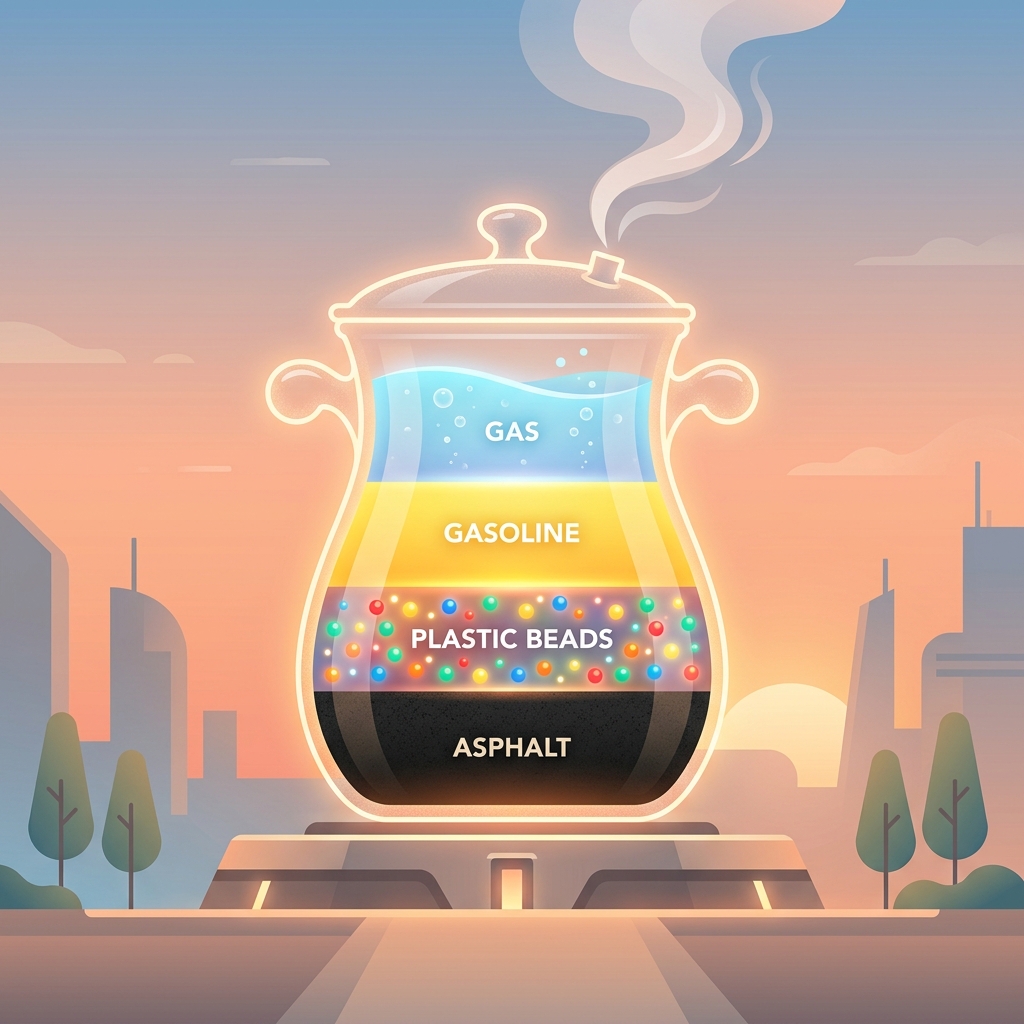
Think of oil refining as making a rich broth. Engineers feed crude oil into a massive “distillation tower” and heat it up, using the fact that different substances have different boiling points to separate them layer by layer.
| Position | Description |
|---|---|
| Top of the tower (light fractions) | These have the lowest boiling points and rise as gas first. Once collected, they become the liquefied petroleum gas (LPG) we use for cooking. |
| Middle of the tower (medium fractions) | Next come gasoline, jet fuel, and diesel — the lifelines that keep global logistics running. |
| Bottom of the tower (heavy fractions) | The leftover sticky, unwanted “dregs” eventually become the asphalt used to pave roads. |
2. Cracking (Chemical Change): Cutting Big Molecules into Small Building Blocks
Sometimes there’s too much heavy oil that nobody wants, while light gasoline is in short supply. Scientists use extreme heat to break apart “long-chain” large molecules into “short-chain” small ones. It’s like cutting an overly long, useless thick rope into several shorter, useful pieces.
These tiny molecules (like ethylene and benzene) are the “building blocks” of the petrochemical industry, used to synthesize all kinds of plastics and chemical raw materials.
We Live in a “Petrochemical World”
If oil suddenly vanished tomorrow, what would life look like? It would be far more than just “no more driving.”
| Area of Life | Now (With Oil) | Future (Without Oil) | Specific Impacts and Pain Points |
|---|---|---|---|
| Transportation | Gasoline cars, budget airlines, highways (paved with asphalt). | Electric vehicles, high-speed rail, sailboats; planes grounded; concrete roads. | International travel becomes a luxury; roads become rough and extremely expensive to maintain. |
| Food | Cheap fertilizers (ammonia), pesticides, plastic packaging (straws, takeout containers, drink cups). | Organic fertilizer (manure), package-free stores, only locally grown seasonal food. | Food production plummets, prices skyrocket — you might never buy cheap imported fruit again. |
| Clothing | Moisture-wicking shirts, thermal wear, cheap fast fashion (polyester). | Cotton, linen, silk, wool, and other natural fibers. | Clothes become expensive and “slow to dry”; athletic wear loses its stretch and functionality. |
| Healthcare | Disposable syringes, blood bags, breathing tubes, most pharmaceutical raw materials, contact lenses. | Glass syringes (requiring repeated sterilization), metal instruments, herbal medicine. | Healthcare costs soar, surgical risks increase — because sterile disposable supplies are all gone. |
| Home & Electronics | Phone cases, keyboard keys, wire insulation, shampoo, cleaning products. | Wooden or metal casings, soap (natural fats), cardboard boxes. | All electronics become heavier and more expensive — and may even be impossible to miniaturize due to lack of insulating coatings. |
Oil underpins modern civilization’s “low cost” and “high convenience.”
Our current convenient lifestyle is fundamentally built on consuming the essence the Earth accumulated over hundreds of millions of years. The disappearance of oil wouldn’t drive us to extinction, but life would become much slower, much more expensive, and much more localized.
What Would Life Be Like Without Oil?
It’s Not Gasoline That Disappears — It’s Your Dinner and Your Life
Most people instinctively think of transportation, but the first thing actually hit when oil vanishes is survival itself.
The reason we can feed 8 billion people today is largely thanks to petroleum-derived fertilizers (ammonia). Without oil-based fertilizers, agricultural yields would be cut in half overnight. You can’t solve that by planting a few more trees — it means facing severe famine.
Healthcare would be an even bigger disaster zone. Walk into any hospital and you’ll find that 90% of the equipment is tied to petroleum: from disposable syringes, breathing tubes, and blood bags to most pharmaceutical raw materials (such as benzene-ring-based drugs). Without oil, we’d lose sterile disposable supplies, healthcare costs would skyrocket, and surgical risks would increase dramatically.
The End of Logistics and the Collapse of “Disposable Civilization”
Next to suffer would be the “convenience” we’ve grown accustomed to. Those of us used to next-day delivery would find that without cheap diesel trucks and massive amounts of plastic packaging (bubble wrap, poly mailers), shipping costs might exceed the price of the goods themselves.
The straws, takeout containers, and drink cups you casually toss away, even the contact lens solution bottles you use every day — they’re all petroleum products.
When these cheap plastics vanish, humanity would be forced back to the old-fashioned lifestyle of “fix it again, wash it again.” While this would be great for the environment, for those of us accustomed to “use it and toss it,” it would be an extremely painful adjustment period.
The Future Beyond Oil: From “Extraction” to “Circulation”
Since oil will eventually run out, what do we do?
While we technically can make “bioplastics” from corn and sugarcane, or directly capture CO₂ from the atmosphere to “synthesize” raw materials, the current challenges lie in cost and energy density.
The reason oil is so hard to replace is that it’s energy that Earth has already “concentrated” for us, capable of producing raw materials for countless everyday products at extremely low cost.
Artificially replicating this process requires enormous amounts of electricity and is prohibitively expensive.
“Downcycling” vs. “Chemical Recycling”
You might think, “But we’re already recycling!” The honest truth is that most current plastic bottle recycling is “downcycling.” With each recycling cycle, the plastic becomes more brittle, yellows, and eventually still ends up in a landfill.
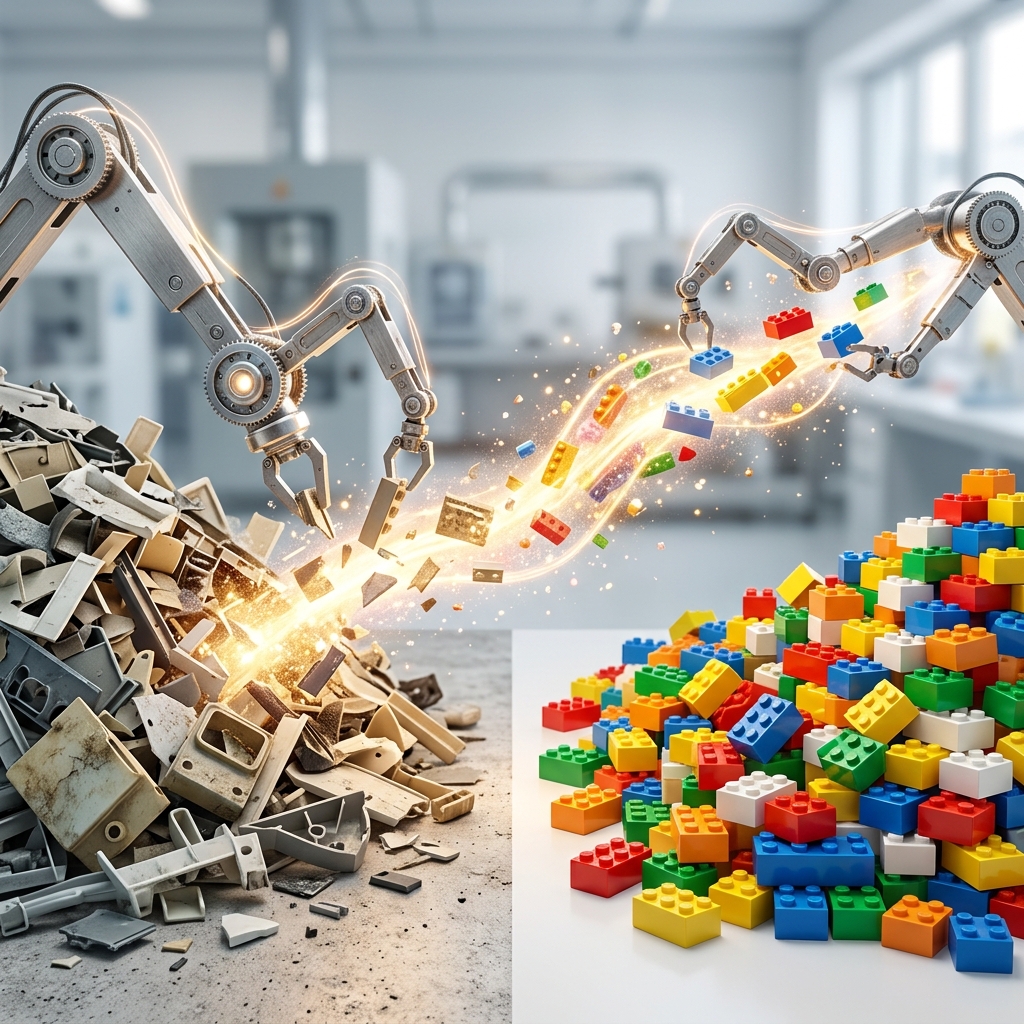
The hope for the future lies in “chemical recycling.” It’s like disassembling a completed LEGO castle back into individual original bricks, allowing old plastic to be restored to 100% brand-new quality — achieving true infinite recycling.
Conclusion: Redefining “Convenience”
Oil is far more than fuel — it’s the cornerstone of everything in our modern lives. Understanding its versatility isn’t meant to encourage reckless consumption, but to teach us to cherish it.
The solution for the future doesn’t lie in finding the next inexhaustible oil field, but in driving a “design for recycling” materials revolution. Perhaps one day, we can give every product a new life through circular systems, freeing ourselves from dependence on that dark substance deep underground.