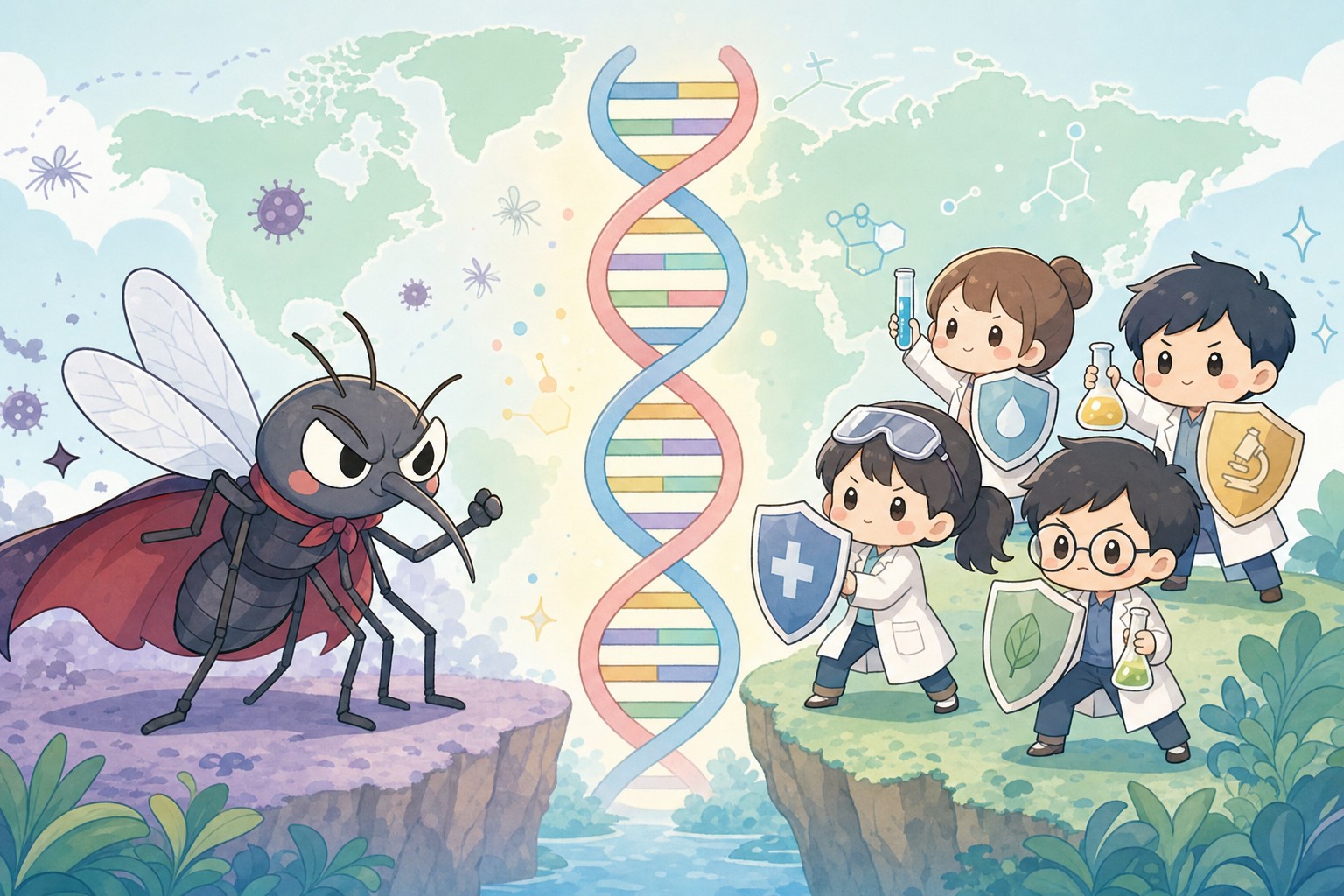
What is the animal that kills the most humans on Earth?
It’s not lions, tigers, venomous snakes, or sharks. According to the World Health Organization’s 2023 statistics, the answer is a tiny flying insect that claims over 700,000 lives every year.
Add up all the deaths caused by venomous snakes, sharks, lions, crocodiles, and even human warfare and homicide combined — they still can’t match this creature.
It is the mosquito.
Mosquitoes Aren’t Just Annoying — They’re Deadly “Disease Couriers”
The terror of mosquitoes lies not in the bite itself, but in the pathogens they carry. Mosquitoes are the most efficient disease vectors on Earth, having repeatedly altered the course of human civilization.
Malaria: 249 Million Infections Per Year
Malaria is the number one killer among mosquito-borne diseases. In 2022, approximately 249 million people were infected globally, with over 600,000 deaths .
The transmission mechanism of malaria is remarkably cunning:
- A malaria-carrying mosquito bites a malaria patient
- The
Plasmodium parasiteenters the mosquito’s gut and begins to reproduce - After reproduction is complete, the parasite precisely migrates to the mosquito’s salivary glands
- The next time the mosquito bites another person, the parasite is injected along with the saliva
The Plasmodium parasite isn’t just hitchhiking on mosquitoes — it’s exploiting the mosquito’s blood-feeding mechanism as a springboard.
Dengue Fever: Once Infected, Infectious for Life
Dengue fever is primarily transmitted by the Aedes aegypti and Aedes albopictus mosquitoes, with a transmission mechanism similar to malaria.
What’s even more terrifying:
Once a mosquito carries the dengue virus, it remains infectious for its entire lifetime.
The number of dengue infections worldwide reaches 100 to 400 million people annually.
Overview of Mosquito-Borne Diseases
| Disease | Primary Mosquito Vector | Key Data |
|---|---|---|
| Malaria | Anopheles mosquito | 249 million infections globally in 2022, over 600,000 deaths |
| Dengue Fever | Aedes aegypti, Aedes albopictus | 100 to 400 million infections annually worldwide |
| Yellow Fever | Aedes aegypti | Repeatedly impacted Panama Canal construction and the Spanish-American War |
| Zika Virus | Aedes mosquitoes | Can cause microcephaly in newborns |
| Japanese Encephalitis | Culex mosquitoes | Major mosquito-borne disease in Asian regions |
Mosquitoes Have Rewritten Human History
The diseases spread by mosquitoes are more than just public health statistics. They have repeatedly changed the maps of world powers at critical moments.
The construction of the Panama Canal is the most famous example. France pioneered the excavation of the Panama Canal in the late 19th century, but the rampant spread of yellow fever and malaria killed massive numbers of workers, forcing them to abandon the project.
The United States later took over and only completed this engineering marvel of the century after controlling mosquito-borne diseases.
Yellow fever and malaria spread by mosquitoes have repeatedly altered the territorial expansion of world powers.
Even today, the English name for malaria, Malaria, still carries traces of humanity’s misunderstanding of its cause. The word comes from the Italian mala aria, meaning “bad air.”
In an era when humans didn’t yet know mosquitoes were the culprit, ancient Romans believed people living near swamps got sick because of the “miasma” emanating from the marshes.
Humanity’s First Counterattack: The Rise and Fall of DDT
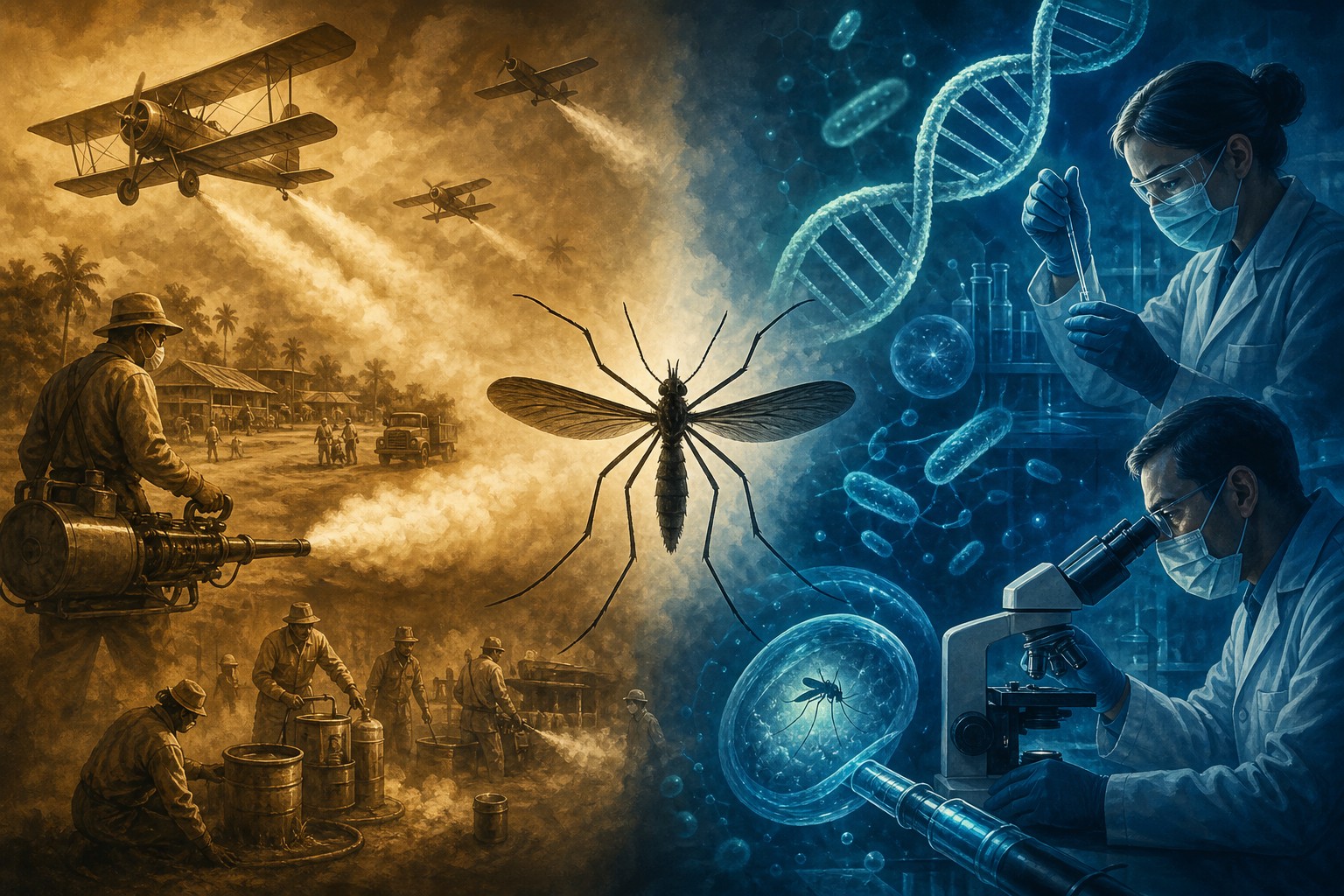
Facing the deadly threat posed by mosquitoes, humans once believed they had found the ultimate weapon.
In 1939, scientists discovered that the compound DDT had extraordinary insecticidal properties. During World War II, Allied forces facing the severe threat of mosquito-transmitted malaria on battlefields immediately began large-scale spraying of DDT on swamp waters and soldiers’ clothing.
The results were astonishingly effective. After the war, DDT was sprayed on an even larger scale across global malaria zones, and malaria rates in many countries plummeted dramatically . Swiss chemist Paul Hermann Müller, who discovered DDT’s insecticidal properties, was awarded the 1948 Nobel Prize in Medicine for this achievement.
But the success was short-lived. Mosquitoes evolved resistance to DDT, and DDT caused ecological toxicity, ultimately harming humanity’s own living environment.
| Problem | Description |
|---|---|
| Resistance | Mosquitoes evolved resistance to DDT within just a few years |
| Ecological toxicity | DDT degrades extremely slowly in nature, accumulating layer by layer through the food chain, building up massive toxin levels in apex predators |
| Environmental awakening | In 1962, American marine biologist Rachel Carson published Silent Spring, igniting global environmental awareness |
| Global ban | DDT was ultimately banned internationally, permitted only in extreme circumstances |
Humanity won a battle with chemical weapons but lost the ecological war.
The Dawn of Modern Biotechnology: Not Poison, but “Inside Agents”
After the collapse of chemical defenses, modern science turned to more sophisticated genetic and biological intervention strategies.
Wolbachia: Planting an “Inside Agent” in Mosquitoes
Wolbachia is a naturally occurring bacterium. Scientists discovered that when this bacterium is introduced into Aedes aegypti mosquitoes, it competes with dengue and Zika viruses for nutrients , stripping mosquitoes of their ability to transmit diseases.
An international organization called the “World Mosquito Program” conducted a large-scale experiment in Yogyakarta, Indonesia, releasing massive numbers of Wolbachia-infected mosquitoes.
The experimental results showed:
| Metric | Change |
|---|---|
| Dengue incidence rate | Decreased by 77% |
| Hospitalization rate | Significantly decreased |
Instead of killing mosquitoes, make them lose their ability to serve as “disease couriers.”
Self-Limiting Genes: Making Mosquito Populations Collapse From Within
A company called Oxitec took a different approach: implanting a self-limiting gene into the genes of male Aedes aegypti mosquitoes.
This gene causes female offspring from mating with wild females to die before reaching maturity , while male offspring survive normally and continue passing on this “only males survive” gene.
After several generations, female mosquitoes in the area become increasingly scarce, and the entire mosquito population collapses like dominoes.
Gene Drive: The “Ultimate Weapon” That Could Eliminate an Entire Species
Gene Drive is currently the most powerful and most unsettling technology.
Scientists use gene editing tools to directly break Mendel’s laws of inheritance , forcing a specific gene (such as “female infertility”) to be inherited within a population at nearly 100% probability .
In other words, once this gene is introduced into a mosquito population, it spreads uncontrollably like a virus, crossing national borders with mosquito migration, and theoretically could eliminate an entire species in a short time .
Are We Truly Ready to Eliminate an Entire Species?
Despite possessing these powerful biological weapons, gene drive technology remains locked in the highest-security laboratories to this day — no one dares release it into the wild.
Because no one can predict:
What kind of ecological chain reactions would occur once we release technology capable of altering an entire species into nature.
The Wolbachia bacteria and Oxitec’s genetic modification technology mentioned earlier are also only being used on a very limited scale in select regions, due to funding and ethical concerns.
| Technology | Advantage | Risks and Limitations |
|---|---|---|
| Wolbachia | Doesn’t kill mosquitoes, only removes disease transmission ability | Requires continuous release of infected mosquitoes, enormous funding |
| Self-limiting genes (Oxitec) | Can collapse local populations | Effects are geographically limited, requires repeated releases |
| Gene Drive | Theoretically could eliminate an entire species | Ecological chain reactions are unpredictable , massive ethical controversy |
Facing a species with 130 million years of history, humanity has already picked up the “hand of God” capable of rewriting genes, yet the potential ecological upheaval from eliminating a species still fills us with awe and caution.
When we truly possess the power to completely erase a species, are we really prepared to bear the consequences that follow?