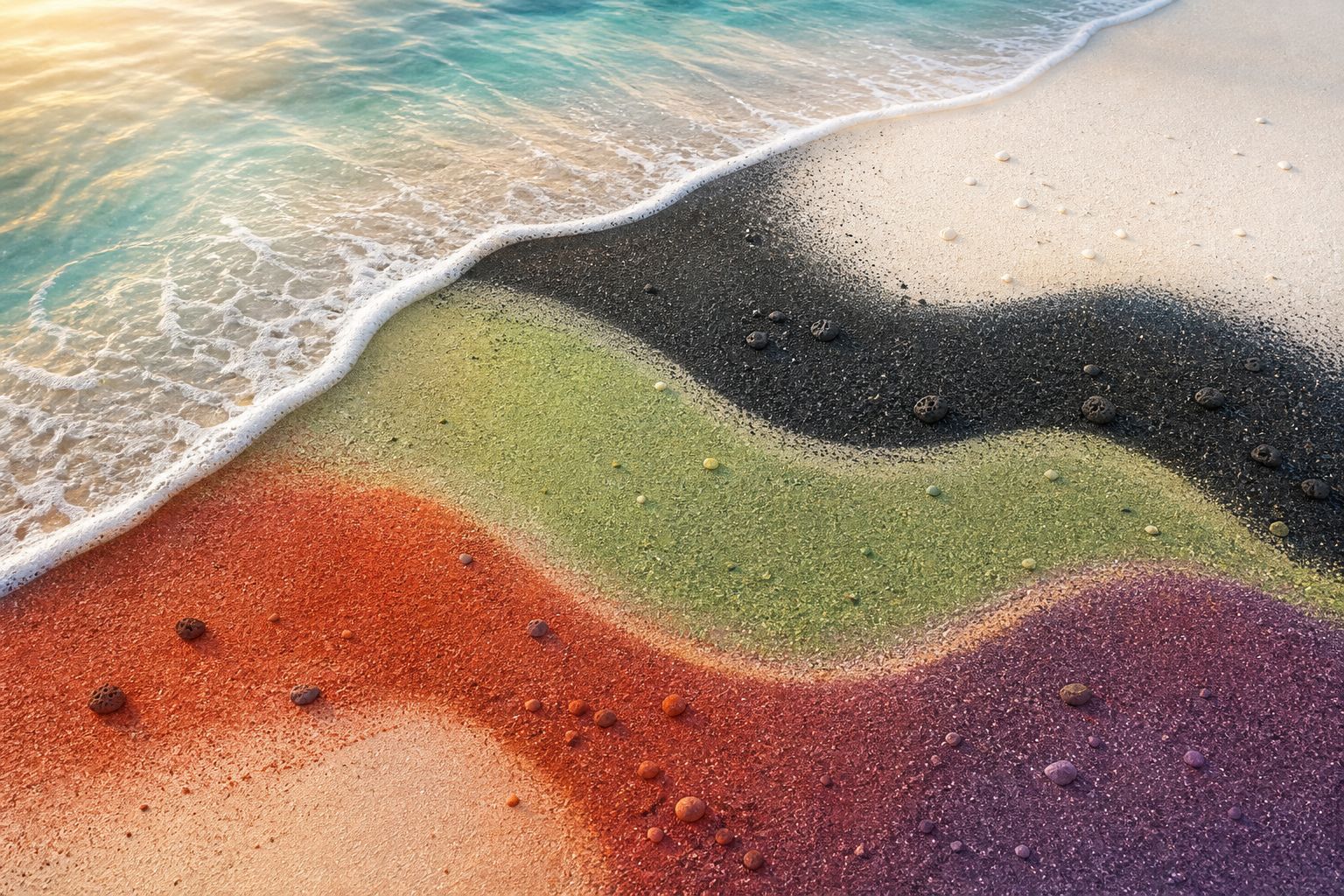
Every time you go to the beach, have you ever wondered why some beach sand is as fine and white as flour, while others are rough black sand or stones?
And not just black and white, there are actually green, purple, and red beaches in the world.
These colors are not artificially dyed; the color and texture of each grain of sand hide a geological story written by nature over tens of millions of years.
How Is Sand Texture Determined?
You can think of nature as a giant "stone crusher" combined with an "automatic sorter." The texture of sand is mainly determined by two factors:
Transport Distance
When stones are washed from mountains to the sea by river water, the longer the distance, the more finely ground they become.
| Environment | Sand Type |
|---|---|
| Long-distance transport | Fine sand |
| Short-distance transport | Coarse sand or gravel |
Wave Power
Big waves will wash away fine sand, leaving only heavy coarse sand.
| Environment | Sand Type |
|---|---|
| Calm bay | Fine sand beach |
| Strong winds and high waves | Coarse sand beach |
How to Find Your Ideal Beach?
| Goal Scenario | Beach | Natural Conditions |
|---|---|---|
| Lying down and sunbathing | Fine sand beach | Bay with flat terrain and gentle waves |
| Listening to white noise of rolling waves | Gravel beach | Steep terrain, coastline directly facing the open ocean |
For example, Qixingtan in Hualien, Taiwan is a typical coarse gravel beach because the Central Mountain Range is very close to the sea. The stones reach the beach before being ground down, and combined with the strong waves of the Pacific Ocean, they can only be ground into round pebbles.
On the other hand, the beaches on the west coast of Taiwan are much finer because the rivers flow hundreds of kilometers from the mountains to the sea, grinding the stones into powdery fine sand long ago.
Sand Is Not Just Ground Stones? Where Do the Colors Come From?
Many people think sand is just "smaller stones," but in fact, the composition of sand determines its color, and the composition of sand in the world is much more diverse than you think.
| Beach Color | Main Composition | How It Is Formed |
|---|---|---|
| White | Coral, shell fragments, calcium carbonate | Marine organism remains are crushed by waves, accumulating into pure white beaches. |
| Black | Volcanic lava (basalt) | High-temperature lava from volcanic eruptions cools rapidly in contact with seawater, shattering into tiny black particles. |
| Red | Iron ore deposits, red volcanic rocks | Rocks containing iron collapse under long-term ocean erosion. |
| Green | Olivine | Green minerals from volcanic activity are washed ashore and ground into sand grains. |
| Purple | Manganese Garnet | Purple mineral veins in coastal rock layers are continuously eroded and washed down by wind and waves. |
| Golden Yellow | Quartz, feldspar | Mixed mineral sand washed by rivers; quartz is highly resistant to weathering and appears golden. |
Every beach is a "composition sheet" of nature. Each grain of sand under your feet tells you what this coastline has experienced over millions of years.
What Is the Difference Between White and Black Sand Beaches?
These two are the most common "non-golden" beaches in the world, but their backgrounds are completely opposite.
White Sand Beaches: Remains of Marine Life
The sand on white beaches is mainly the product of coral and shells crushed by waves. Since the main component is calcium carbonate, it appears pure white.
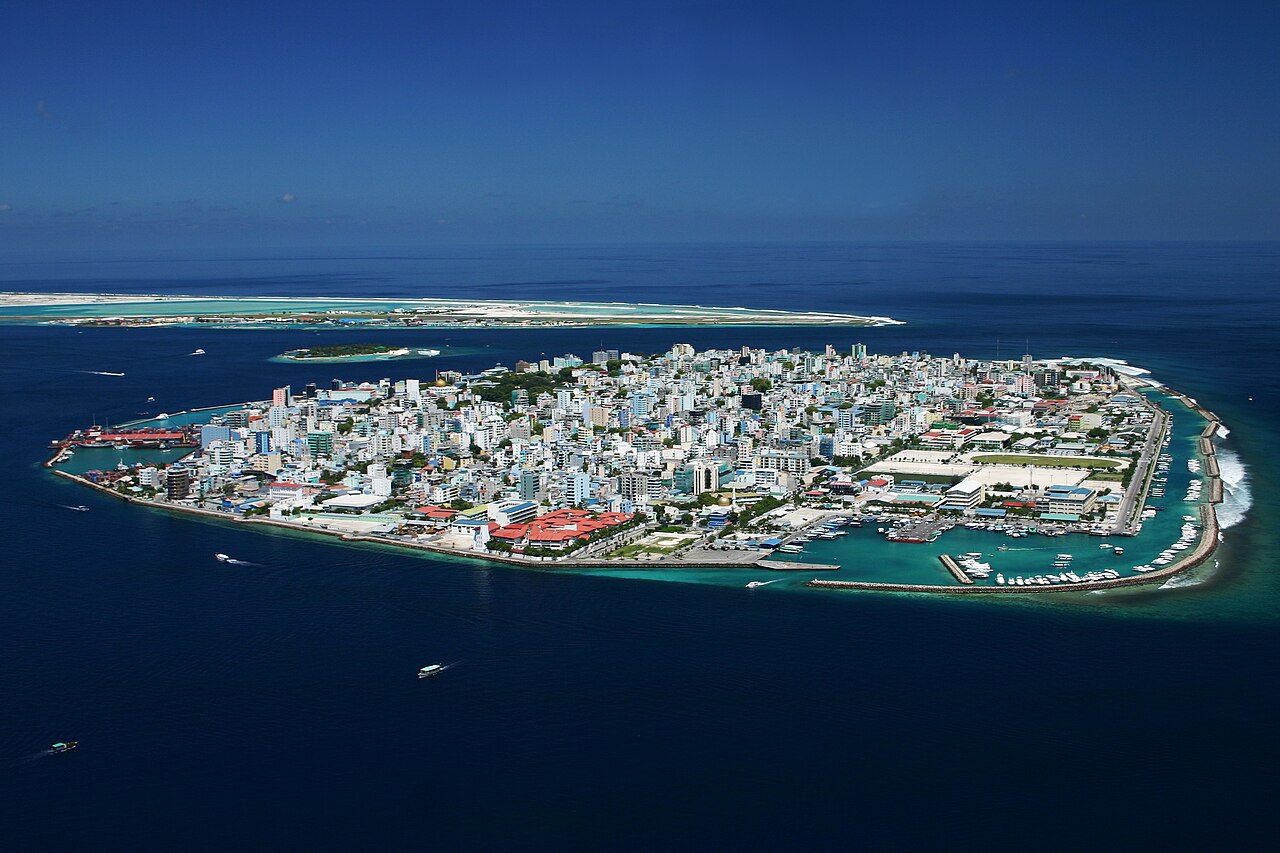
White sand beaches are mostly located in tropical and subtropical waters because coral reef ecosystems can only breed in large quantities in warm waters.
Famous white sand beaches include the Maldives, Fiji, and Siesta Key Beach in Sarasota, USA, where the sand contains 99% pure quartz, keeping it cool even in the hottest weather.
Black Sand Beaches: Cooling Fragments of Volcanic Lava
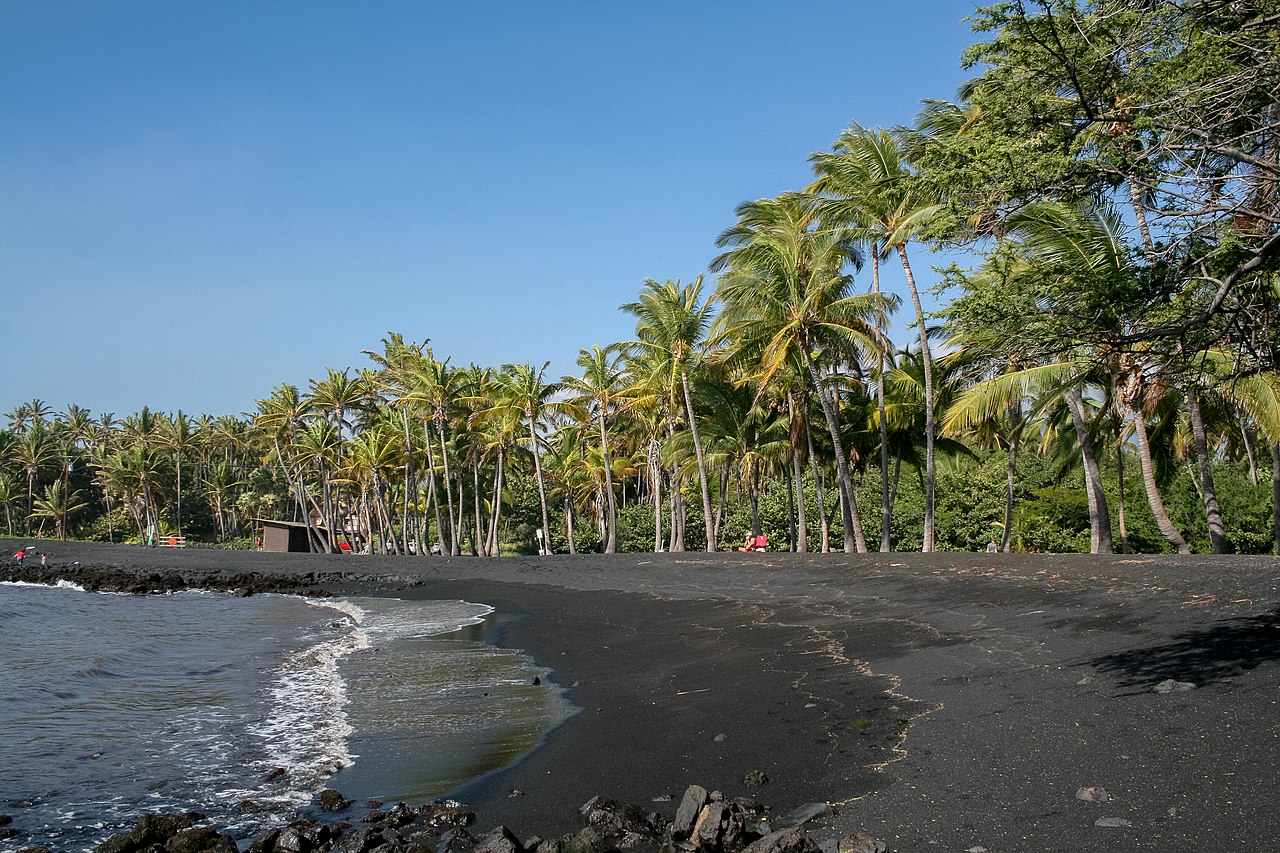
The formation of black sand beaches is entirely a "duel between fire and water."
When a volcano erupts, high-temperature lava meets freezing seawater and instantly cools and shatters, forming a large amount of black tiny particles. These particles are brittle and easily weathered into fine black sand.
Famous black sand beaches include Hawaii’s Punaluʻu Black Sand Beach, volcanic lava beaches in Costa Rica, and the alien-like black coastline of Iceland.
Where Are the Green, Purple, and Red Beaches?
In addition to black and white, there are some extremely rare colorful beaches in the world, each of which is a miracle under coincidental geological conditions.
Green Sand Beach: Volcanic Goddess’s Olivine Tears
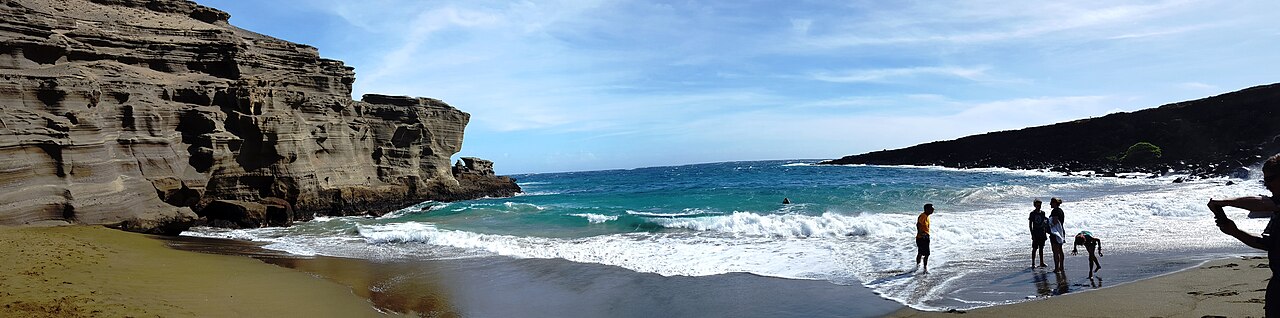
There are only a few green sand beaches in the world, the most famous of which is Papakōlea Beach in Hawaii.
The reason why the sand is green is that the local rock layers are rich in green olivine. Legend has it that these olivines are the tears of Pele, the volcanic goddess, and if anyone takes the sand away without permission, they will face the goddess’s wrath.
Seen from afar, the entire beach looks like a green jade set between the sea and the sky.
Another green sand beach is Talofofo Beach in Guam, where olivine is pushed ashore by submarine volcanic activity and ground into fine sand by seawater, looking like a matcha-colored coastline.
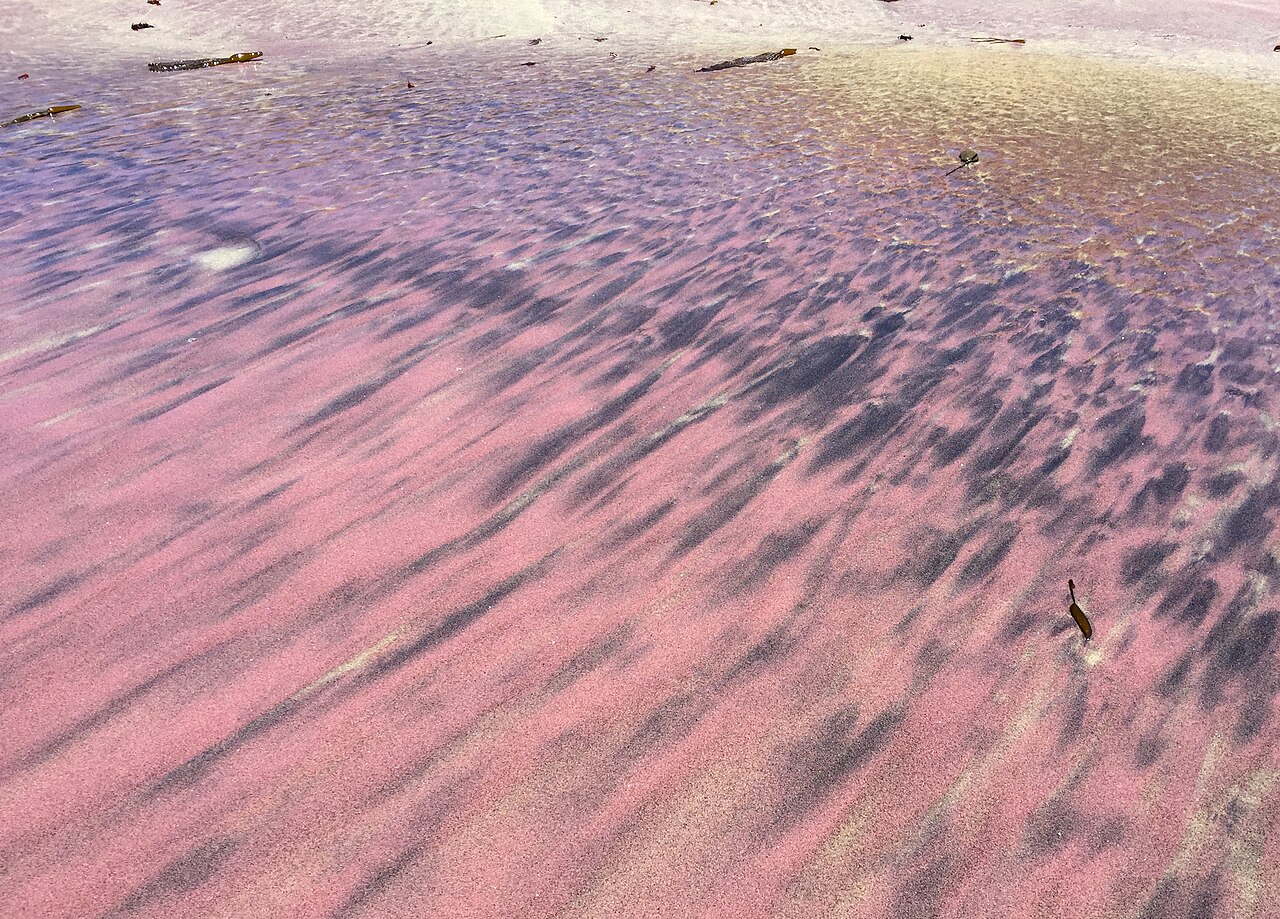
Purple Sand Beach: Purple Flash of Manganese Garnet in Sunset
California’s Pfeiffer Beach is adjacent to the famous "California State Route 1."
For millions of years, the purple manganese garnet mineral veins in the coastal rock layers have been eroded and washed down by wind and waves, colliding and grinding in the sea, eventually forming a very fine purple sand beach.
Under the afterglow of the sunset, the purple sand grains shimmer, making it a unique sight in the world.
Red Sand Beach: Masterpiece of Iron Ore and Red Cliffs
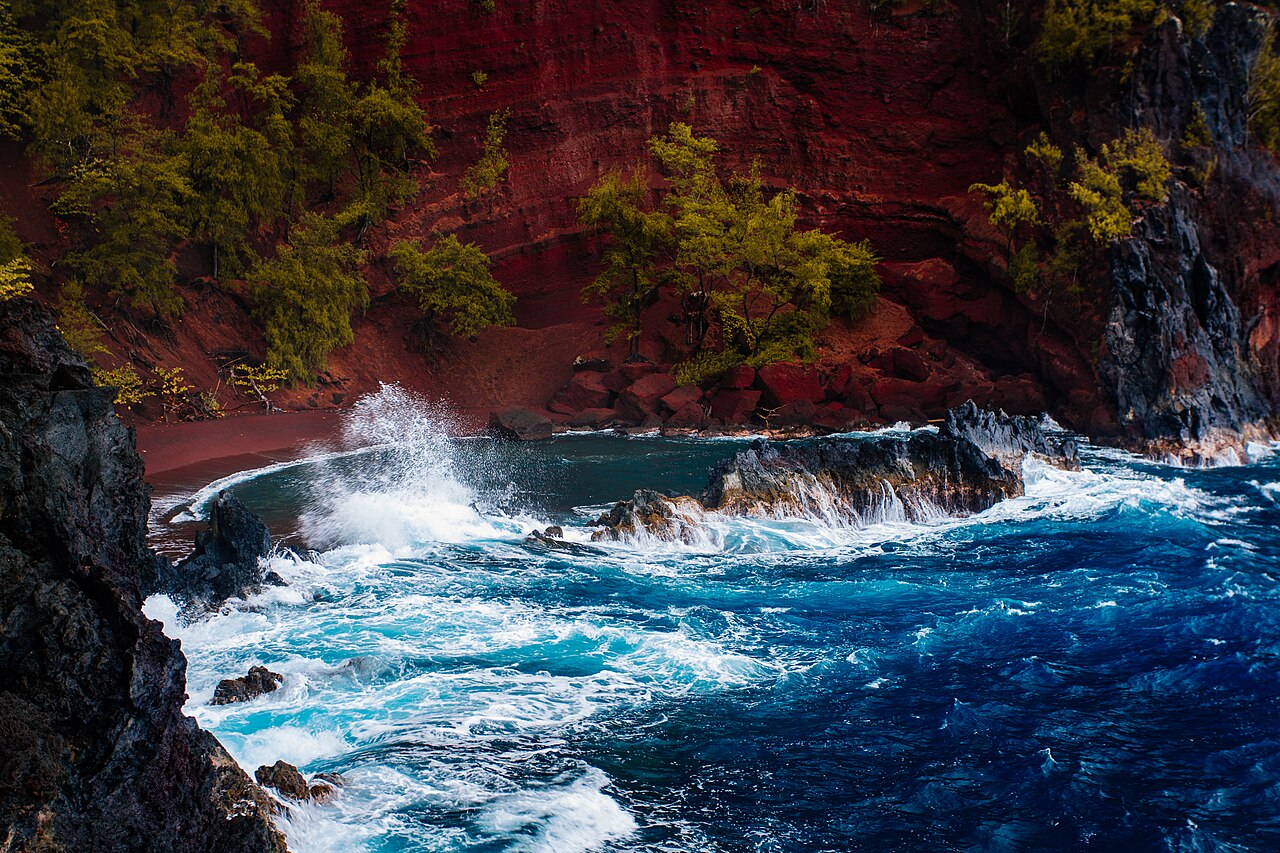
Red sand beaches are formed due to the long-term erosion of volcanic rocks and iron deposits by the ocean.
| Location | Features |
|---|---|
Kokkini Red Beach, Greece | Surrounded by red lava and red cliffs, paired with blue-roofed buildings, creating a grand sense of awe. |
Kaihalulu Red Beach, Hawaii | Hidden at the end of the "Road to Hana," surrounded by towering red cliffs. |
Prince Edward Island, Canada | Rich in rust in the soil, amber red beach formed by soft sandstone sedimentation. |
Shell Beach: Large Accumulation of Marine Organism Remains
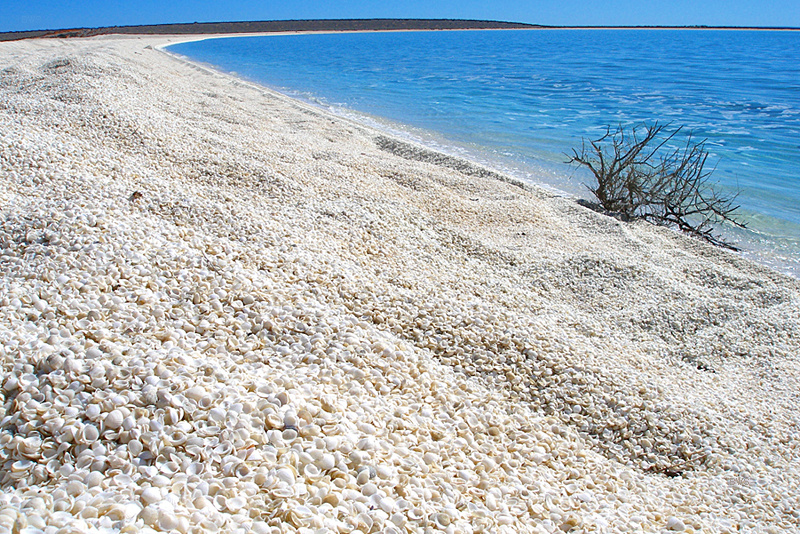
There is also a special type of beach that is not composed of minerals, but rather an entire beach piled up with shell fragments.
Shell Beach in Australia and Jeffreys Bay in South Africa are the most famous shell beaches.
Due to their special geographical location, few predators, and powerful currents and hurricanes continuously bringing in massive shells, shell layers up to several meters thick have accumulated over time.
Strolling along the coast, every step you take is on delicate shell fragments, a texture completely different from ordinary beaches.
Are These Colorful Beaches Disappearing?
These colorful beaches, crafted by nature over tens of millions of years, are actually extremely fragile.
Waves erode them every day, global warming causes sea levels to rise, and tourist foot traffic and sand theft are causing many special beaches to shrink year by year.
In some places, legends even say that "taking sand will bring a curse," reminding tourists in this way
not to destroy these non-renewable geological wonders.
Hawaii’s green sand beach is currently designated as a conservation area; tourists must walk several kilometers to reach it, and it is strictly forbidden to take any sand away.
The purpose of these measures is simple:
to allow future generations to see these natural palettes with their own eyes.
Next time you go to the beach, you might as well look down at the sand under your feet.
Those seemingly ordinary grains of sand might be coral fragments, volcanic remnants, or some rare mineral ground over millions of years.
Every beach is a unique gift from nature.