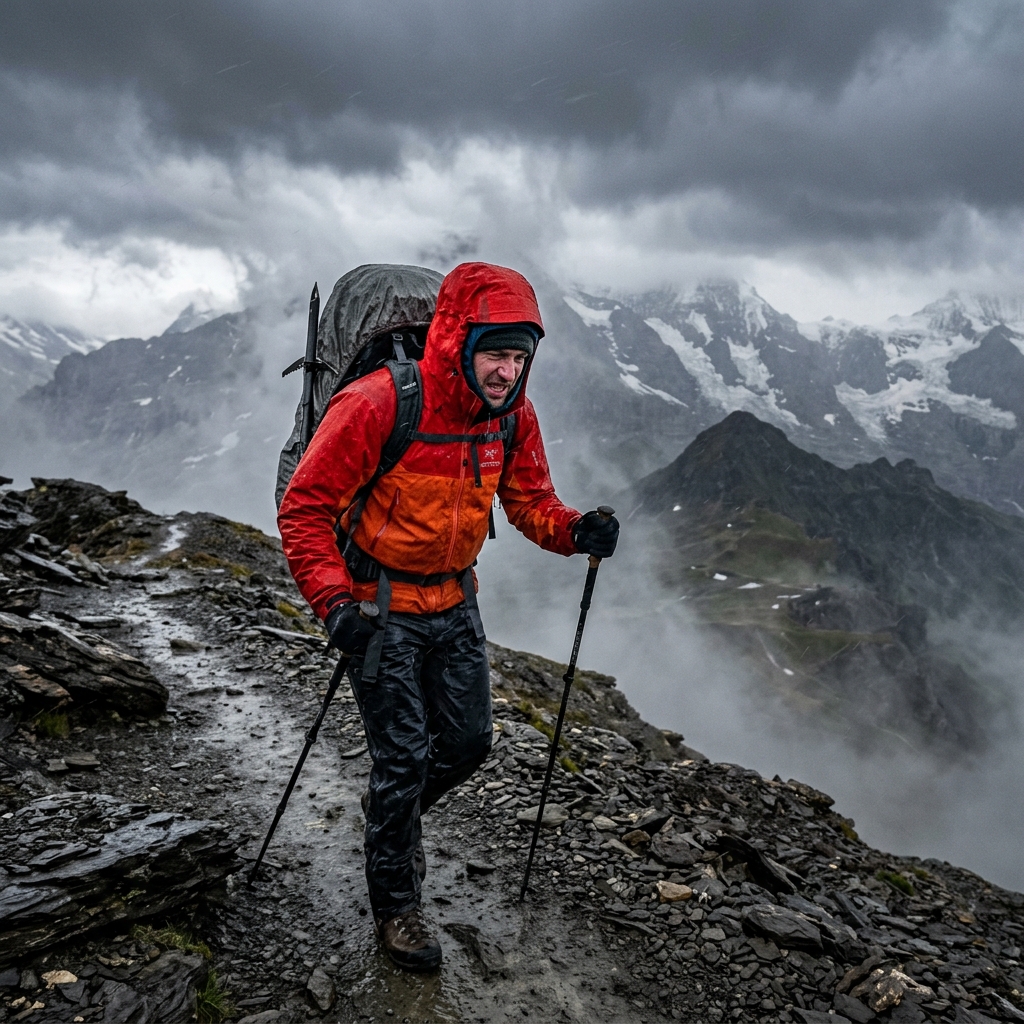
Our body is like a five-star hotel with 24/7 temperature control. Whether it’s blazing sunshine or wind and rain outside, the hotel’s central air conditioning (the brain’s thermoregulation center) works hard to maintain our core temperature at around 37°C, keeping all the organ guests functioning properly.
But in the high mountains, environmental changes are like someone mounting giant fans on the hotel walls and spraying ice water. Without proper protection, this central air conditioning system will quickly face a breakdown crisis.
Let’s talk about two “temperature thieves” that every mountaineer must know: wind chill effect and water chill effect.
The “Fake Sun” on High Mountains: Wind Chill Is Stealing Your Body Heat
Have you ever experienced this? On the mountain, the sun is shining brightly, the thermometer reads 10°C, but a gust of wind hits you and you’re shivering uncontrollably. This is what hikers call the “fake sun.”
Why Does Wind Make You Colder?
Our skin surface is actually wrapped in a thin layer of warm air, like an “invisible jacket.”
When wind speed increases, this warm air layer is quickly blown away, forcing the body to consume more energy to reheat the air near the skin — this is known as “convective heat loss.”
According to calculations, at an air temperature of 10°C, if the wind speed reaches 32 kilometers per hour, the “feels-like temperature” can instantly drop to around 0°C!
The faster the wind, the rate of body heat loss grows exponentially.
The Powerful Heat Vacuum: The Deadly Water Chill Effect
If wind is a thief slowly stealing your heat, then “water” is a powerful vacuum cleaner for body heat.
Water conducts heat approximately 25 times faster than air.
This means when your clothing is soaked by rain, sweat, or mist, the rate of body temperature loss is dozens of times faster than in dry conditions. This is why the “Rule of Threes” circulates in the mountaineering community:
- A person can survive 3 weeks without food.
- A person can survive 3 days without water.
- But severe hypothermia can be fatal in just 3 hours.
When your body is soaking wet and hit by strong winds, the wind chill and water chill effects strike together, and the speed of hypothermia can exceed your imagination.
Why Does Hypothermia Occur More Often in “Non-Snow Seasons”?
In mountain areas, hypothermia tragedies most commonly happen not in winter, but in spring, summer, and autumn.
Because in deep winter or snow season, everyone has “mental preparedness” and brings very thorough cold-weather gear.
But in the pleasant spring, summer, and autumn seasons, hikers tend to overlook the risks of sudden weather changes and heavy rain.
Once caught in an afternoon thunderstorm that drenches your entire body, with temperatures dropping sharply due to altitude gain, tragedy often strikes at that moment.
Temperature drops by
0.6°Cfor every100 metersof altitude gain
How to Tell If You’re Already Hypothermic?
On the mountain, don’t rely on a thermometer (regular thermometers can’t measure core body temperatures below 35°C). Use the “Swiss Hypothermia Staging System” to observe physical symptoms:
| Stage | Description |
|---|---|
| Cold (Normal Self-Rescue) | Shivering, conscious, can take care of yourself. |
| Mild Hypothermia | Shivering, conscious, but starting to be unable to take care of yourself. |
| Severe Hypothermia | Stopped shivering, confused, unable to walk. |
Pay Special Attention: If your companion was shivering from cold and suddenly “stops shivering” with a blank stare, this is absolutely not them adapting to the environment — their body has lost the energy to produce heat and has entered an extremely dangerous state!
Life-Saving Strategy: Protecting 37°C with Layered Dressing
To fight these two temperature thieves, the most effective defense is creating a stable “microclimate” through proper gear.
1. The Classic Layering System (Layering)
| Layer | Purpose | Description |
|---|---|---|
| Base Layer | Moisture-Wicking | Choose wool or synthetic fibers. Never wear cotton clothing or jeans, because cotton retains moisture and is extremely slow to dry, turning into a heavy, ice-cold “death garment.” |
| Mid Layer | Insulation | Use fleece or down to trap air. Air is the best insulator, helping you retain core body heat. |
| Outer Layer | Wind & Waterproof | A high-quality rain jacket is your last line of defense, blocking the wind chill effect and keeping out rain (water chill effect). |
2. Temperature Management While Hiking
Don’t overdress during hiking and cause “excessive sweating.” Wet base layers will trigger the water chill effect, causing your body temperature to drop rapidly when you stop to rest.
Maintaining a state of “slightly cool but not shivering” is optimal.
3. “Waterproof Packing” for Spare Clothing
No matter how many times you’ve hiked, always prepare a set of spare dry clothing, packed in a waterproof bag or plastic bag.
This set of dry clothes may not be needed most of the time, but it can save your life at a critical moment.
Conclusion: Respect Nature — Temperature Is Just a Reference
When hiking, the number on the thermometer is just a reference. The real challenge lies in wind speed and humidity.
Always keep your body dry, add a wind-blocking layer when needed, and watch your companions’ condition — this way you can challenge the peaks while safely returning to your warm home.
We cannot control nature’s environmental air conditioning, but the gear in our hands and the knowledge in our heads are the most important fuses protecting our lives.