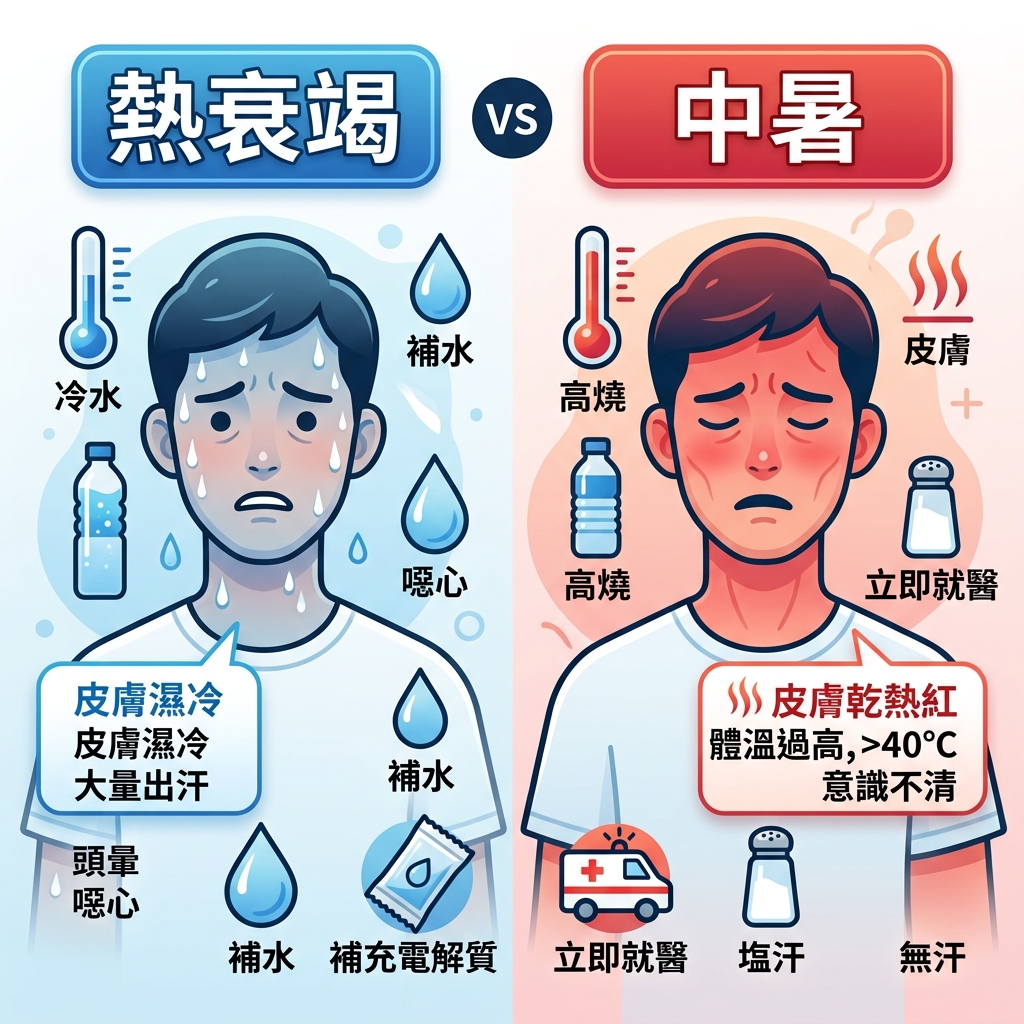
On a scorching summer day, when you’re drenched in sweat and feeling dizzy outdoors, do you always assume you have “heatstroke”?
In fact, you might just be experiencing heat exhaustion. Knowing the difference between the two is the crucial first step to saving yourself and others in extreme heat!
Your Body’s Cooling Fan: The Critical Difference Between Heat Exhaustion and Heatstroke
Many people confuse “heat exhaustion” with “heatstroke”, but they are actually different levels of your body’s distress signal.
The simplest way to tell them apart is to check the moisture on the skin.
| Feature | Heat Exhaustion (System Overload) | Heatstroke (Complete Shutdown) |
|---|---|---|
| Skin Condition | Cool and clammy, heavy sweating | Hot and dry, no sweat, redness |
| Core Temperature | Normal or slightly elevated (< 40°C) | Soaring above 40.5°C |
| Consciousness | Usually alert, but dizzy and weak | Confused, disoriented, or even unconscious |
| Danger Level | A precursor to heatstroke; requires immediate attention | Extremely dangerous, fatality rate of 30-80% |
| Status | The body is still desperately “cooling down,” causing heavy sweating, and the skin feels cool and clammy. It’s like a computer fan spinning wildly, but the coolant is almost depleted. | The body’s cooling system has completely shut down, the skin is hot and dry, and not a single drop of sweat comes out. It’s like the fan has seized up and the motherboard is about to burn out. |
Cooling Myths: Avoid These Common Mistakes
When someone is about to faint from the heat, many people instinctively do things they “think will help cool down,” but these mistakes can actually make things worse:
| Mistake | Explanation |
|---|---|
| Chugging ice water only | After heavy sweating, the body is lacking not just water but also electrolytes. Drinking only water without replenishing electrolytes (salt) can cause electrolyte imbalance and even trigger muscle cramps. |
| Taking fever reducers | The elevated body temperature from heat injury is caused by environmental heat, not infection or inflammation. Fever reducers are completely ineffective for heatstroke and add unnecessary stress to the liver and kidneys. |
| Rubbing alcohol on the body | Alcohol causes the tiny blood vessels on the skin surface to constrict instantly, closing the pores, and trapping heat inside the body instead of releasing it! |
| Drinking sugary or caffeinated beverages | Caffeine and alcohol promote diuresis, making dehydration worse; sugary drinks slow down water absorption. |
| Rushing into an air-conditioned room while drenched in sweat | The drastic temperature difference disrupts the body’s regulation, causing sweat to recede, which can easily trigger “cold-type heat illness”. |
Proper First Aid in 5 Steps: “Cool, Loosen, Dissipate, Replenish, Send”
When dealing with heat injury, stay calm and remember these golden 5 steps:
| Step | Explanation |
|---|---|
| Cool | Immediately move the person to a shaded, well-ventilated area, away from direct sunlight. |
| Loosen | Loosen clothing, undo the collar and belt to help the body dissipate heat. |
| Dissipate | Apply physical cooling methods. Wipe the body with a wet towel, or spray cool water on the skin and use a fan to help evaporate the water, using evaporation to carry away heat. |
| Replenish | If the person is conscious, give small, frequent sips of lightly salted cool water or electrolyte sports drinks. |
| Send | If the person is unconscious or experiencing persistent vomiting, call 119 immediately for medical transport, continuing to cool them during the process. |
Heat Prevention Diet and Special Warning Signs
Besides staying hydrated, eating some “natural coolants” in summer can also help your body regulate temperature:
| Food Category | Foods | Explanation |
|---|---|---|
| Melons and Fruits | Watermelon, winter melon, tomatoes | Rich in potassium and high in water content. |
| Cooling Companions | Mung beans, Job’s tears, grass jelly | Help eliminate excess heat from the body. |
Special Warning: Rhabdomyolysis
If after being active under the blazing sun, you experience severe muscle cramps, or your urine appears tea-colored or cola-colored, this could be a sign of “rhabdomyolysis”!
This means muscle tissue has already been damaged, and you must see a doctor immediately to prevent kidney failure.
Conclusion: Heat Injury Is Preventable
As long as you follow the principle of “drink water before you feel thirsty and replenish electrolytes regularly”, wear breathable clothing, and learn to distinguish between heat exhaustion and heatstroke, you can enjoy the summer sun while keeping your family safe.