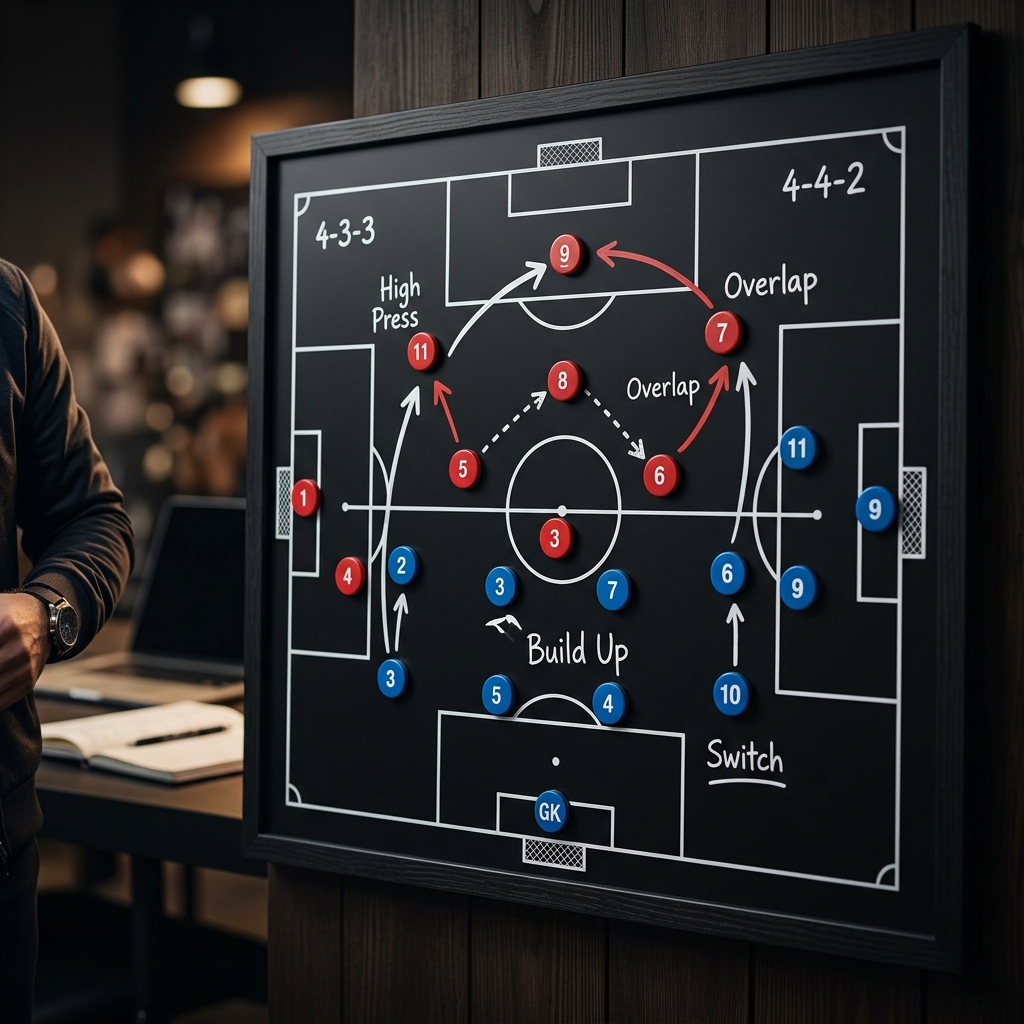
“A football match lasts 90 minutes, and only 1 goal was scored — what on earth are they running around for the rest of the time?”
This is the most common question from people who are new to football. If you’re used to basketball, where points are scored every few dozen seconds, watching football can indeed feel a bit “boring.”
The key to understanding football isn’t about watching the ball — it’s about understanding the battle for “space.”
Formations Are Like Company Structures: Breaking Down 4-4-2, 4-3-3, and 5-4-1
The “formation numbers” (like 4-4-2) on a football pitch are essentially like a company’s organizational structure.
| Number | Zone | Role |
|---|---|---|
| First digit | Defenders | Security guards (near your own goalkeeper) |
| Second digit | Midfielders | Department managers |
| Third digit | Forwards | Frontline salespeople (near the opponent’s goalkeeper) |
The number of midfielders usually determines whether a team wants to "dominate possession" or "play counter-attack."
Here are three classic structures you absolutely need to know:
| Formation | Summary | Description |
|---|---|---|
| 4-4-2 | The established, stable corporation | The most classic and balanced formation. Two rows of four players spread out like a safety net — not aggressive enough, but wins with stability and wide defensive coverage. |
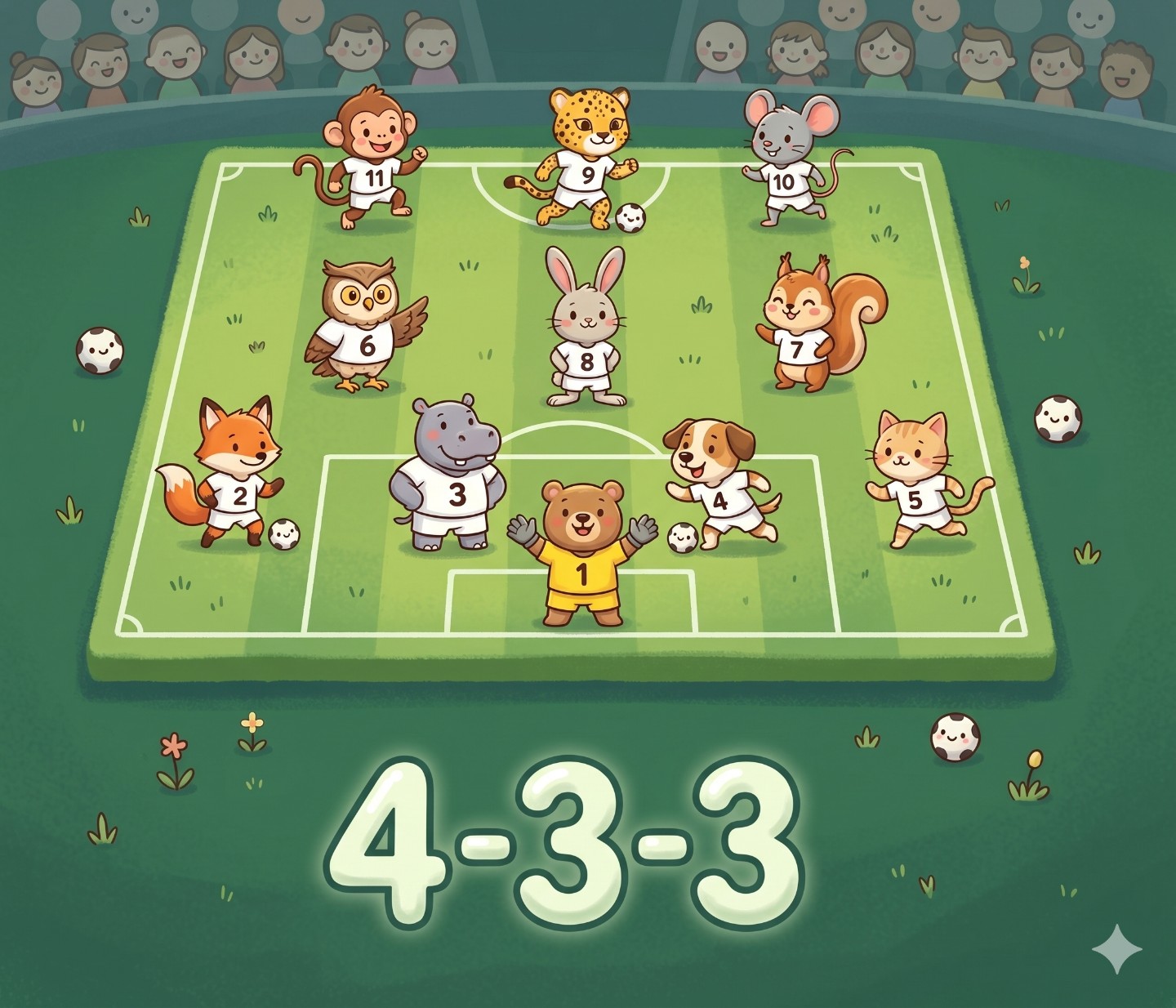
| 4-3-3 | The attack-minded startup | This is the favorite formation of modern football powerhouses. One fewer midfielder, one more forward — emphasizing frontline pressing and stretching the attack’s “width,” with the goal of tearing apart the opponent’s defensive line. |
| 5-4-1 | The iron-wall bus factory | Five defenders locked tight in the penalty area — this is typically the survival tactic of weaker teams against stronger ones: I’m not looking to score, but don’t even think about scoring on me! |
Formation Weaknesses and Counterplay: The 4-3-3 Example
So why has 4-3-3 become increasingly popular in modern football? This involves “tactical countering.”
Because scoring in football is extremely difficult, coaches must proactively create opportunities. The core of 4-3-3 lies in “high pressing.”
When the ball is still in the opponent’s half, the three forwards relentlessly harass the opponent’s defenders, forcing them into mistakes. Once the opponent makes a passing error in their own half, 4-3-3 players can instantly cut into the penalty area.
Although this tactic is extremely physically demanding, it is one of the most effective methods for breaking the goal-scoring deadlock.
Shape-Shifting on the Pitch: The Expansion and Contraction of Space
Savvy football fans observe a team’s “Shape.”
A well-trained team moves on the pitch like a breathing rubber band:
| State | Space | Description |
|---|---|---|
| Attacking | Expansion | You’ll see wingers running toward the sidelines, “stretching” the pitch wide. Why? Because the defending team must follow suit — once the distance between defenders grows, deadly passing lanes emerge in the middle. |
| Defending | Contraction | When possession is lost, the defending side quickly converges toward the center, forming a dense “defensive block.” This is all about compressing the opponent’s space, making it impossible to pass through even if they have the ball. |
Tactical breakdowns often happen in that one second when teammates fail to move in coordination.
What Do Savvy Fans Watch? Three Key Indicators for Viewing
If you want to look like a pro while watching TV broadcasts, try observing these three indicators next time:
| Indicator | Description |
|---|---|
| Formation Density | Watch the distance between midfielders on both sides. If the gap is too wide, it’s a sign that tactics are about to collapse. |
| Offside Line Height | Look at how high the defending team's backline is positioned. The higher they stand, the more they want to attack; but this also means the space behind them is vast, making them vulnerable to “through balls.” |
| The Golden 5 Seconds of Transition | This is football’s most thrilling moment! When one side loses the ball and the other counterattacks, the original defensive shape collapses instantly — this is when the goal-scoring probability is highest, so don’t blink. |
Summary: Football Is a Battle for Space
Football tactics are essentially a “trade in space.” The attacking side wants to buy space to pass, while the defending side wants to sell space to block the goal.
When you stop just watching the ball bounce around and start observing how players stretch the defensive line through their runs, how they contract like a rubber band, you’ll realize that football’s 90 minutes aren’t boring at all.
The entire match is actually a spectacular, detail-rich game of dynamic strategy.
Next time you watch a match, try to spot that “invisible shape” — and you too will become a football tactics master!