“Ref, our coach wants to call a timeout!”
If you shouted this on a football pitch, the spectators on the sideline would probably burst out laughing.
After getting used to the rhythm of basketball or volleyball—where the game stops every few minutes for tactical huddles, water breaks, and floor wipes—the hardest thing for newcomers to football is probably that suffocating feeling of “non-stop action.”
1. Why Can’t You Call a Timeout in Football?
Football is all about testing your “physical limits” and “real-time adaptability.”
A football pitch is over ten times larger than a basketball court, and players routinely cover more than 10 kilometers during a 90-minute match.
Once the referee blows the whistle to start, that 45-minute half will not stop unless someone gets injured or a substitution is made.
| Situation | Explanation |
|---|---|
| The Coach’s “Secret Orders” | Coaches can’t call timeouts, so when you see a player lying injured on the ground or when the ball goes out of play, players will rush to the sideline to grab a drink and catch a few words from the coach—this is what’s known as “smuggling” tactics. |
| The Psychological Battle | No timeouts means players must read the game and make decisions on their own while completely exhausted. This charm of finding order amid chaos is what makes football so captivating. |
2. Stoppage Time: Why Doesn’t the Clock Stop?
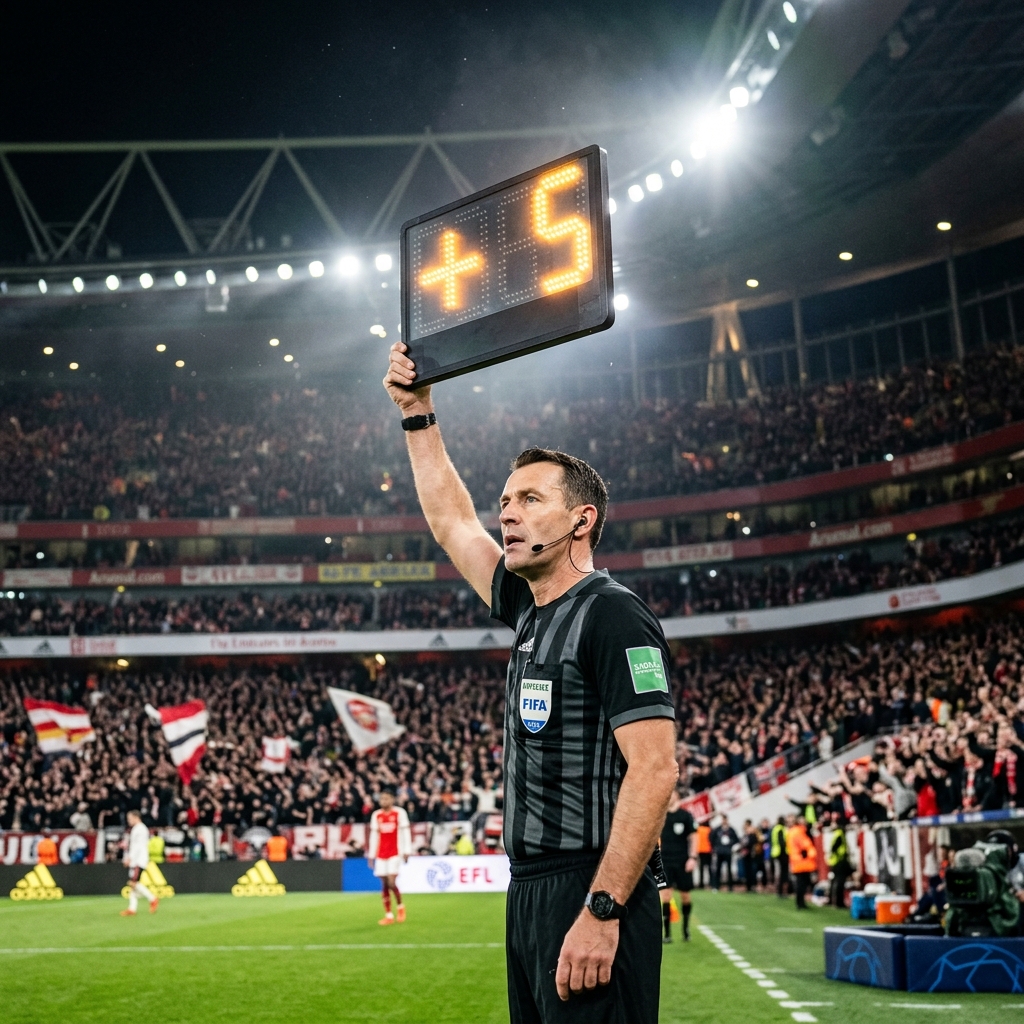
Since the clock doesn’t pause during the match, if someone lies injured for 3 minutes, wouldn’t that time be wasted? That’s exactly why “Stoppage Time” exists.
The referee tracks time lost to goal celebrations, injuries, substitutions, and other delays, then “adds it back” at the end of each 45-minute half.
| Event | Compensation Logic |
|---|---|
| Goal Celebrations | Each goal typically adds about 30–60 seconds |
| Player Injuries | Time is added based on how long medical attention takes |
| Tactical Substitutions | To prevent the leading team from time-wasting through substitutions, this is also factored in |
So why is stoppage time always so thrilling?
Because by that point everyone’s energy is nearly drained, minds start to fog, and defensive lapses become more frequent.
Many legendary “stoppage-time winners” happen during these moments—the heart-pounding excitement is even more intense than watching a thriller!
3. What Happens When the Score Is Tied? Must There Be a Winner?
It depends on whether the match is a “points-based” fixture or a “do-or-die” encounter. Football handles ties in two main ways:
| Format | Explanation |
|---|---|
| League Format | In competitions like the Premier League or the World Cup group stage, it’s like a marathon—if this match ends in a draw, each team takes 1 point and “shakes hands” before heading home. Sometimes the 1 point a small club earns by holding a powerhouse to a draw is as precious as winning a championship. |
| Knockout Format | In this format, one team must fall! If the score is still tied after 90 minutes, the match goes to: • Extra Time: An additional 30 minutes of play (two 15-minute halves). • Penalty Shootout: If it’s still level, the match enters the most brutal 12-yard showdown. At this point, it’s no longer about skill—it’s a pure psychological battle. |
In Summary
Once you understand these hidden rules about time and match formats, the next time you see the stoppage-time board go up or the score remain unchanged, you’ll know whether both sides are grinding each other’s patience or gearing up for one final killer blow.
The core philosophy of football’s rules is “respecting the continuity of play.”
A draw isn’t just a result—sometimes it’s the ultimate expression of a weaker team’s tactical success.
Next time you watch a match, bring these fresh perspectives along and experience that euphoric explosion after a long, agonizing wait!