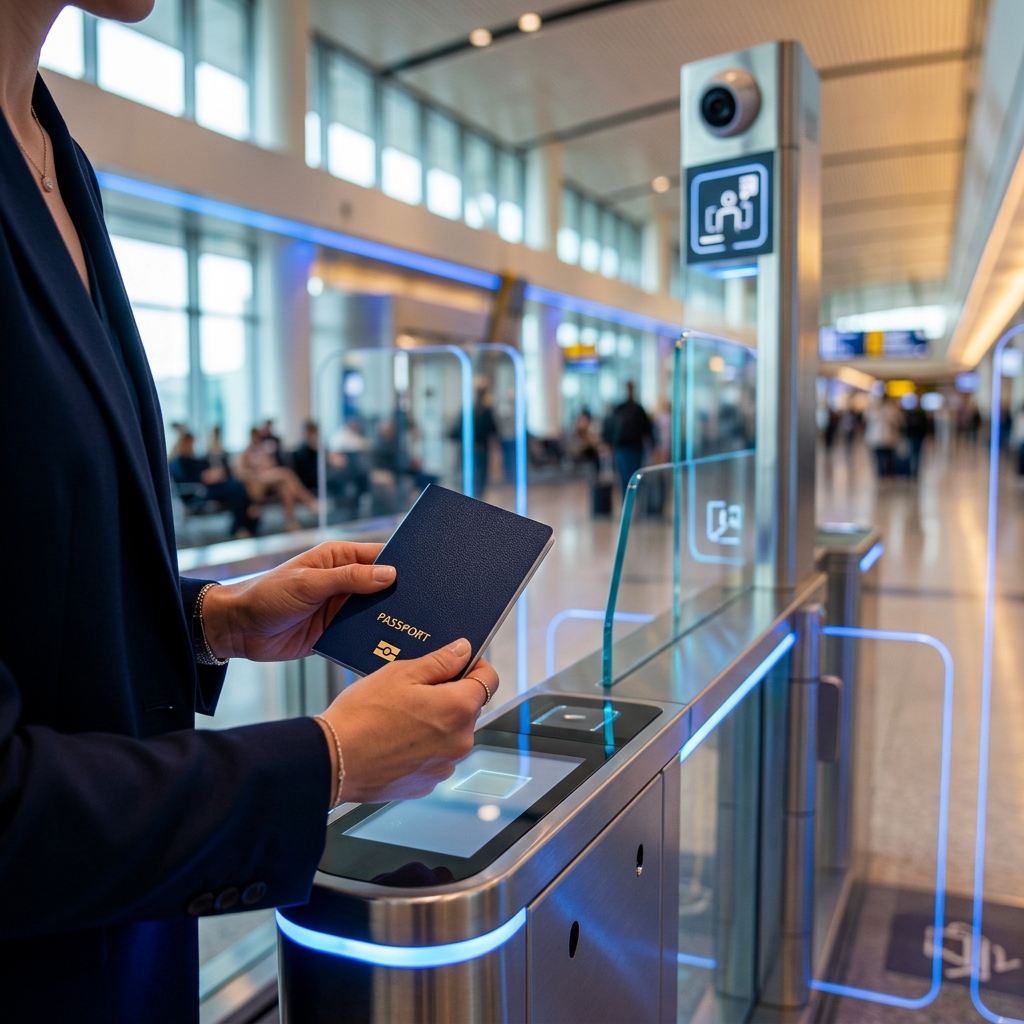
Have you ever had this experience: standing in front of an automated border gate at a foreign airport, feeling a little nervous, and then your passport just “beeps” and the gate swings open?
You might think: “This machine doesn’t even know me — how does it know this little booklet is legit? Do all the world’s police share some massive cloud drive with my mugshot and embarrassing history?”
Or maybe your passport still had a few months before expiring, and you showed up at the airport all excited, only to be told by the check-in agent: “Sorry, you can’t board — your passport has less than six months validity.” That feeling of having battery left but not being able to turn on the phone? Yeah, it’s infuriating.
Don’t worry — your secrets are still relatively safe, and the rules actually make sense. Today, let’s break down how this little “global pass” actually works!
Why Can Border Control Identify You with Just a “Beep”? Debunking the Global Database Myth
Many people assume that every country in the world shares one giant hard drive loaded with data on 8 billion people. But think about it — that drive would crash, and the read speed would be so slow you’d miss your flight crying.
The truth is, passports work globally thanks to two key technologies:
| Technology | Explanation |
|---|---|
| A universal machine language (ICAO standard) | Every passport in the world follows the rules set by ICAO (International Civil Aviation Organization) — think of them as the “head coach.” They established those two lines of “««<” symbols at the bottom of your passport, called the MRZ (Machine Readable Zone). It’s like a barcode on a product — any card reader from any country can “understand” the basic info on it. |
| Digital seal (chip verification) | Modern passports contain a thin chip inside. Think of it as a “tamper-proof safe”. When customs scans it, they’re not looking up your personal file — they’re checking whether “this digital seal was genuinely issued by that country’s government.” If the seal checks out, the passport is the real deal! |
The system only raises an alert when you’re on INTERPOL’s blacklist.
So customs is verifying “Is this passport genuine?” and “Has this person committed any crimes?” — not snooping through your private life.
The Vanishing Six Months: Why Can’t You Travel When Your Passport Hasn’t Expired Yet?
Your passport is like a phone battery. Even though the screen shows 10% charge (not yet expired), if you’re about to enter a forest where you might get lost for half a year (traveling abroad), the gatekeeper (border officer) will stop you and say:
“Hey! That battery might die before you find the exit.”
This is the concept of “safety reserve charge.” Foreign governments worry that if something unexpected happens while you’re in their country — illness, flight cancellations, or detention — and your passport expires during that time, you become a “ghost with no valid ID.” That’s a massive headache for the local government.
| Tip | Details |
|---|---|
| Beginner tip | Mentally subtract 6 months from your passport’s expiry date and treat that as the “real” deadline. |
| Advanced tip | Not all countries require 6 months (Japan and the UK are more lenient, for example), but to be safe, consider renewing when you have 7–8 months left. |
Your Passport Number Changes When You Renew? How Does Border Control Still Track You?
Have you noticed that when you get a new passport, the number changes? That’s completely different from your national ID number, which stays the same for life.
A passport number is more like “a serial number for a specific booklet.” If the number never changed and you lost your passport, a criminal could impersonate you using that number forever. A new number is like a new security code — once the old number is voided, it’s useless.
So how does border control keep track?
They use what you might call a “shadow file” system.
When you first enter a country (say, Japan), they create a Japan-specific folder based on your “country code + passport number.”
Even though you’ve got a new passport, your “name (in English) + date of birth + gender” — and even your “fingerprints/facial data” — don’t change. The computer automatically links the new number to the old file. Trying to “clean your record” by changing passport numbers? Not going to work!
The “Unwritten Social Rules” of Automated Border Control: Do You Have a VIP Pass?
Finally, why do some people breeze through customs like it’s their own kitchen, while others queue forever? This comes down to real-world “national credit scores.”
Whether you can use automated border control usually depends on three factors:
| Factor | Explanation |
|---|---|
| Reciprocal agreements | You let my citizens use the fast lane, and I’ll let yours use it too. |
| Anti-fraud strength | Your passport’s chip technology needs to be strong enough that foreign border machines are willing to let it “self-read.” |
| Track record | If citizens of a particular country have a history of overstaying, their “credit score” drops, and border officers will naturally want to screen them in person. |
If you’re a frequent flyer, you might also consider applying for programs like the U.S. Global Entry trusted traveler program. Spend a little money, pass an in-depth background check, and you earn an official “good citizen” badge — along with lightning-fast border clearance.
Summary: Your Passport Is Your International Credit Score
This slim little booklet isn’t just a ticket to travel abroad — it’s your “credit rating” on the international stage.
Before your next trip, besides checking whether your luggage is overweight, don’t forget to flip open your passport and see how much “battery (validity)” you have left.