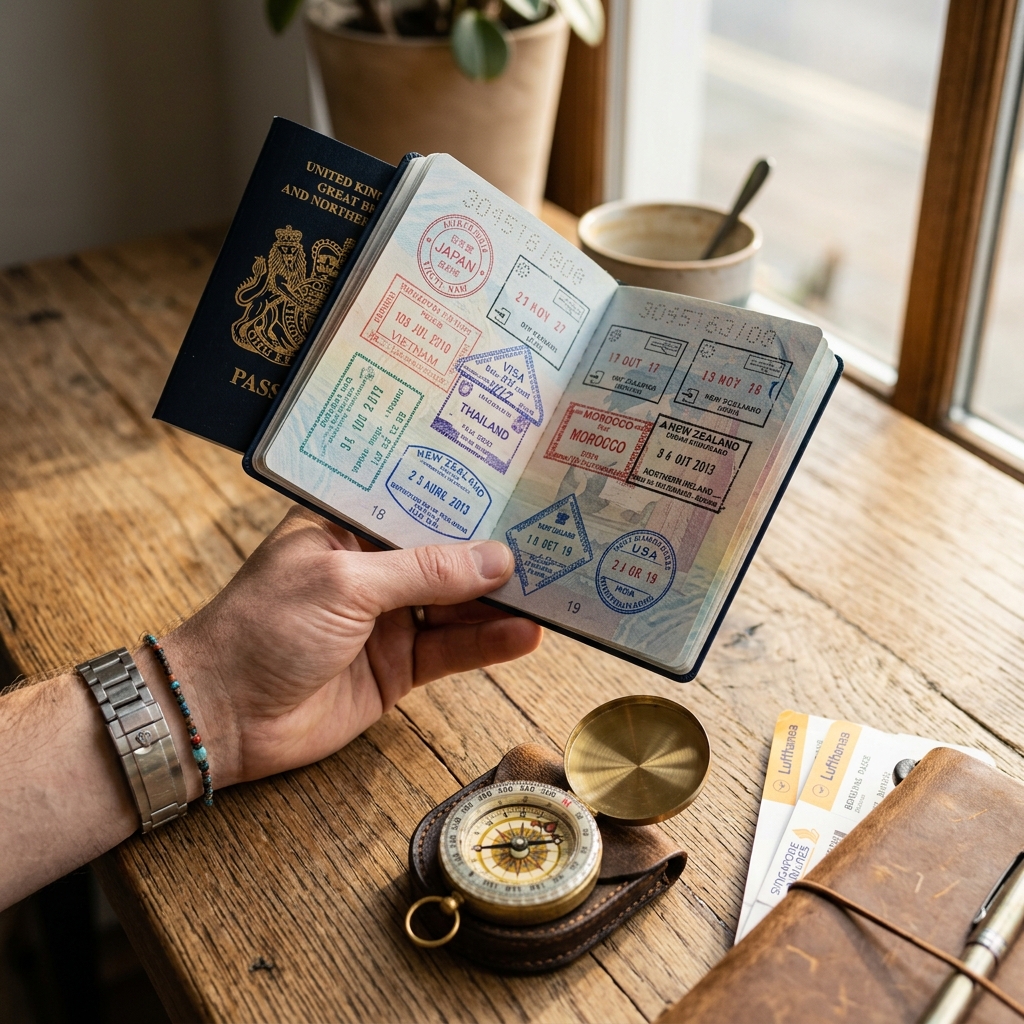
Picture this: you’re on a dreamy train trip through Europe, having croissants for lunch in France, and the weather’s so nice you hop on a train to grab a coffee in the neighboring country. Then, at the border, customs stops you — and declares you “denied entry.”
You’re standing there in total disbelief: “But I have a visa! I just left from here! I only went for a coffee — why can’t I come back?!”
You may have stumbled into the “one-time ticket” trap. Traveling abroad isn’t just about having a plane ticket — you need to understand the sneaky logic behind your visa.
Visas Have “One-Time Passcodes” Too? Single vs. Multiple Entry
Many travelers, looking to save a few bucks on fees or just opting for convenience, go with the basic “Single Entry” visa. In the immigration officer’s system, this works exactly like a one-time passcode:
The moment you step out of the country, your entry file gets “closed and archived.”
So why would a country treat a law-abiding visitor like a “one-and-done” deal?
| Reason | Explanation |
|---|---|
| “Status Refresh” Logic | For national security agencies, “the you from two weeks ago” doesn’t represent “the you right now.” Once you leave, the system assumes you might have encountered questionable contacts or had a sudden financial collapse. So every time you come back, they need to “refresh” your profile. |
| Administrative Boundaries | Managing a pile of “closed files” is far easier than managing a “live binder that could open or close at any time.” Once you cross the border, everything resets — that’s standard operating procedure for international customs. |
What If You’re Already Abroad and Want to Visit Another Country?
Don’t rush to leave the country! Head to the local immigration office and ask about getting a “Re-entry Permit.”
Think of it as an invisible stamp on the back of your hand — proof that you’re just stepping out for a bit, allowing your “single-use ticket” to come back to life for a limited time.
Why Are Some Passports VIP While Others Get Extra Screening?
You’ve probably heard of the “Henley Passport Index” — think of it as the “black card ranking” of international travel.
How powerful a passport is really comes down to a “trust game” and “power dynamics” between nations.
| Reason | Explanation |
|---|---|
| Reciprocity (Quid Pro Quo) | It’s like social etiquette. If your guests don’t need to take off their shoes at my house, then my people should be able to keep their shoes on at yours. When two countries have strong political ties, economic stability, and mutual trust, they sign visa-free agreements. |
| The Cynical Side of Risk Management | Some countries restrict entry for certain nationalities — usually to prevent illegal employment, public safety risks, or political hostility. That’s why some visa applications make you disclose three generations of family history — they’re running “national-level background checks.” |
One Day Late Equals Illegal Overstay? Understanding “Validity” vs. “Duration of Stay”
Don’t see “Valid Until” on your visa, notice it’s still a year away, and then happily stay for six months after entry — only to get arrested at customs on your way out. Understand what these two numbers really mean:
| Term | Explanation |
|---|---|
| Valid Until (Last Entry Date) | This is the latest date you can “walk through the door” into the visa-issuing country. |
| Duration of Stay (Permitted Days) | This is how many days you’re allowed to stay after you enter. |
What really determines your fate is the date stamp customs puts in your passport — not the text on the visa sticker! On the very first day you pass through customs, set a “three-day countdown reminder” on your phone to guard against unexpected delays.
What to Do When Your Visa Is About to Expire?
If you realize you’re “accidentally” about to overstay — or you’ve already overstayed by a day or two — do NOT hide in your hotel and play dead! The longer you hide, the longer your ban will last.
| Strategy | How It Works | Best For |
|---|---|---|
| Extension | Visit the local immigration office before your visa expires, explain the situation, and pay the fee. | When you know you need more time and you still have time to act. |
| Visa Run | Exit to a neighboring country for a couple of days, then re-enter. | A quick-and-dirty way to reset your stay timer immediately. |
| Self-Reporting | Show up at the airport counter with your fine payment and flight ticket. | The only option when you’ve already overstayed — it reduces penalties. |
Pro Tip: Prepare Your “Alibi”
If your overstay was caused by force majeure — a typhoon grounding flights, sudden hospitalization, etc. — make sure to keep all evidence (airline statements, medical certificates).
In the eyes of immigration officers, a “forced overstay” with proof is usually forgivable and can save you from a permanent blacklist.
Bottom Line: Your Visa Is Part of Your Itinerary
Trip planning isn’t just about Instagram-worthy spots — understanding visa rules keeps your journey on track.
Before hopping across borders, confirm what “ticket” you’re holding.
When a crisis hits, take action immediately — don’t let a bad record follow you around in international databases.