When winter hits, are you one of those “ice block” people sitting in the office with freezing hands and feet, gulping hot water but still shivering?
The truth is, feeling cold despite dressing heavily might be because you haven’t grasped the “underlying logic” of body heat retention!
Why Do Our Hands and Feet Get Cold?
Simply put, our body is like a castle, and the heart is the “central heating furnace”.
When the temperature drops, your brain — in order to protect the most vital command center (namely your brain and internal organs) — orders the blood vessels in your limbs to constrict, pulling warm blood back to the core first.
That’s why your hands and feet are always the first to get cold — they’ve been “sacrificed” in the body’s priority order.
Besides this natural defense mechanism, several other factors can make you feel even colder:
| Cause | Explanation |
|---|---|
| Nutritional deficiencies | Insufficient metabolic energy. |
| Lack of exercise | Low muscle heat generation efficiency. |
| Extreme dieting | Avoiding carbs puts your body into “power-saving mode” — the heating furnace runs low on fuel. |
The Best “Golden Warm Zones” for Maximum Efficiency
Since the body prioritizes protecting the core, how should we dress to help the heating furnace “lock in the heat”?
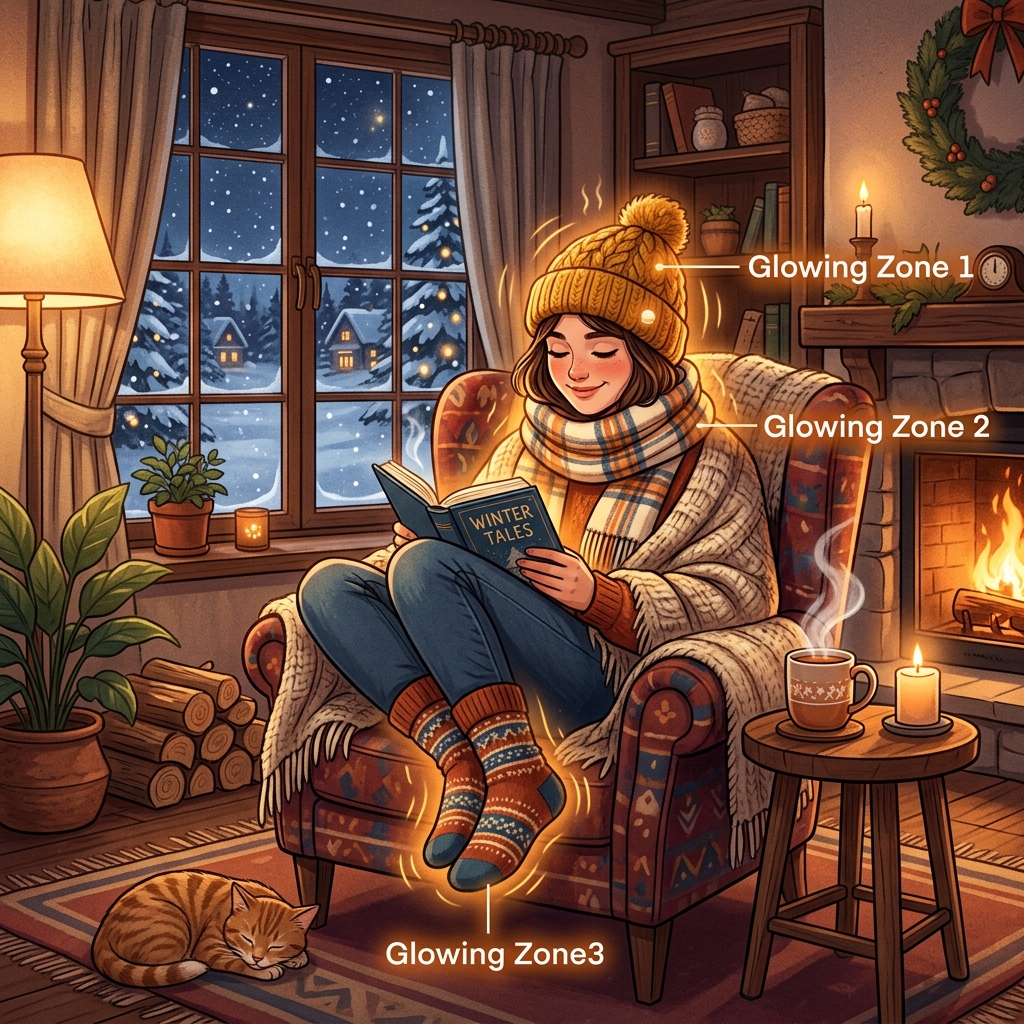
You don’t actually need to bundle up like a ball — just protect these key heat-loss points and you’ll get twice the warming effect with half the effort:
| Area | Brief | Explanation |
|---|---|---|
| Head & Neck | The body’s “heat chimney” | Heat rises, and the head is like a castle’s chimney where warmth escapes easily. Simply wearing a hat and scarf can effectively cut off heat loss, instantly boosting your overall warmth. |
| Abdomen | The core of the heating furnace | The abdomen is where the body’s organs are most densely packed. If you feel cold, placing a heat pack on your abdomen (near the Guanyuan acupoint) delivers warmth to your core organs the fastest, making your body feel truly warm. |
| Feet & Palms | The farthest “frontier” | The feet are the farthest from the heart and lose heat the fastest. Wearing a pair of breathable, warm wool socks is like closing the castle’s windows, effectively blocking conductive heat loss. |
Key Areas Where the Body Efficiently Dissipates Heat
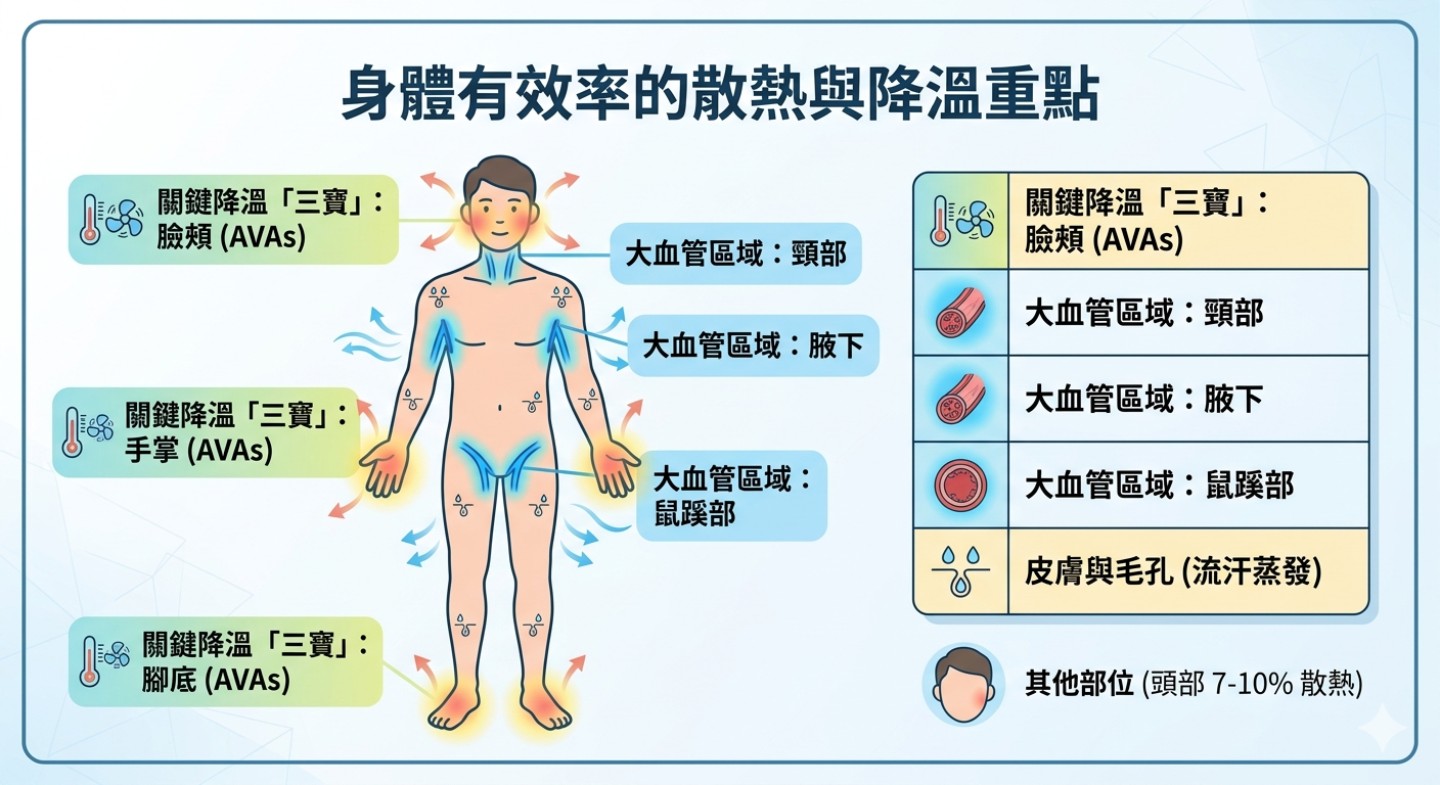
Beyond keeping the core areas warm, you can also insulate the key heat-dissipation areas of your body to prevent excessive heat loss, achieving twice the results with half the effort.
| Area | Function |
|---|---|
| Cheeks, palms, soles | The “big three” for cooling — these areas have arteriovenous anastomoses (AVA) blood vessels that regulate blood flow, carrying cooled blood back to the heart to control body temperature. |
| Neck, armpits, groin | Large blood vessel zones — major arteries run close to the skin surface, and ice packs or wet compresses can effectively cool the blood, ideal for rapid cooling during heat exhaustion. |
| Skin and pores | The entire body’s skin dissipates heat through pore dilation and sweat evaporation. If clothes get wet, using a fan with mist spray can accelerate moisture evaporation for faster cooling. |
Everyday Warmth Strategies
Besides protecting key areas, you can also boost warmth through dressing and diet in daily life:
Layered Dressing: Trapping the Air Layer
| Layer | Purpose | Explanation |
|---|---|---|
| Inner layer (breathable) | Wick sweat | Responsible for quickly wicking sweat to stay dry. Never wear pure cotton — cotton dries slowly after absorbing sweat, and wet clothing conducts heat 25 times faster than air, which can actually cause hypothermia! |
| Middle layer (insulating) | Warmth | Such as sweaters or down jackets — the goal is to create a “still air layer” forming an insulating wall to block out the cold. |
| Outer layer (protective) | Windproof | Blocks cold wind convection — must have absolute windproof and waterproof capabilities to prevent convective heat loss and keep the warm air near your body from being blown away. |
Diet Boost: Fueling the Heating Furnace
Sugar can quickly provide the energy muscles need to “generate power (shiver)”.
Eat more heat-producing foods such as ginger, scallions, garlic, and cinnamon to boost blood circulation.
When you urgently need to warm up, a cup of hot cocoa is also a great choice
The “Invisible Killer” of Winter for the Elderly
Lastly, a reminder — elderly family members are at risk because their thermoregulation function declines, making them less sensitive to cold.
Large indoor temperature differences (such as suddenly getting out of a warm bed) can cause severe blood vessel constriction, triggering “thermal shock”.
It’s recommended to maintain a consistent indoor temperature, sit on the edge of the bed for a moment when getting up, put on an extra layer before moving around, and exercise moderately to maintain muscle mass — these are the keys to getting through winter safely.
In Summary
Staying warm isn’t about wearing more layers — it’s about “wearing them in the right places”.
Next time a cold snap hits, remember to close the heat chimneys and windows first (wear a hat, put on socks), and fuel up the body’s furnace — then you’ll stay toasty warm from the inside out all winter long!