Breathing is the most fundamental survival instinct, yet when this perfectly natural act becomes laborious, it can trigger extreme panic and a suffocating sensation.
Have you ever experienced this: sitting quietly at rest, yet feeling like air just won’t enter your lungs? Or becoming winded after walking only a few steps?
Difficulty breathing is more than just a momentary lack of stamina. When this sensation becomes frequent or severe, it may be your body sending an urgent distress signal, warning you that your heart or lungs may be in trouble.
Why Do We Feel “Short of Breath”? Understanding the Medical Causes
In medical terms, dyspnea is a subjective sensation, commonly described as “air hunger,” “chest tightness,” or “an inability to get enough air.”
Clinically common pathological causes can be classified into the following major categories:
1. Pulmonary Diseases (Pulmonary Dyspnea)
This is the most common cause, occurring when airways are obstructed or the lungs’ gas exchange function is impaired:
| Type | Description |
|---|---|
| Inspiratory dyspnea | Often seen with upper airway narrowing, such as laryngitis, foreign bodies in the throat, or tumors. |
| Expiratory dyspnea | Caused by decreased lung elasticity or bronchospasm, as in chronic obstructive pulmonary disease (COPD), asthma, or chronic bronchitis. Long-term smoking or air pollution damages the alveoli, causing air to “get in but not out.” |
| Mixed dyspnea | As seen in pneumonia, pleural effusion, pneumothorax, pulmonary infections, or pulmonary fibrosis, making both inhalation and exhalation difficult. |
2. Cardiovascular Issues (Cardiac Dyspnea)
Patients often experience noticeable difficulty breathing when lying down, needing to prop up pillows or sit upright to find some relief.
| Symptom | Description |
|---|---|
| Heart failure | The heart cannot effectively pump blood throughout the body, leading to pulmonary congestion where blood pools in the lungs, triggering pulmonary edema. Patients often feel “more breathless when lying flat” and must sit up to breathe. |
| Acute coronary syndrome | Myocardial ischemia can cause sudden chest tightness and rapid breathing. |
3. Metabolic, Hematological, and Neurological Factors
| Type | Description |
|---|---|
| Metabolic factors | Such as severe anemia reducing blood oxygen-carrying capacity, obesity (diaphragm compression), or metabolic acidosis (e.g., diabetic ketoacidosis, where breath may carry a fruity odor). |
| Neuropsychiatric | Breathing regulation abnormalities triggered by severe brain diseases or extreme anxiety. |
Recognizing Warning Signs: Seek Immediate Medical Attention for These “Red Flags”
Not all shortness of breath requires an emergency visit, but if breathing difficulty is accompanied by the following conditions, please go immediately to a pulmonology, cardiology, or emergency department:
| Condition | Description |
|---|---|
| Sudden worsening | Severe dyspnea occurring suddenly at rest, such as becoming breathless when lying down, requiring propped-up pillows or sitting upright to breathe. |
| Signs of hypoxemia | Bluish lips or fingernails (cyanosis), cold sweats, confusion. |
| Dangerous accompanying symptoms | Audible wheezing, severe chest pain radiating to the jaw or left arm, coughing up pink frothy sputum (acute pulmonary edema). |
| High-risk medical history | Those who have recently had surgery, been bedridden long-term, or have a history of venous thrombosis — sudden breathlessness should raise concern for pulmonary embolism. |
| Structural abnormalities | Sternal area retracting inward during inhalation (a sign of upper airway obstruction). |
Medical Intervention and Home Care: How to Effectively Relieve Discomfort
For chronic or pathological dyspnea, in addition to actively treating the underlying disease, proper care methods can significantly improve quality of life:
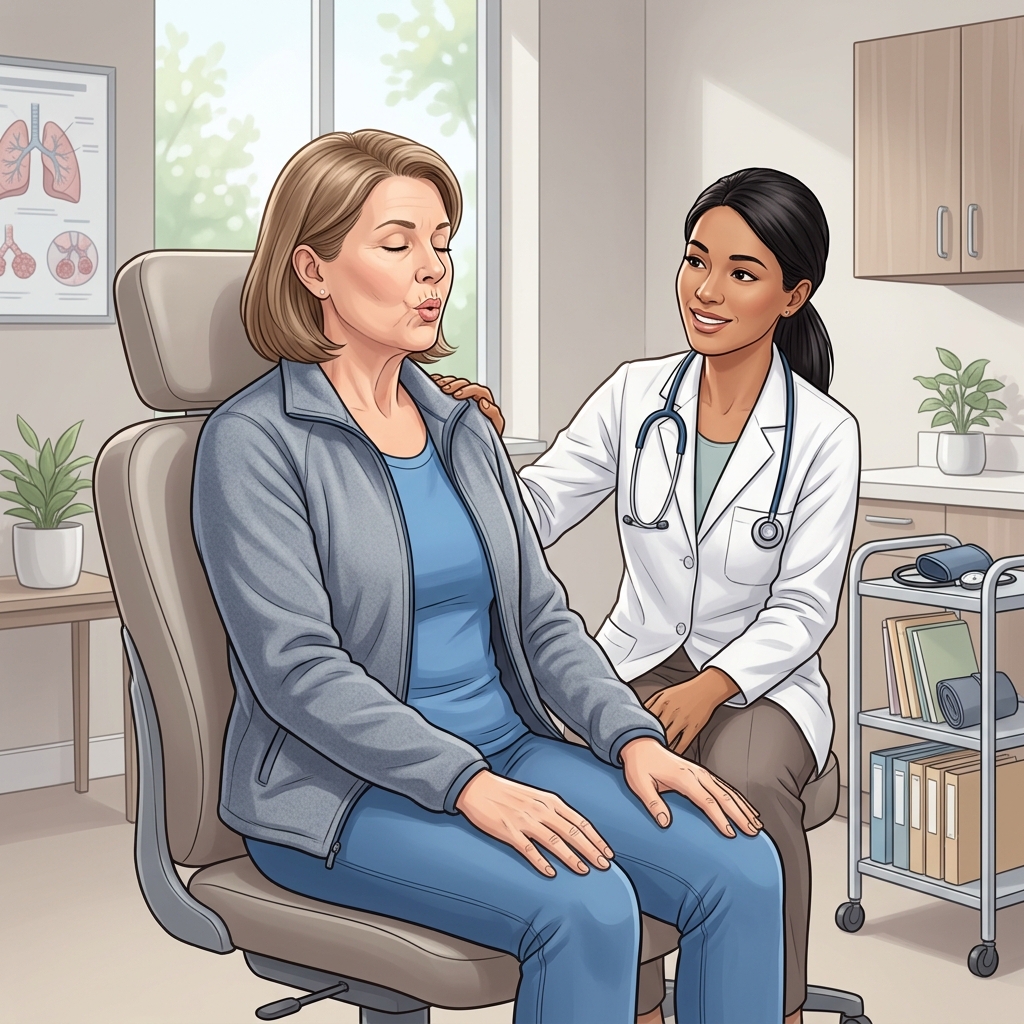
1. Key Rehabilitation Technique: Pursed-Lip Breathing
This is an essential technique for patients with chronic lung disease (such as COPD):
| Item | Description |
|---|---|
| How to do it | First, inhale deeply through your nose, then purse your lips (as if blowing out a candle) and exhale slowly for twice the duration of your inhalation. |
| Benefits | This increases airway internal pressure, prevents premature bronchial collapse, helps the lungs expel stale air more completely, and thereby reduces the suffocating feeling of “not getting enough air.” |
2. Oxygen Therapy and Medication Guidance
Follow medical instructions when using bronchodilators. If an oxygen concentrator is needed, strictly adhere to the flow rate set by your physician.
Pay special attention: for certain COPD patients, administering high-concentration oxygen may actually suppress their respiratory drive, so never adjust the flow rate on your own.
3. Environmental and Physical Relief
| Item | Description |
|---|---|
| Fan relief | Research has found that directing a gentle cool breeze toward the face can reduce the brain’s subjective perception of dyspnea through neural pathways. |
| Avoid triggers | Quit smoking completely, stay away from secondhand smoke, cooking fumes, and PM2.5. |
| Maintain indoor ventilation | During large temperature fluctuations, wear a mask or scarf to prevent cold air from irritating the airways. |
Conclusion: Early Diagnosis to Reclaim Your Breathing Freedom
Dyspnea is a serious warning from your body that should never be dismissed as simply “getting old” or “being out of shape.”
Early detection through chest X-rays, electrocardiograms, or pulmonary function tests to identify the root cause, combined with proper rehabilitation exercises, is the key to truly safeguarding every smooth breath you take.