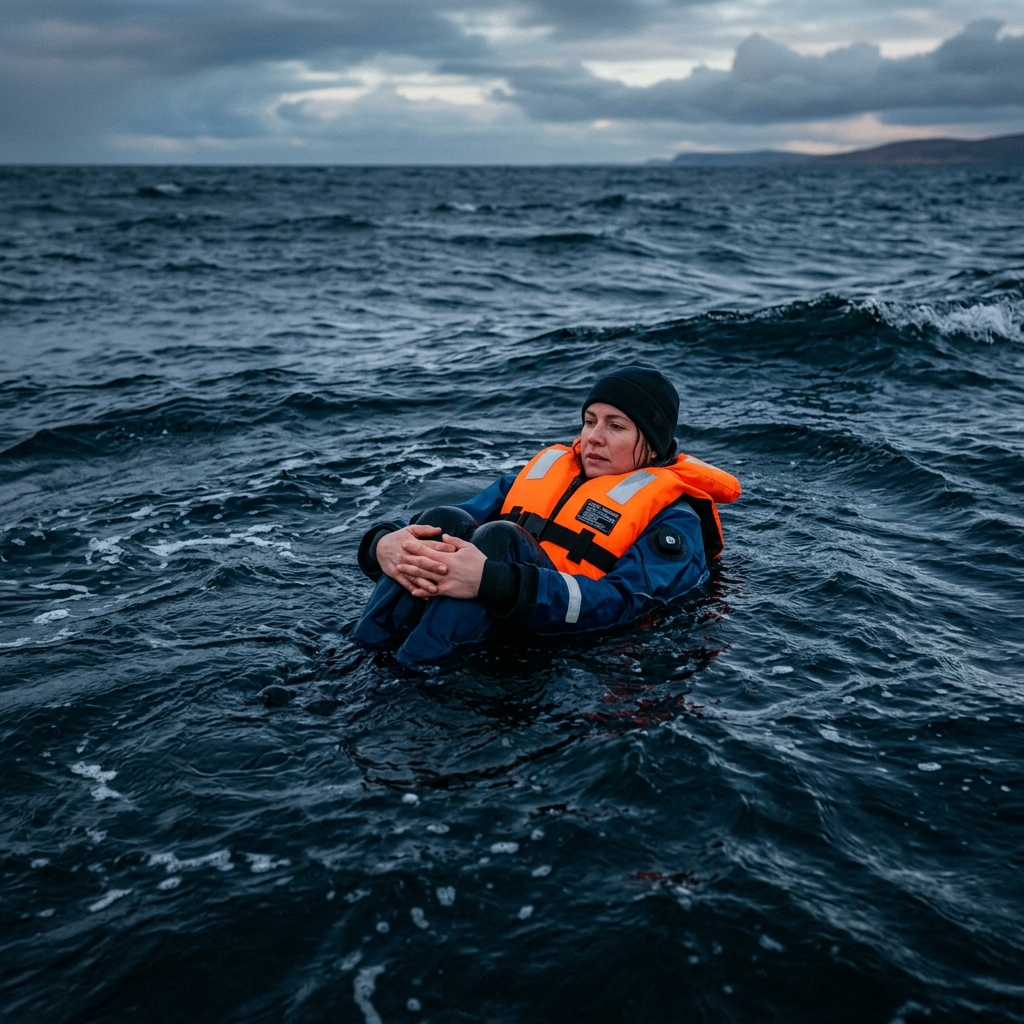
Imagine your body as a five-star hotel with 24/7 climate control. Whether it’s scorching sun or wind and rain outside, the hotel’s central air conditioning (the brain’s thermoregulation center) works hard to keep the core body temperature at around 37°C, so all the guests inside (your organs) can function normally.
But when you jump into water, things change completely. Why does 25°C indoor air feel comfortable, yet immersing in 25°C water makes you feel cold within half an hour?
Because water is a powerful vacuum cleaner for heat.
Why Does Pool Water Always Feel Cold?
Every time you enter a pool, you inevitably shiver. Most pools maintain water temperatures between 26°C and 28°C.
You might wonder:
Since body temperature is 37°C, why not raise the water temperature a bit?
In fact, cold water is the most effective heat dissipator during exercise.
| Reason | Explanation |
|---|---|
| Heat Dissipation | During exercise, metabolism speeds up and body temperature rises. Cold water quickly carries away excess heat, keeping you comfortable and able to continue exercising. |
| Preventing Heat Stroke | If water temperature is close to body temperature, exercising in water is like being in a sauna — heat cannot escape, causing body temperature to soar. This can trigger “aquatic heat stroke”, leading to dehydration, cardiac dysfunction, and even loss of consciousness, which is extremely dangerous in water. |
| Cardiovascular Training | Blood vessels constrict upon entering the water and dilate during exercise. This contraction-expansion cycle is like gymnastics for your blood vessels, greatly helping to prevent cardiovascular diseases. |
Fun Fact: Triathletes and long-distance swimmers are more sensitive to cold water because they typically have lower body fat and lack an “insulation layer”.
The Water Chill Effect: An Ultra-Efficient “Heat Black Hole”
If air is a thief that slowly steals your heat, water is a violent mover.
Water conducts heat approximately 25 times faster than air.
This means that in 15°C water, you lose heat at roughly the same rate as standing naked in 0°C air.
When water temperature drops below 15°C, your body’s thermoregulation system faces collapse within minutes.
Cold Shock Response
When the body suddenly contacts extremely cold water, the brain activates “emergency mode,” triggering an involuntary gasp reflex (The Gasp).
If your face happens to be underwater at that moment, this “life-saving breath” becomes “life-taking water”, leading to drowning.
This is why even strong swimmers can drown within the first minute of falling into cold water.
Survival Strategies for Maritime Emergencies
If you are unfortunately caught in a capsizing or fall overboard, understanding water temperature characteristics and proper responses can help you buy more rescue time.
1. Stay Calm and Assess the Vessel Material
Decide your self-rescue approach based on the vessel material:
| Vessel Material | Explanation |
|---|---|
| Wooden Vessels | Usually do not sink immediately; try to climb onto the overturned hull and wait for rescue. |
| Fiberglass Vessels (FRP) | More likely to sink after capsizing, but may temporarily float if air is trapped in the cabin. Do not attempt to right the vessel; maintain balance and hold onto the hull. |
2. Estimated Survival Time
Survival capability varies dramatically across different water temperatures:
| Water Temperature | Expected Survival Time |
|---|---|
| Below 2°C | Less than 45 minutes |
| 4°C – 10°C | Less than 3 hours |
| 15°C – 20°C | Less than 12 hours |
| Above 20°C | Depends on fatigue level |
3. Survival Posture: The HELP Position
To preserve core body temperature, avoid unnecessary swimming after falling into water (movement accelerates heat loss from the limbs).
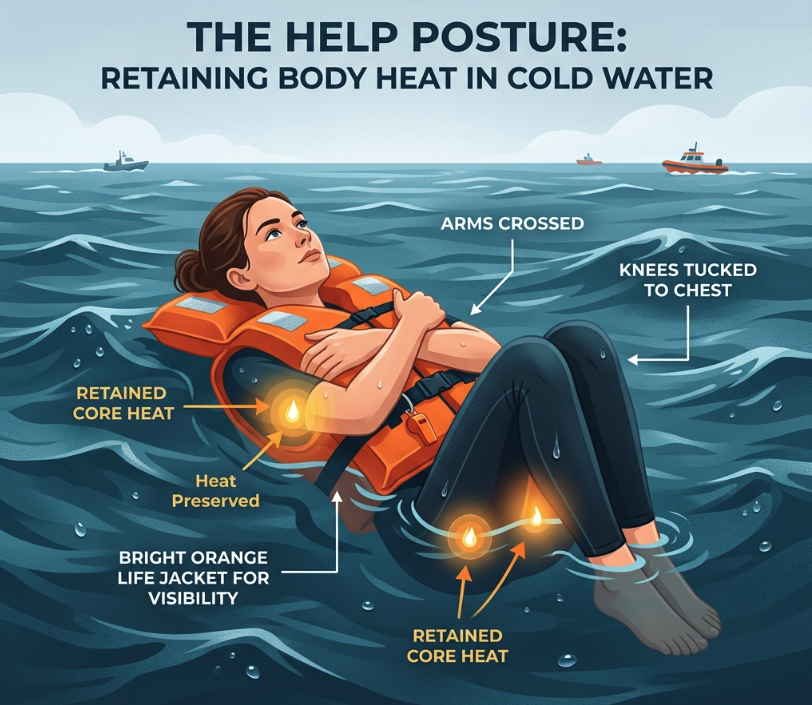
Adopt the HELP (Heat Escape Lessening Posture) position:
| Number of People | Instructions |
|---|---|
| Individual | Curl up your legs, press your knees against your abdomen, and hug your arms tightly against your chest. |
| Group | Form groups of three, link arms shoulder to shoulder in a circle, and huddle closely to reduce heat loss. |
Proper First Aid After Hypothermia Rescue
Correct first aid after a person is rescued is the key to survival:
| Method | Instructions |
|---|---|
| 1. Stop Heat Loss | Quickly remove wet clothing and change into dry clothes or wrap in blankets. |
| 2. Provide Warm Drinks | Only provide warm sweetened water (such as hot milk or sugar water) when the patient is fully conscious. |
| 3. Contraindications | Never give alcohol, and avoid excessive limb massage or direct fire warming, as this causes blood to rush to the surface, further lowering core temperature. |
| 4. Rapid Rewarming | Severely hypothermic patients can be immersed in 40°C – 45°C hot water (no longer than 10 minutes) to rapidly restore core body temperature. |
Whether it’s casual swimming or engaging in maritime activities, respecting the power of water and understanding the relationship between water and body temperature is the key to staying safe while enjoying the cool.