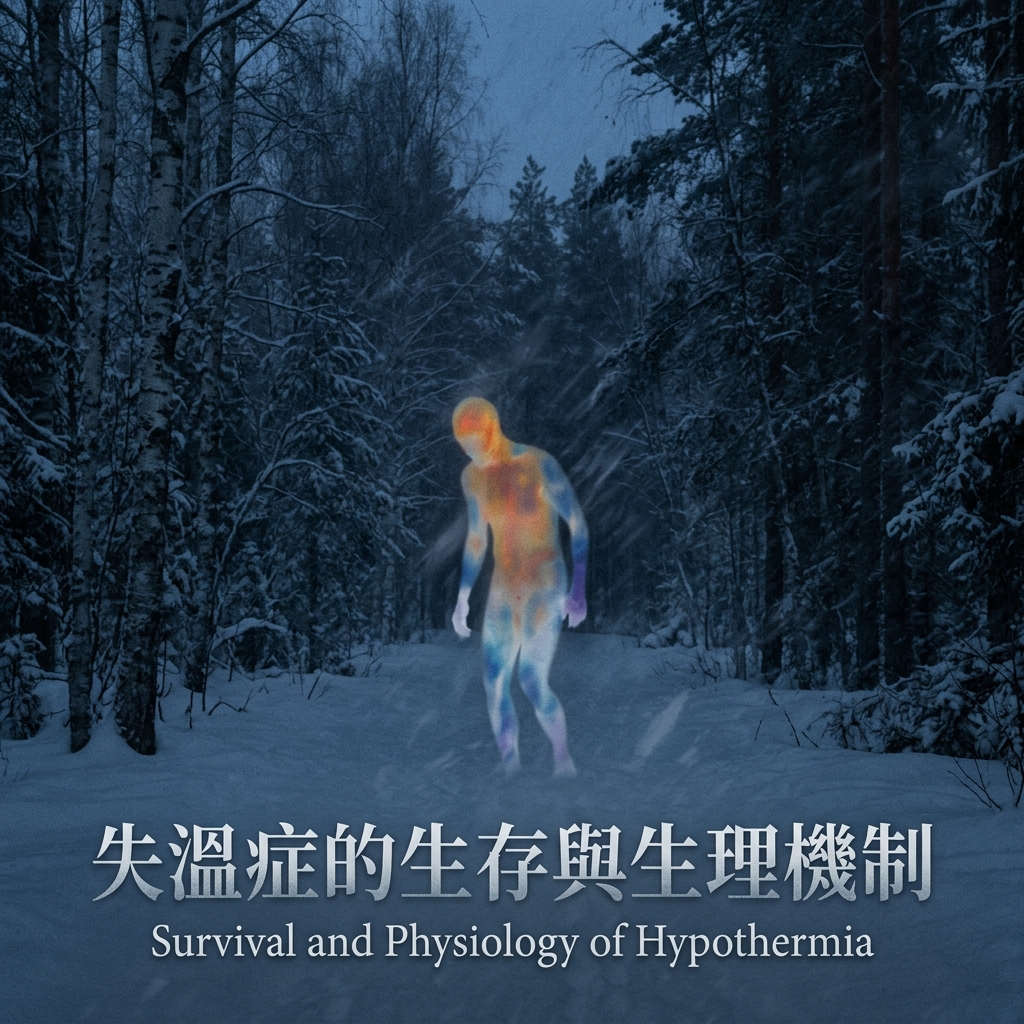
In 2010, a 20-year-old Russian young man, determined to prove his masculinity, ventured alone into the Siberian forest at -30°C with only basic equipment, and started a livestream on a local outdoor survival forum.
However, this gamble against nature ultimately turned into an irreversible countdown to death.
What exactly did he experience during the livestream? Why was he found by rescuers in a state of “paradoxical undressing”, frozen to death in the snow?
Today, let’s learn from this tragedy and understand nature’s coldest killer — “Hypothermia”.
The Three Deadly Stages of Hypothermia: A Complete Collapse of the Body’s Energy System
Hypothermia is not just about “feeling very cold” — it is a complete collapse of the body’s internal energy system.
When the body’s core temperature drops below 35°C, physiological functions deteriorate through three brutal stages based on the degree of temperature decline:
| Stage | Core Temperature | Condition |
|---|---|---|
| 1. Mild Hypothermia | 35°C - 32°C | The body begins to develop goosebumps, attempting to close pores to retain heat. At this point, the brain’s judgment starts to decline, with symptoms of slurred speech or sluggish movements. This is the body’s final warning and the most critical window for safe evacuation. |
| 2. Moderate Hypothermia | 32°C - 30°C | At this stage, uncontrollable “violent shivering” occurs as the body frantically burns muscle glycogen to generate heat. To protect the most vital heart and brain, the body activates a “sacrifice the pawns to save the king” mechanism, forcibly constricting blood vessels in the limbs and withdrawing blood to the core. This is why victims often experience severe pain in their hands and feet or even tissue necrosis. |
| 3. Severe Hypothermia | Below 30°C | When you notice a victim suddenly “stops shivering”, this is not improvement — it’s the most terrifying signal. It means the body has exhausted all energy, the brain’s thermoregulation center has completely failed, the body can no longer be controlled, and “paradoxical undressing” occurs before freezing to death — life is coming to an end. |
The Brain’s Final Frenzy: Why Do People Undress Before Freezing to Death?
At many polar rescue scenes, search and rescue teams often find victims with their clothes stripped off, even lying naked in the snow.
This phenomenon is known as “Paradoxical undressing”.
Why would someone feel burning hot in extreme cold? When hypothermia enters the severe stage, the peripheral blood vessels that had constricted to preserve life suddenly relax because the hypothalamus (thermoregulation center) has been frozen and damaged.
This causes the warm blood that was concentrated in the core to suddenly rush to the skin’s surface, creating an illusion of “extreme burning heat” in the brain.
In their final moments, victims feel unbearably hot and frantically remove their clothes, and driven by the primitive brainstem, they may even burrow into narrow snow caves or tree hollows like animals (known as Terminal burrowing), ultimately meeting death quietly in a false illusion of warmth.
Moisture: Nature’s Deadliest “Heat-Draining Pump”
In the Russian teenager’s livestream records, the real fatal turning point was a message he sent: “My feet are completely soaked.”
In extreme environments, “moisture” is the biggest thief of body heat.
Physics tells us that water conducts heat approximately 25 times faster than air!
Once your shoes, socks, or inner layer clothing are soaked through, they are no longer an insulation layer but become a “super heat-draining pump” that frantically strips away your core heat.
Under the double assault of cold wind and moisture, the rate of heat loss from the body increases exponentially
This is why “staying dry” is the most important rule in outdoor survival.
The Four-Layer Defense for Outdoor Survival: Scientific Layering and Respect for Nature
To survive in extreme climates, we must rely on science rather than willpower. Outdoor activities should strictly follow the four-layer logic of the “onion layering system”:
| Layer | Purpose | Description |
|---|---|---|
| Base Layer (Moisture-wicking) | Sweat removal | Responsible for quickly wicking sweat to stay dry. Never wear pure cotton, because cotton dries slowly after absorbing sweat — wet clothing conducts heat 25 times faster than air, which will actually accelerate hypothermia! |
| Mid Layer (Insulation) | Warmth | Such as sweaters or down jackets, the purpose is to create a “still air layer” forming an insulation wall to block out the cold. |
| Outer Layer (Protection) | Wind protection | Blocks cold wind convection, must have absolute wind-proof and waterproof functionality, preventing convective heat loss and keeping the warm air near the body from being blown away. |
| Mindset Layer | Respect for nature | This is also the most important layer. Always maintain respect for nature, don’t play the hero, and constantly observe environmental changes and retreat decisively. |
The Best “Golden Warming Spots” for Maximum Efficiency
Since the body prioritizes protecting the core, how should we dress to help our internal heater “lock in heat”?
You don’t actually need to wrap yourself up like a ball — just protect these key heat-loss points and the warming effect will be dramatically improved:
| Body Part | Brief | Description |
|---|---|---|
| Head and neck | The body’s “heat chimney” | Heat rises upward, and the head is like a castle’s chimney where heat escapes easily. Simply wearing a hat and scarf can effectively cut off heat escape, instantly boosting warmth throughout the body. |
| Abdomen | The core of the heater | The abdomen is where the body’s organs are most densely packed. If you feel cold, placing a heat pack on the abdomen (near the Guanyuan acupoint) delivers heat to core organs the fastest, letting the body feel true warmth. |
| Soles and palms | The farthest “frontier” | The soles are farthest from the heart and lose heat the fastest. Wearing a pair of breathable, warm wool socks is like closing the castle’s windows, effectively blocking conductive heat loss. |
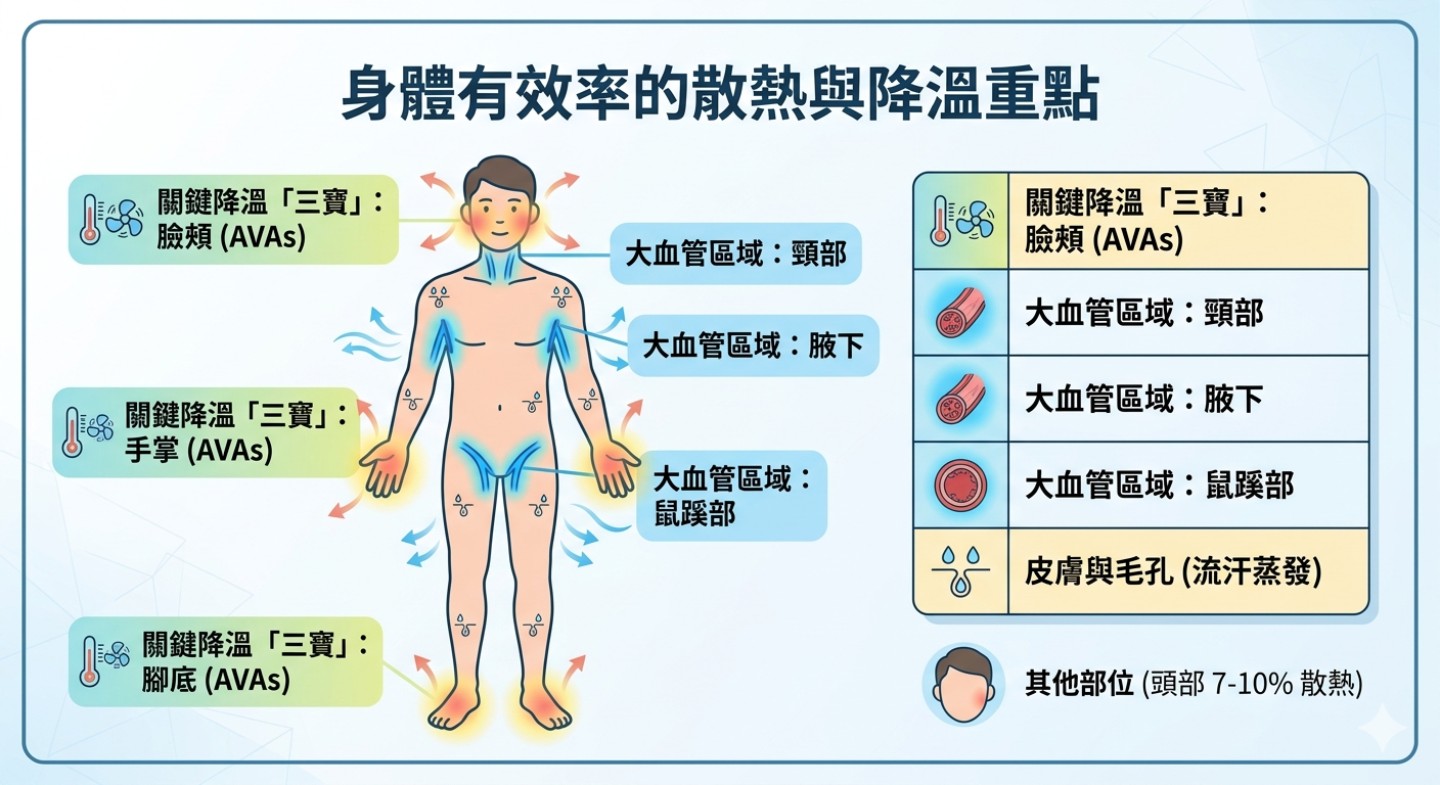
Key Body Parts for Efficient Heat Dissipation
Beyond insulating the core areas, you can also insulate the key heat-dissipation points of the body to prevent excessive heat loss, achieving a multiplied warming effect.
| Body Part | Function |
|---|---|
| Cheeks, palms, soles | The key cooling “big three” — these areas have arteriovenous anastomoses (AVA) blood vessels that regulate blood flow, carrying cooled blood back to the heart to control body temperature. |
| Neck, armpits, groin | Major blood vessel areas — large arteries are close to the skin surface; applying ice packs or wet compresses can effectively cool the blood, ideal for rapid cooling during heat exhaustion. |
| Skin and pores | The entire skin surface dissipates heat through pore dilation and sweat evaporation. If clothes are wet, using a fan combined with misting can accelerate evaporative cooling. |
Conclusion: Nature Only Follows the Cold Laws of Physics
The spot where the Russian teenager finally collapsed was actually only four kilometers from the road where he could have been rescued.
But under conditions of moderate hypothermia, impaired judgment, and physical exhaustion, those four kilometers became an insurmountable chasm between life and death.
Whether you’re planning to climb mountains or travel in snowy regions, remember:
Nature doesn’t care about your courage or pride — it only follows the cold laws of physics.
Staying warm and surviving has never been about pushing through with willpower — it’s about correct scientific knowledge and respect for life.