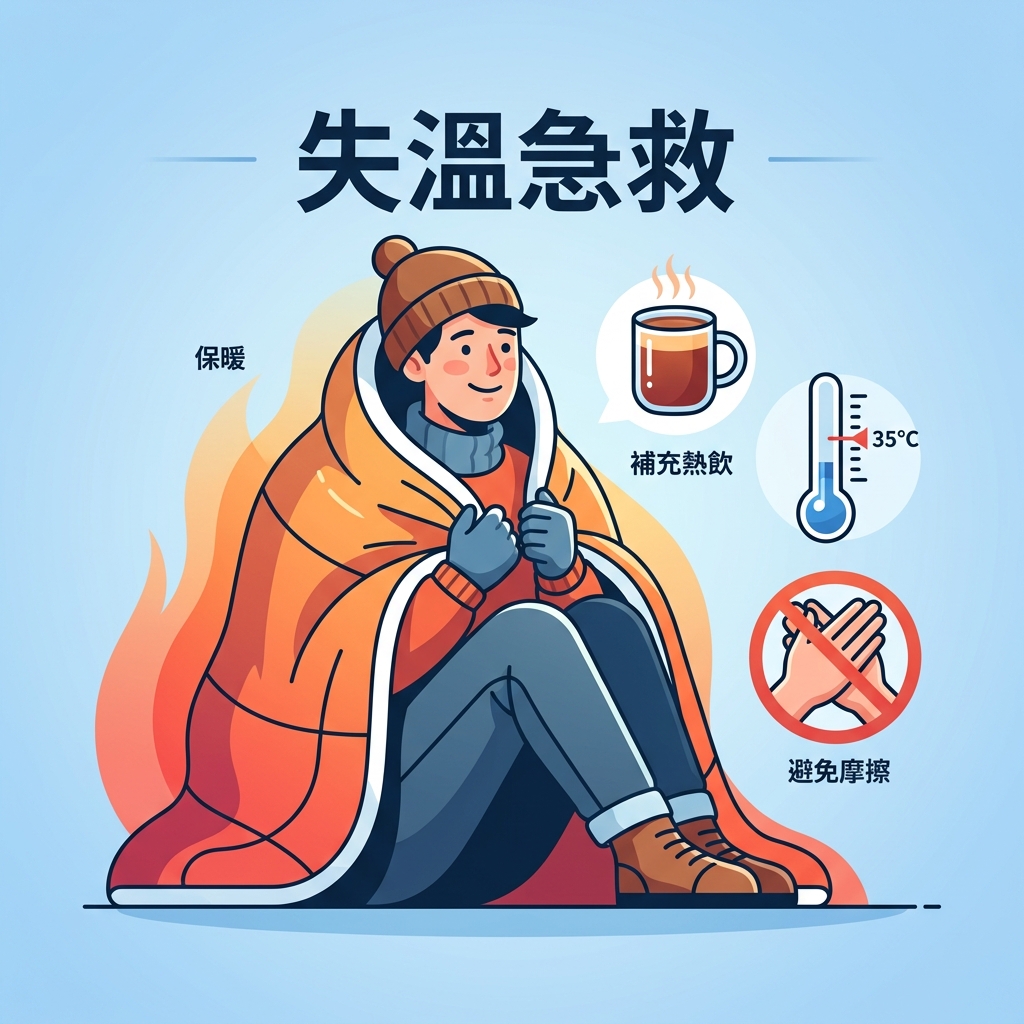
When camping in the mountains during winter or facing a cold snap, what would you do if a companion becomes so cold that they’re shivering uncontrollably, their lips turn purple, or they’re about to lose consciousness?
“Quickly rub their hands and feet vigorously to generate heat?” or “Let them take a hot bath to warm up?” If these instinctive reactions come to mind, hit the brakes immediately!
In medical terms, these seemingly well-intentioned actions could very likely cause fatal “secondary injuries”.
Hypothermia is not simply “feeling cold” — it is a total collapse of your body’s internal energy system.
The Three Deadly Stages of Hypothermia: A Total Collapse of Your Body’s Energy System
Hypothermia is not just “feeling very cold” — it is a total collapse of your body’s internal energy system.
When the body’s core temperature drops below 35°C, physiological functions will go through three brutal stages depending on how far the temperature falls:
| Stage | Core Temperature | Condition |
|---|---|---|
| 1. Mild Hypothermia | 35°C - 32°C | The body starts getting intense goosebumps, trying to close pores to retain heat. At this point, the brain’s judgment begins to decline, with slurred speech or sluggish movements. This is the body’s final warning and the most critical window for safe evacuation. |
| 2. Moderate Hypothermia | 32°C - 30°C | At this stage, uncontrollable “violent shivering” occurs as the body frantically burns muscle glycogen to generate heat. To protect the most vital heart and brain, the body activates a “sacrifice the pawns to save the king” mechanism, forcefully constricting blood vessels in the limbs and withdrawing blood back to the core. This is why victims often feel severe pain in their hands and feet or even experience tissue necrosis. |
| 3. Severe Hypothermia | Below 30°C | When you notice a victim has suddenly “stopped shivering,” this is not a sign of improvement — it’s the most terrifying signal. It means the body has exhausted all its energy, the brain’s thermoregulatory center has completely failed, unable to control the body, and “paradoxical undressing” occurs before death, as life approaches its end. |
The Brain’s Final Frenzy: Why Do People Undress Before Freezing to Death?
In many polar rescue scenes, search and rescue teams often find that victims have stripped off their clothes and even died naked in the snow.
This phenomenon is called “Paradoxical undressing.”
Why would someone feel burning hot in extreme cold? When hypothermia enters the severe stage, the peripheral blood vessels that had been constricted to preserve life suddenly relax because the hypothalamus (thermoregulatory center) has been frozen and damaged.
This causes the warm blood that had been concentrated in the core to suddenly rush to the skin surface, creating an illusion of “extreme burning heat” in the brain.
Victims feel unbearably hot in their final moments and frantically strip off their clothes, and driven by the primitive brainstem, they burrow into narrow snow caves or tree hollows like animals (known as Terminal burrowing), ultimately meeting death quietly in a false sensation of warmth.
Why Is Hypothermia First Aid Often Done Wrong? Debunking Three Common Myths
When the body’s core temperature drops below 35°C, the body, in order to survive, activates the “sacrifice the pawns to save the king” mechanism:
Constricting blood vessels in the
limbsand withdrawing all warm blood back to the core (internal organsandbrain).
If incorrect rescue measures are taken at this point, disasters often follow.
Wrong Myths About Hypothermia First Aid
| Wrong Myth | Explanation |
|---|---|
| Vigorously rubbing the limbs to generate heat | This is the most dangerous instinctive action! When a companion’s limbs are ice-cold, the blood flowing in their vessels is “cold blood” filled with chill and metabolic waste. If you rub vigorously, you’ll forcefully dilate the blood vessels, causing this cold blood to rush back to the heart like a flood, triggering what’s known as “Afterdrop”, which in severe cases can cause arrhythmia or even cardiac arrest. |
| Directly taking a hot bath or applying high heat | Sudden external high heat (like scalding hot water) will cause skin surface blood vessels to fully open instantly. The brain then misjudges that the crisis is over, actually accelerating the loss of core heat, causing body temperature to drop even faster and easily damaging tissue in frostbitten areas. |
| Warming up with alcohol | “Don’t they always drink hard liquor to warm up in movies?” In reality, alcohol dilates blood vessels — while it may temporarily make your skin surface feel “warm,” it’s actually forcing the remaining life-saving heat from your core to dissipate. The rate of hypothermia after drinking actually increases much faster than without alcohol. |
Understanding the “Physics” of Heat Thieves
To learn proper first aid, we must first understand how heat is stolen from the body.
In outdoor or low-temperature environments, heat loss occurs through three main pathways:
| Method | Explanation |
|---|---|
| Conduction | The most deadly pathway. For example, wearing wet clothes or falling into water. Water conducts heat approximately 25 times faster than air — moisture acts like a super pump, frantically draining your core heat. |
| Convection | Direct cold wind exposure. The stronger the wind, the faster it carries away heat. |
| Radiation | Heat radiates outward directly like infrared rays. For example, if your head is not covered by a hat, heat escapes upward continuously like a chimney. |
The Life-Saving Hypothermia First Aid SOP: Three Golden Rules
When you encounter a hypothermic companion, follow these scientific rescue procedures based on “gentle, start from the core, and cut off heat loss”:
| Step | Purpose | Explanation |
|---|---|---|
| 1. Turn off the “pump” (cut off conduction) | Stop continuous heat loss | Immediately move the patient to a sheltered, dry environment. If the patient’s clothes are soaked, remove the wet clothes and dry the body immediately. This is the top priority for saving their life — otherwise, any subsequent warming measures will fail due to water conduction. |
| 2. Warm from the inside out | Warm the core organs | Change into dry clothes and wrap the patient in a thick blanket or sleeping bag. Remember the golden order of warming: prioritize warming the torso core (neck, armpits, groin) — use warm water bottles or heat packs (wrapped in towels to prevent burns) placed on these areas. Never heat the hands and feet first! |
| 3. Supply “ready-to-use” fuel | Replenish the fuel needed for body heat production | If the patient is conscious and able to swallow, give them “warm sugary drinks” (such as hot cocoa or warm sugar water). This quickly provides the sugar fuel muscles need for heat production (shivering). Never give beverages containing alcohol or caffeine. |
The Fatal Details During Transport: Treat Them Like a “Frozen Fragile Instrument”
If you need to move a
severely hypothermic patientindoors, absolutely do not let them “walk on their own”!
Because when walking, the contraction of leg muscles will squeeze the cold blood from the limbs back to the heart.
The correct approach is to use a stretcher to lift them steadily, minimizing unnecessary swaying and vibration. Treat the patient as a “frozen fragile precision instrument” with utmost care — any rough movement could trigger ventricular fibrillation.
Conclusion: Gentleness Is the True Strength
The key to hypothermia first aid is not “rapid heating” but “gentle warming”.
Remember these counterintuitive yet scientifically sound life-saving principles:
Dry first, then warm; core first, then limbs.
In the face of extreme cold, your calm and correct judgment is your companion’s strongest shield.