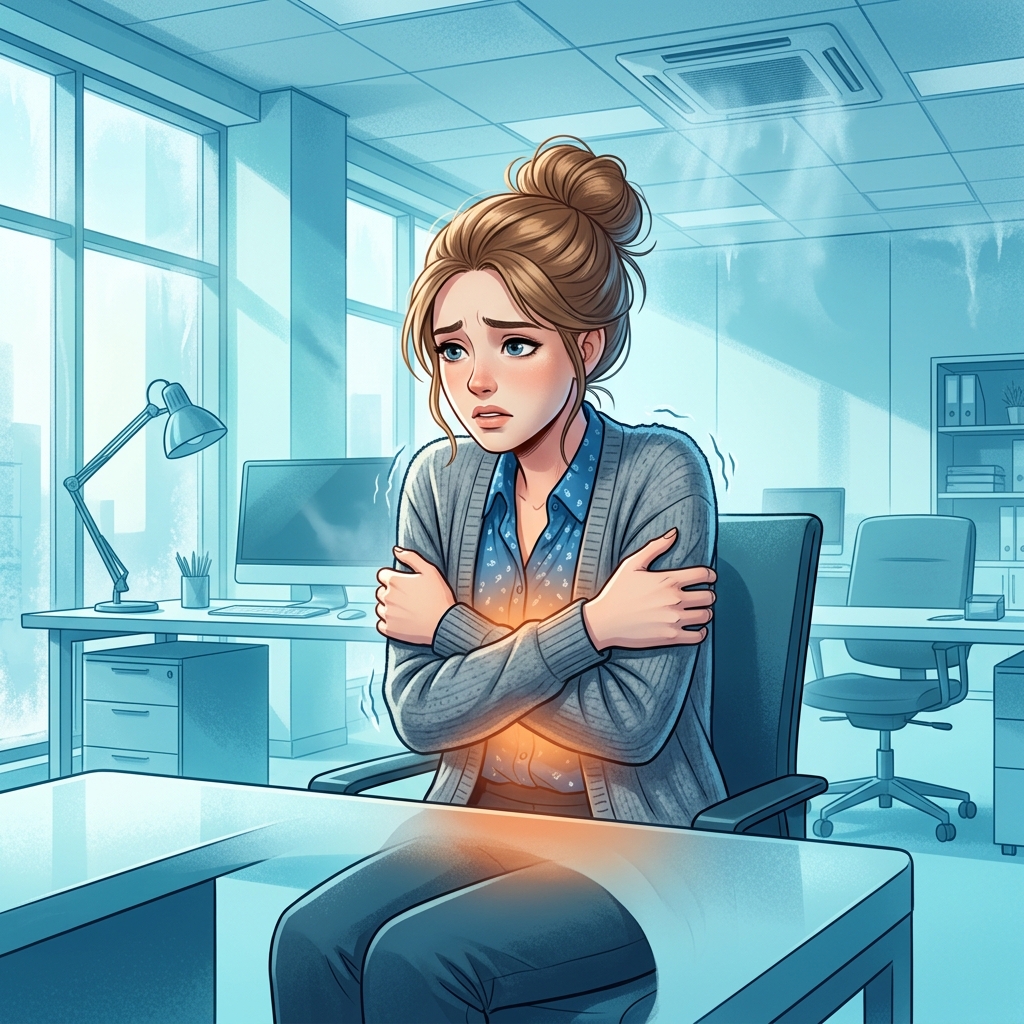
“I’ve been in an air-conditioned room all day, so how can I still have a headache, feel nauseous, and feel like I have heatstroke?”
This is probably a common sentiment shared by many modern office workers during summer. Even in the cold winter, some people experience symptoms similar to heatstroke!
All of this actually stems from our body’s “air conditioning system” crashing due to drastic fluctuations in artificial temperature.
The Thermal Flask in the Air-Conditioned Room: Understanding “Yin Heatstroke”
What modern people most commonly get is not the “Yang heatstroke” caused by prolonged sun exposure, but rather the so-called “Yin heatstroke”.
1. Symptoms of Yin Heatstroke
- Mild fever without sweating
- Headache with a tight band-like sensation (head feels constricted)
- Back of neck feels hot
- Diarrhea
- Cold sweats
- Body temperature usually not high
- Rapid breathing
- Vomiting
- Fatigue and weakness
- Body aches all over
- Chest tightness
- Thirst
- Dizziness
- Loss of appetite
- Gastrointestinal discomfort
2. Causes of Yin Heatstroke
It can happen in all four seasons and is the most common type among modern office workers — feeling cold on the outside while burning up on the inside.
Imagine this: after being out in the sun, you rush into a strongly air-conditioned office or convenience store drenched in sweat, and your skin pores instantly “shut down their defenses” due to the cold air stimulation.
At-risk groups include those who exercise little, sit in air-conditioned rooms for long periods, have weak constitutions, stay up late, or are sleep-deprived
3. Heat Trapped Inside the Body
Although you feel cold enough to shiver on the outside, the heat absorbed outdoors cannot escape because your pores have sealed shut.
Your body is like a “thermal flask” or insulated bottle, with heat locked in the core.
This causes symptoms like a hot back of the neck, a band-like headache (feeling like your head is being squeezed tight), and full-body fatigue with an inability to sweat — an uncomfortable state.
Heatstroke in Winter? Understanding “Heating Syndrome”
It’s not just summer — winter’s “dry heatstroke” is also a product of modern civilization.
1. The Trap of Overdressing
In winter, to stay warm, we often wear heat-tech underwear or heavy, non-breathable jackets.
Once you enter a department store, subway, or office with powerful heating and don’t remove your jacket in time, your body’s core temperature can spike rapidly.
2. Core Overheating and Dehydration
Heat gets trapped inside heavy clothing, and combined with dry winter air and forgetting to hydrate, this leads to slower blood circulation, and brain overheating causing dizziness and nausea.
This “cold outside, hot inside” state of imbalance is essentially a form of heatstroke.
Debunking Temperature Myths: Heat Dissipation Self-Rescue Strategies
When facing these “atypical heatstrokes,” we cannot use traditional ice packs or ice water to treat them, as that would cause pores to constrict even further.
Warm Beverages to “Break the Ice”
When Yin heatstroke or heating syndrome strikes, drinking a cup of warm ginger tea or hot water is actually more effective.
Warm liquids can help dilate peripheral blood vessels, pushing the trapped heat outward from the body, encouraging the body to sweat lightly.
As long as sweat is released, core body temperature will naturally drop.
Take a “Warm-Hot Bath”
This sounds counterintuitive, but it’s actually a miracle cure for Yin heatstroke.
Take a slightly warmer bath (slightly above body temperature), using steam to force open the tightly closed pores.
When you feel refreshed and slightly sweaty after bathing, the heavy feeling of heatstroke typically subsides significantly.
Daily Habits to Prevent Air Conditioning Sickness and Heating Syndrome
To prevent your body’s heat dissipation system from malfunctioning, start with these habits:
1. Make Good Use of “Layered Dressing”
Regardless of the season, always have a light jacket or scarf ready when going in and out of indoor and outdoor spaces.
Put on a jacket when entering an air-conditioned room to protect the “heat dissipation window” on your back neck (such as the Dazhui acupoint) from direct cold air
When entering a heated room, quickly remove layers to allow body surface heat to dissipate through channels.

2. Keep Hydrating
In dry air-conditioned environments, your body’s moisture is silently lost.
Regularly drink room-temperature water or slightly warm water to ensure smooth blood circulation, so your body’s “cooling circulation system” has enough coolant (moisture) to work with.
3. Check Whether Your Body’s Heat Dissipation Points Are Overheating
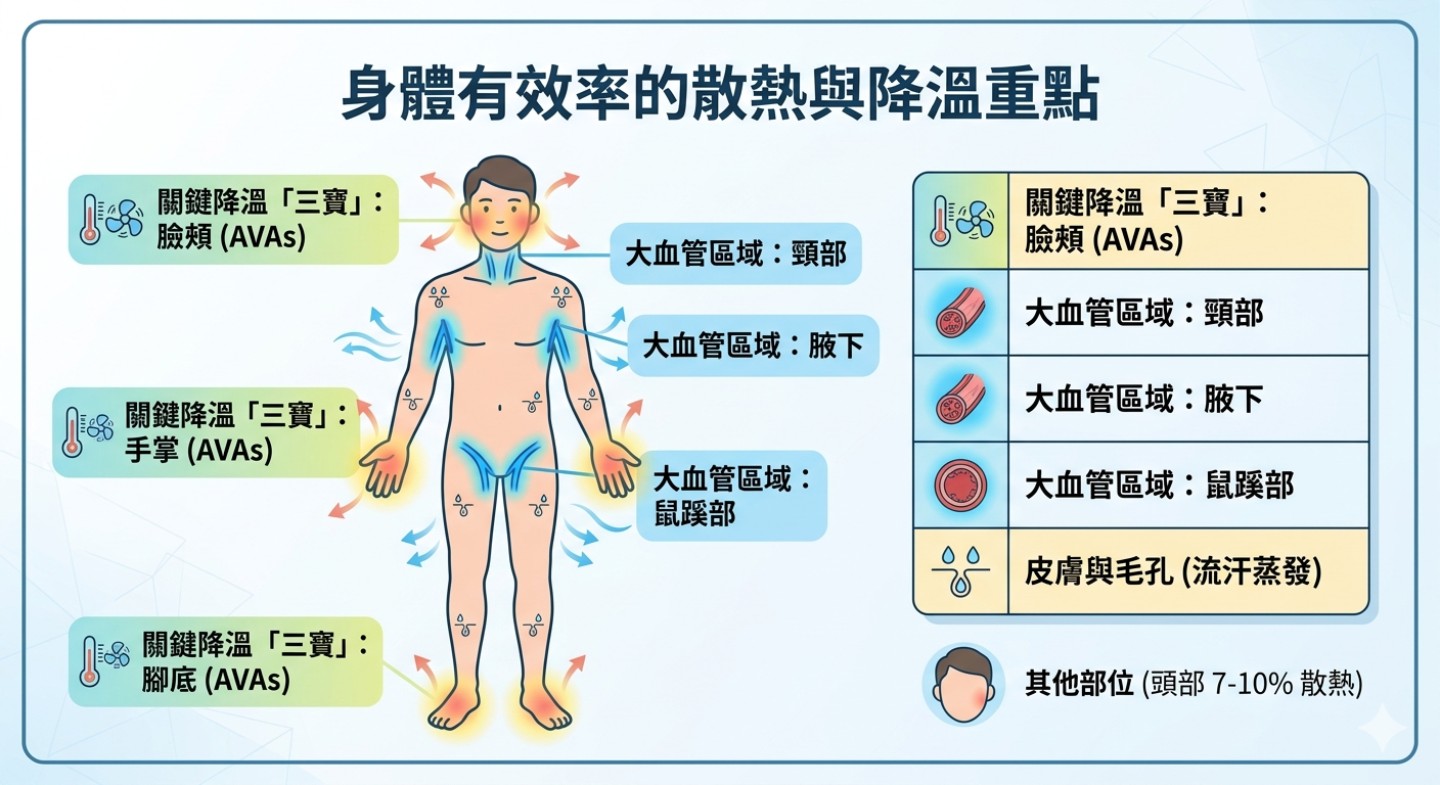
Areas such as palms, soles of feet, cheeks, back of neck, armpits, and groin are all spots that dissipate heat easily. If these areas can dissipate heat normally, it means your body’s heat dissipation system is functioning properly.
Pay attention to whether these areas are overheating. Sometimes in winter, your hands and feet may feel cold, yet the back of your neck, armpits, and groin may be overheating, which means your body’s heat dissipation system is malfunctioning.
Cold areas can be warmed with clothing, socks, and gloves; overheating areas should avoid being covered by clothing, allowing body heat to dissipate through channels.
It’s not true that just because some heat-dissipating body parts feel cold, it means your body is already dissipating heat properly
If your body is overheating, heat can get trapped in different areas depending on each person’s physical condition, leading to Yin heatstroke, so you need to observe carefully and check whether heat trapped in certain areas is causing Yin heatstroke symptoms
Key Points for Efficient Body Heat Dissipation and Cooling
The key areas for body heat dissipation — in hot environments, you can quickly lower your core body temperature by applying ice packs or soaking these areas in cold water
| Area | Function |
|---|---|
| Palms, cheeks, soles of feet | The key cooling “trio” — the arteriovenous anastomoses (AVA) blood vessels in these areas can regulate blood flow, bringing cooled blood back to the heart to control body temperature. |
| Neck, armpits, groin | Major blood vessel areas — major arteries are close to the skin surface, and applying ice packs or wet compresses can effectively cool the blood, ideal for rapid cooling during heat exhaustion. |
| Skin and pores | The entire skin surface dissipates heat through pore dilation and sweat evaporation. If clothes are wet, using a fan combined with misting water can accelerate moisture evaporation for heat dissipation. |
| Head | Accounts for approximately 7-10% of total body heat dissipation |
Conclusion
The human body is a precision biological machine that needs to follow natural heat dissipation mechanisms.
Avoiding drastic temperature difference stimulation and allowing the body to “reboot” and sweat out toxins at appropriate times is the fundamental way to stay away from air conditioning sickness and heating syndrome.
Next time you feel a tight head and chest tightness, don’t rush to blast stronger air conditioning. Instead, drink a cup of warm water first, check your body’s heat dissipation points, and give your body some room to cool down!
Reference
- 夏日炎炎 當心熱衰竭與中暑! 如何分辨是熱衰竭?中暑?
- 「陰暑VS陽暑」處理方式大不同!
- 中暑分陰暑、陽暑處理方式大不同!專家教你如何分辦、緩解、預防
- 馬光醫療網
- 中暑是什麼?完整了解中暑症狀、成因、分級與中醫防治|宜蘊中醫
- 陰暑跟陽暑怎麼區分 │ 雲鼎中醫 羅珮嘉醫師-臻觀中醫醫療體系
- 炎熱天氣如何讓身體快速降溫?專家揭這些部位是散熱重點|生活智慧王|養生|元氣網
- 熱量都從頭部散失!真的嗎? - 家醫/職醫 陳崇賢醫師
- 「手掌」是降溫關鍵?專家推「3寶2招」,預防中暑、安全快速降溫 - 康健雜誌
- 炎熱天氣下,退熱貼貼邊個部位散熱最快?
- 室內也可能造成中暑!避免傷害 3 大部位先降溫:頸部、腋下、鼠蹊部 - Heho健康
- 中暑第一件事不是送醫!醫師教先做這幾件事快速降溫-中暑防治中心-三軍總醫院 - Tri-Service General Hospital