In the scorching summer heat, do you often feel dizzy, sluggish, weak all over, or even nauseous?
Don’t assume heatstroke only happens when you’re sweating under the blazing sun! Many people spend all day in air-conditioned rooms or gulp down ice water, only to develop cold-like symptoms instead.
From both physiological and Traditional Chinese Medicine (TCM) perspectives, heatstroke comes in distinctly different types. If you use the wrong remedy — such as applying Gua Sha scraping for Yin Heatstroke, or drinking hot ginger tea for Yang Heatstroke — you might actually cause your body’s “cooling system” to crash entirely.
Your Body’s Dashboard: The Progressive Warnings of Heatstroke
Heatstroke is not a sudden accident — it’s a gradual process of your body’s cooling system failing.
| Feature | Heat Exhaustion (System Overload) | Heatstroke (Core Shutdown) |
|---|---|---|
| Alert Level | Yellow Alert | Red Alert |
| Signs | Heavy sweating, pale face, dizziness, fatigue, nausea | Soaring body temperature, dry/hot/red skin with no more sweating, confusion, or even unconsciousness |
| Key Point | Skin is usually cool and clammy, body temperature between 37°C and 40°C. | This is a medical emergency — call 119 immediately! |
| Explanation | This is your body’s first warning sign. At this point, your “cooling fan” is still working hard but can barely keep up. | This is the most dangerous moment! The temperature regulation center has lost control, and the entire system has collapsed. |
Two Types of Heatstroke: Are You an “Oven” or a “Smoldering Pot”?
Understanding the types of heatstroke is key to finding the right treatment.
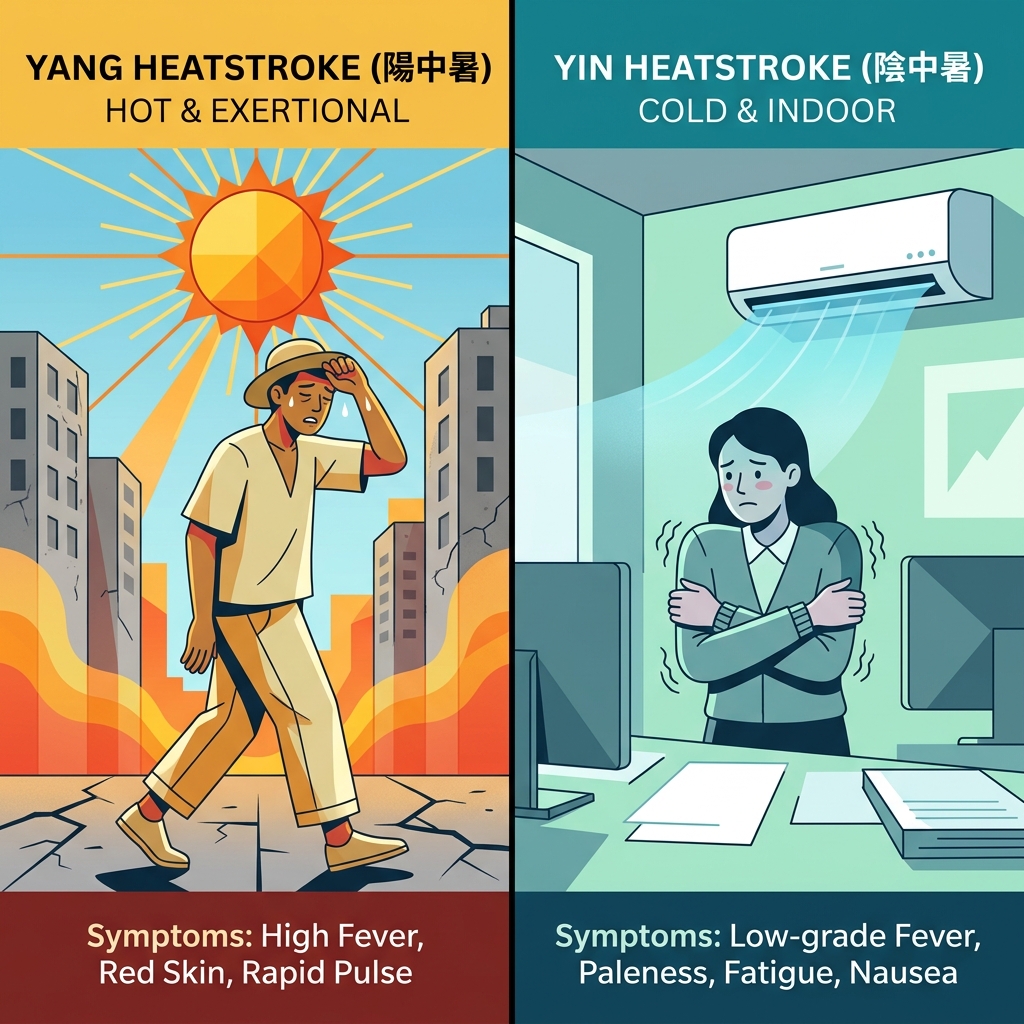
| Feature | Yang Heatstroke | Yin Heatstroke |
|---|---|---|
| Condition | The “Oven” caused by high environmental temperatures | The “Smoldering Pot” caused by air conditioning temperature differences |
| Scenario | This occurs under direct sun exposure or in poorly ventilated, high-temperature environments where heat pours in from outside. | This can happen in any season and is the most common type for modern office workers — you feel cold on the outside but are smoldering inside. It commonly affects those who rarely exercise, sit in air-conditioned rooms for long hours, have weak constitutions, stay up late, or are sleep-deprived. |
| Cause | Outdoor labor, exercise, insufficient fluid intake. | Frequent transitions between air-conditioned and outdoor environments, taking cold showers or drinking icy beverages while heavily sweating, causing pores to suddenly close and trapping heat inside the body. |
| Symptoms | High body temperature, heavy sweating, no sweating, rapid breathing, nausea, vomiting, thirst, confusion, fainting, shock. | Mild fever without sweating, band-like headache (feeling of tightness around the head), hot back of the neck, diarrhea, cold sweats, usually normal body temperature, rapid breathing, vomiting, fatigue, body aches, chest tightness, thirst, dizziness, loss of appetite, gastrointestinal discomfort. |
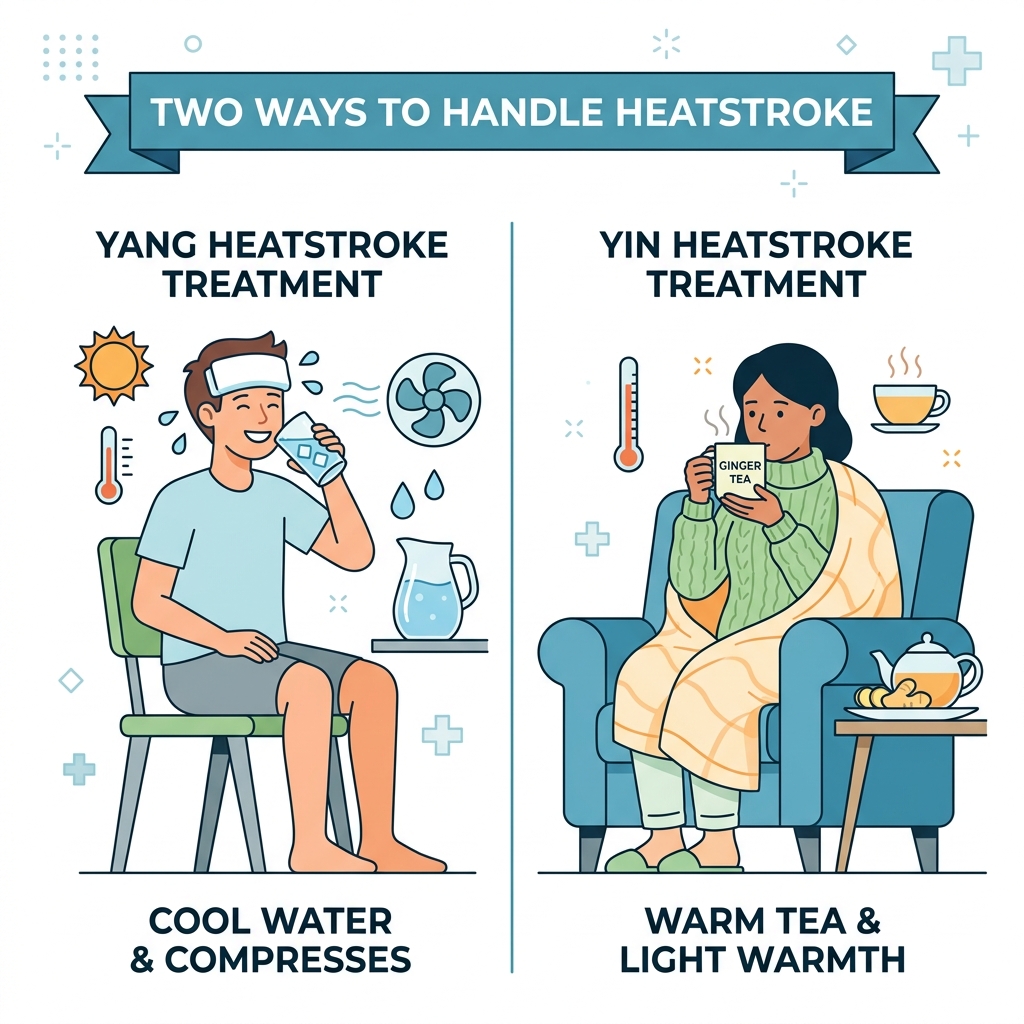
| Treatment | Move to a cool, shaded area immediately, apply physical cooling (such as wiping with a wet towel), and replenish fluids. Gua Sha scraping is appropriate at this time to help dissipate heat. | Absolutely do not apply Gua Sha or drink ice water! This will make your pores close even tighter. The correct approach is to drink warm or hot water or ginger tea to help your body break a light sweat. |
Quick First Aid: Four-Step Self-Rescue
If you notice signs of heatstroke in yourself or someone nearby, take action based on the type:
Yang Heatstroke First Aid
| Step | Instructions |
|---|---|
| Move | Move to a cool, well-ventilated area. |
| Loosen | Loosen clothing and undo the collar. |
| Cool | Spray lukewarm water on the skin or wipe with a damp towel to allow evaporation to carry away heat. |
| Hydrate | When conscious, sip small amounts of room-temperature water with salt or electrolyte drinks frequently. |
Yin Heatstroke First Aid
| Step | Instructions |
|---|---|
| Shelter | Avoid direct air conditioning and put on a light jacket. |
| Warm | Drink plenty of warm or hot water; sipping some ginger tea can promote blood circulation and push the heat toward the extremities. |
| Bathe | Take a “warm bath”. This forces the tightly closed pores to open and is the best remedy for Yin Heatstroke. |
Check Whether Your Body’s Heat-Dissipation Points Are Overheating
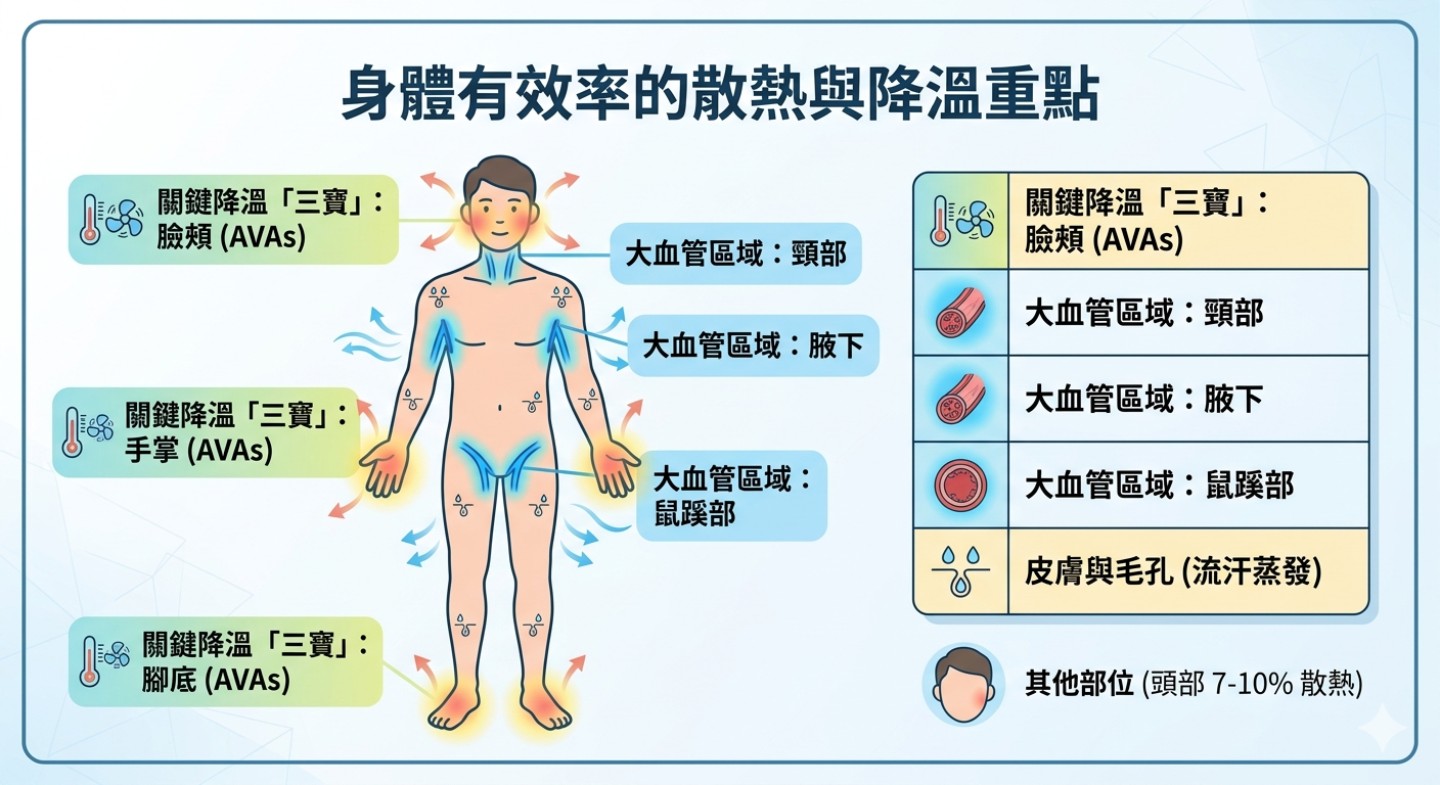
Areas such as the palms, soles of feet, cheeks, back of the neck, armpits, and groin are the body’s primary heat-dissipation points. If these areas can dissipate heat normally, it means your body’s cooling system is functioning properly.
Pay attention to whether these areas are overheating. Sometimes in winter, your hands and feet may feel cold, yet the back of your neck, armpits, and groin may be overheating — this indicates that your body’s cooling system is malfunctioning.
For cold areas, you can wear clothing, socks, and gloves for warmth; for overheating areas, avoid covering them with clothing so that body heat has a pathway to escape.
Just because some heat-dissipation areas of the body feel cold does not mean the body is effectively releasing heat
When the body overheats, heat can get trapped in different areas depending on each person’s physical condition, leading to Yin Heatstroke, so you need to observe carefully and check whether heat trapped in certain areas is causing Yin Heatstroke symptoms.
Key Points for Efficient Body Cooling and Temperature Reduction
The body’s key heat-dissipation points can be used to rapidly lower core body temperature in hot environments through ice packs or cold water immersion
| Body Part | Function |
|---|---|
| Palms, cheeks, soles of feet | The “Big Three” for cooling — the arteriovenous anastomoses (AVA) blood vessels in these areas regulate blood flow, carrying cooled blood back to the heart to control body temperature. |
| Neck, armpits, groin | Major blood vessel areas — large arteries are close to the skin surface, and ice packs or wet compresses can effectively cool the blood, making them ideal for rapid cooling during heat exhaustion. |
| Skin and pores | The entire skin surface dissipates heat through pore dilation and sweat evaporation. If clothes are wet, using a fan combined with spraying water can accelerate evaporative cooling. |
| Head | Accounts for approximately 7-10% of total body heat dissipation |
Daily Dietary Prevention
Besides drinking plenty of water, you can also regulate body temperature through natural foods:
| Prevention Method | Description |
|---|---|
| Preventing Yang Heatstroke | Eat hydrating foods such as watermelon, mung bean and barley soup, grass jelly tea, or herbal tea. These foods have natural heat-clearing and fire-reducing properties. |
| Preventing Yin Heatstroke | When working in air-conditioned environments, keep a light jacket handy to protect the back of your neck and joints. Reduce excessive consumption of icy treats, and occasionally drink warm ginger tea or Four Herbs Soup (Si Shen Tang) to promote metabolism and keep your cooling system responsive. |
Conclusion: Give Your Body Room to Breathe and Cool Down
The human body is a precision machine — heat dissipation requires the circulation of blood and fluids.
Just remember the principle of “extinguish the fire for Yang Heatstroke, clear the smoke for Yin Heatstroke”, and stay alert to your body’s “head tightness and burning” warning signals. This way, you can enjoy the convenience of air conditioning while maintaining a cool and healthy body.
Reference
- 夏日炎炎 當心熱衰竭與中暑! 如何分辨是熱衰竭?中暑?
- 「陰暑VS陽暑」處理方式大不同!
- 中暑分陰暑、陽暑處理方式大不同!專家教你如何分辦、緩解、預防
- 馬光醫療網
- 中暑是什麼?完整了解中暑症狀、成因、分級與中醫防治|宜蘊中醫
- 陰暑跟陽暑怎麼區分 │ 雲鼎中醫 羅珮嘉醫師-臻觀中醫醫療體系
- 炎熱天氣如何讓身體快速降溫?專家揭這些部位是散熱重點|生活智慧王|養生|元氣網
- 熱量都從頭部散失!真的嗎? - 家醫/職醫 陳崇賢醫師
- 「手掌」是降溫關鍵?專家推「3寶2招」,預防中暑、安全快速降溫 - 康健雜誌
- 炎熱天氣下,退熱貼貼邊個部位散熱最快?
- 室內也可能造成中暑!避免傷害 3 大部位先降溫:頸部、腋下、鼠蹊部 - Heho健康
- 中暑第一件事不是送醫!醫師教先做這幾件事快速降溫-中暑防治中心-三軍總醫院 - Tri-Service General Hospital